Cheap International Shipping: How to Send Packages Abroad Without Getting Ripped Off
When you need to send something overseas, cheap international shipping isn’t just about the lowest price—it’s about avoiding hidden fees, delays, and lost packages. Many people think they’re saving money by picking the cheapest option, only to end up paying more in the long run because their package got stuck in customs or took six weeks to arrive. The real trick is finding a balance between cost, speed, and reliability. It’s not magic, and you don’t need a logistics degree to do it right.
International shipping, the process of moving goods across national borders. Also known as global parcel delivery, it involves more than just handing a box to a courier. It includes customs paperwork, duty taxes, carrier networks, and transit times that vary wildly depending on where you’re sending it. If you’re shipping to Europe, Asia, or the US, the rules, costs, and carriers change completely. Some services act like global courier services, companies that handle end-to-end delivery across countries, often with tracking and insurance. Also known as international freight carriers, they include FedEx, DHL, and UPS—but they’re not always the cheapest, even if they’re the fastest. Then there are budget options like postal services and regional freight partners that cut corners but can save you a lot if you’re not in a rush.
Shipping logistics, the planning and execution of moving goods from one place to another, especially across borders. Also known as cross-border supply chain management, it’s what keeps your package from getting lost in a warehouse in Frankfurt or stuck behind a customs backlog in Sydney. The best cheap options aren’t the ones with the lowest sticker price—they’re the ones that know how to route packages smartly, consolidate shipments, and avoid unnecessary handling. Small businesses and individuals who ship regularly learn this fast: packaging matters, weight matters, and declaring the right value matters even more. If you over-declare, you pay higher duties. Under-declare, and your package might get seized. It’s not a game—you’re dealing with real government rules, not just a delivery app.
Most people don’t realize that the time of year affects international shipping costs too. Around holidays, carriers raise prices and cut capacity. If you’re sending gifts in December or back-to-school items in August, you’re paying a premium. But if you ship in January or late summer, you can often find better rates. Some carriers offer discounts for pre-scheduled shipments or bulk sending, even for one-off packages. And don’t forget: sometimes using a local postal service with international partnerships (like Royal Mail or Australia Post) can be cheaper than big-name couriers, especially for lightweight items under 2kg.
You’ll find posts here that break down exactly how Amazon’s delivery network compares to traditional couriers, why FedEx isn’t always the best choice for small packages, and how to avoid the hidden fees that turn a "cheap" quote into a surprise bill. There’s also advice on what to pack, how to fill out customs forms without mistakes, and which countries are easiest (or hardest) to ship to. You’ll learn what real people pay to send a box to Canada, Germany, or Japan—not what the website says, but what they actually paid after taxes and fees. No fluff. No theory. Just what works.
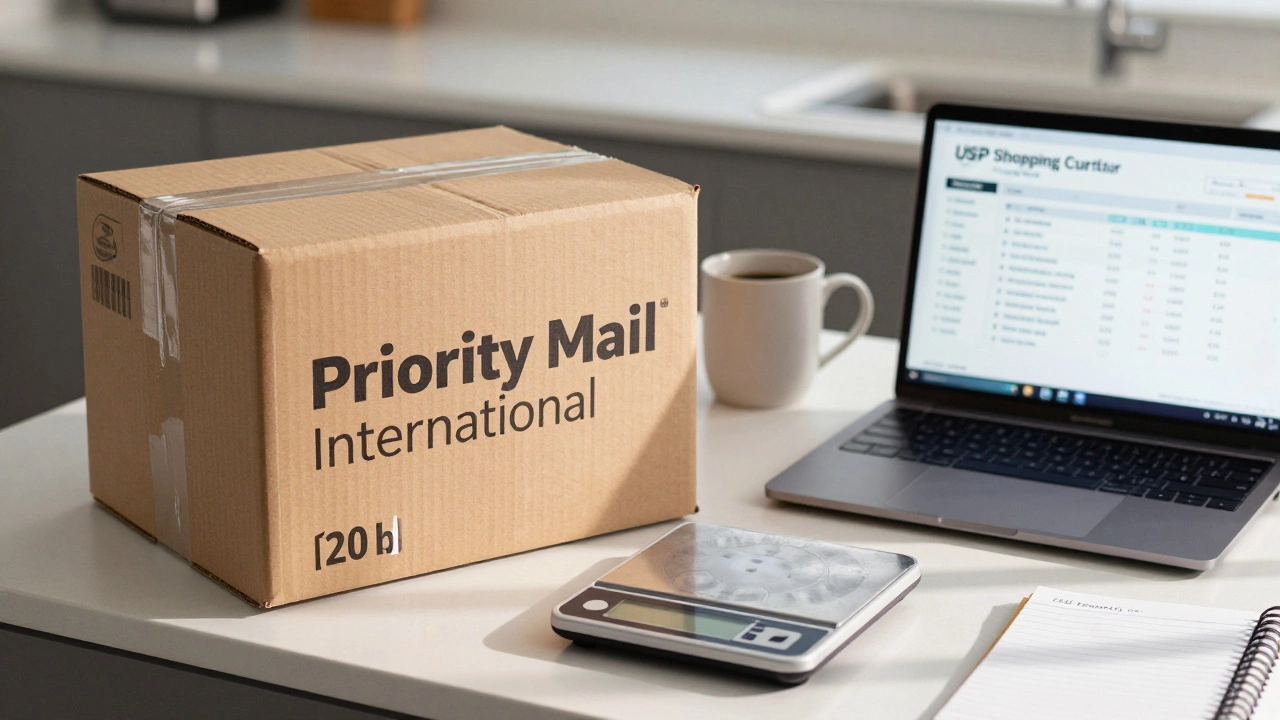
USPS is usually cheaper than UPS for shipping a 20 lb box internationally, but UPS offers faster delivery and better tracking. Compare both services based on destination, speed, and item type to find the best value.
Jan, 18 2026

Shipping a heavy box internationally? USPS is cheaper for lighter, compact packages under 20 pounds to major countries. UPS wins for heavier, bulky, or time-sensitive shipments. Here’s how to choose without overpaying.
Jan, 4 2026
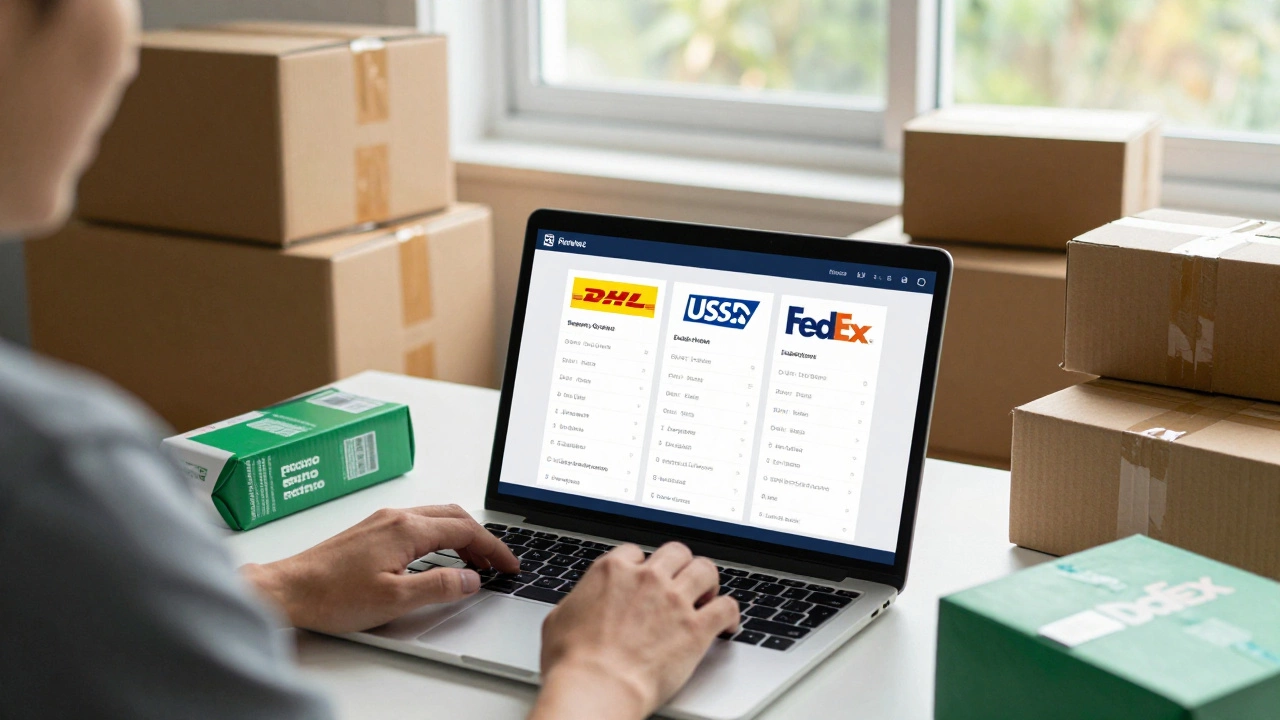
Learn how to cut overseas shipping costs in 2025 with practical tips on packaging, carrier choice, customs, and bulk shipping. Save up to 70% without slowing down delivery.
Dec, 1 2025