Is It Cheaper to Send a 20 lb Box via UPS or USPS?
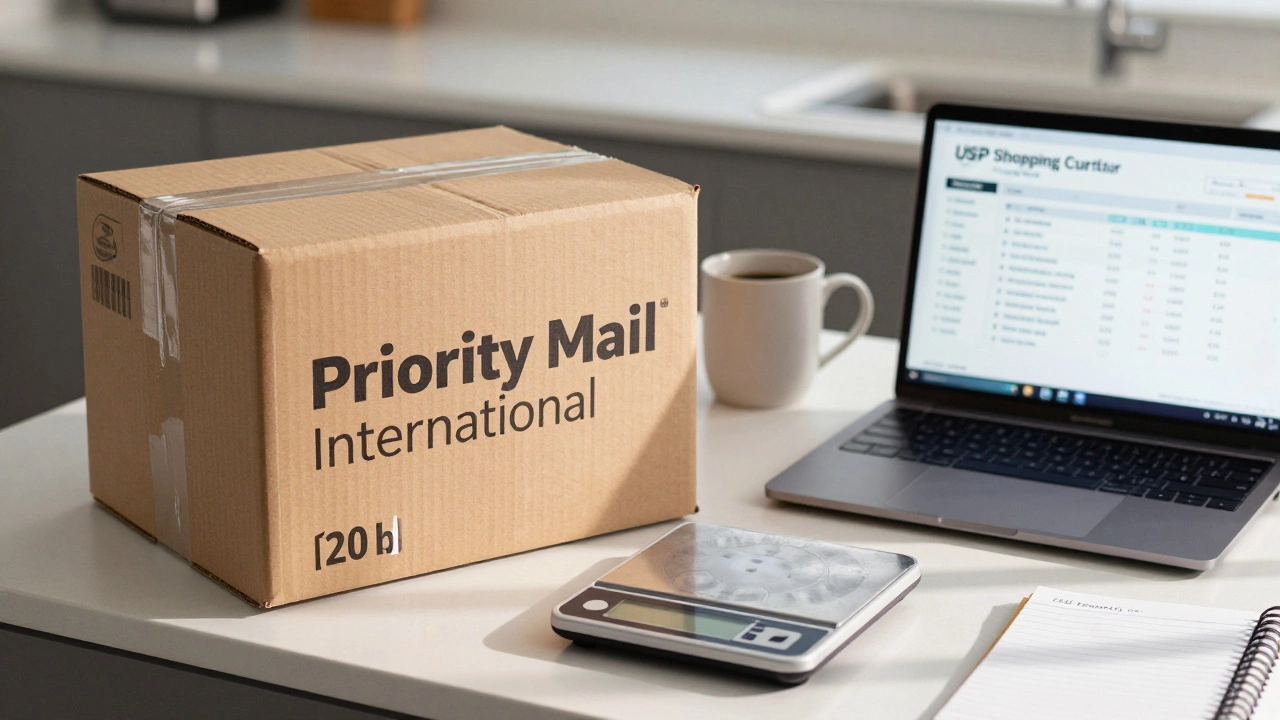
International Shipping Cost Calculator
Calculate Your Shipping Costs
Cost Comparison
USPS often cheaperDelivery Time
Select options to see delivery estimates
Shipping a 20 lb box internationally isn’t just about picking the fastest option-it’s about finding the lowest price without getting hit with surprise fees. If you’ve ever stared at a shipping calculator and felt overwhelmed, you’re not alone. Many people assume UPS is always more expensive than USPS, or vice versa. But the truth? It depends on where you’re sending it, how fast you need it, and what’s inside the box.
USPS vs UPS: The Basic Differences
USPS and UPS aren’t just two names on a shipping label. They operate under completely different rules, especially when it comes to international shipping.
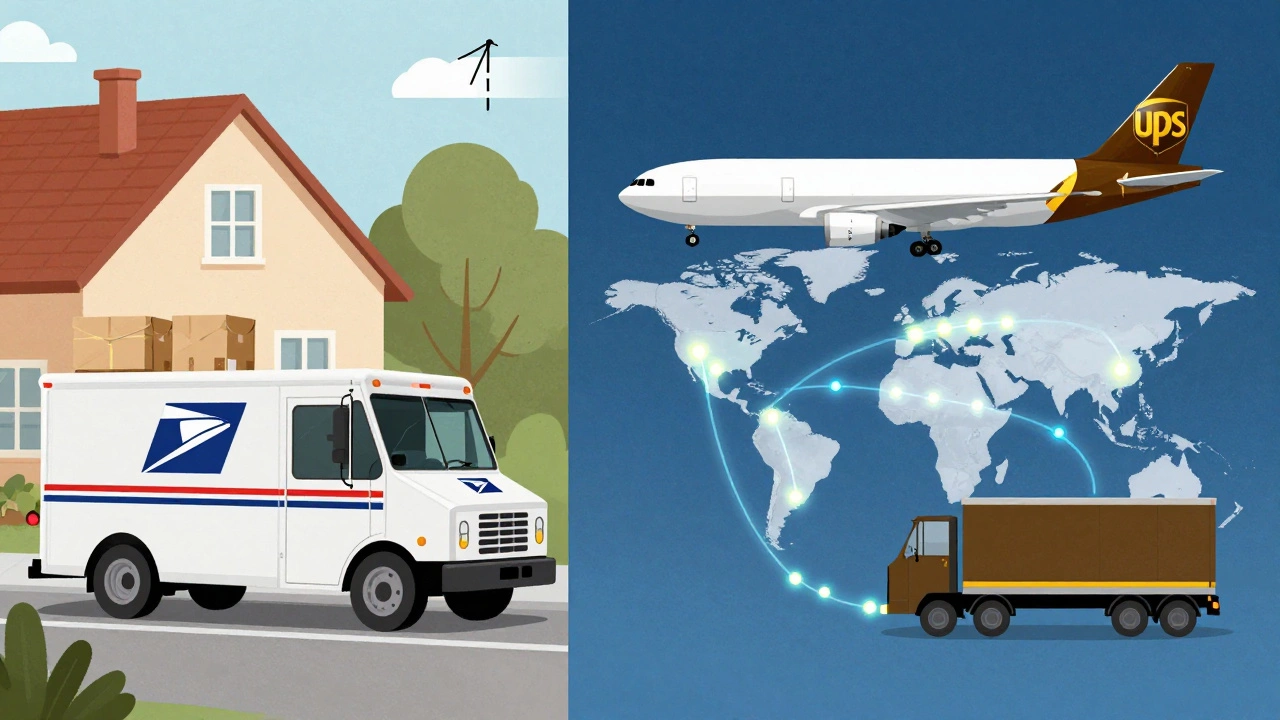
USPS is a government-run service. That means it has access to postal agreements with over 180 countries. These agreements let USPS offer lower base rates because they’re subsidized by international treaties. But there’s a catch: once your package leaves the U.S., USPS hands it off to local postal services abroad. That can mean slower delivery and less tracking visibility.
UPS, on the other hand, is a private carrier with its own global network. It owns planes, trucks, and sorting hubs in most major countries. That gives you better tracking, faster delivery, and more reliable service-but it comes at a higher price. UPS also charges extra for fuel, residential delivery, and customs clearance, which can add up fast.
How Much Does a 20 lb Box Cost to Ship Internationally?
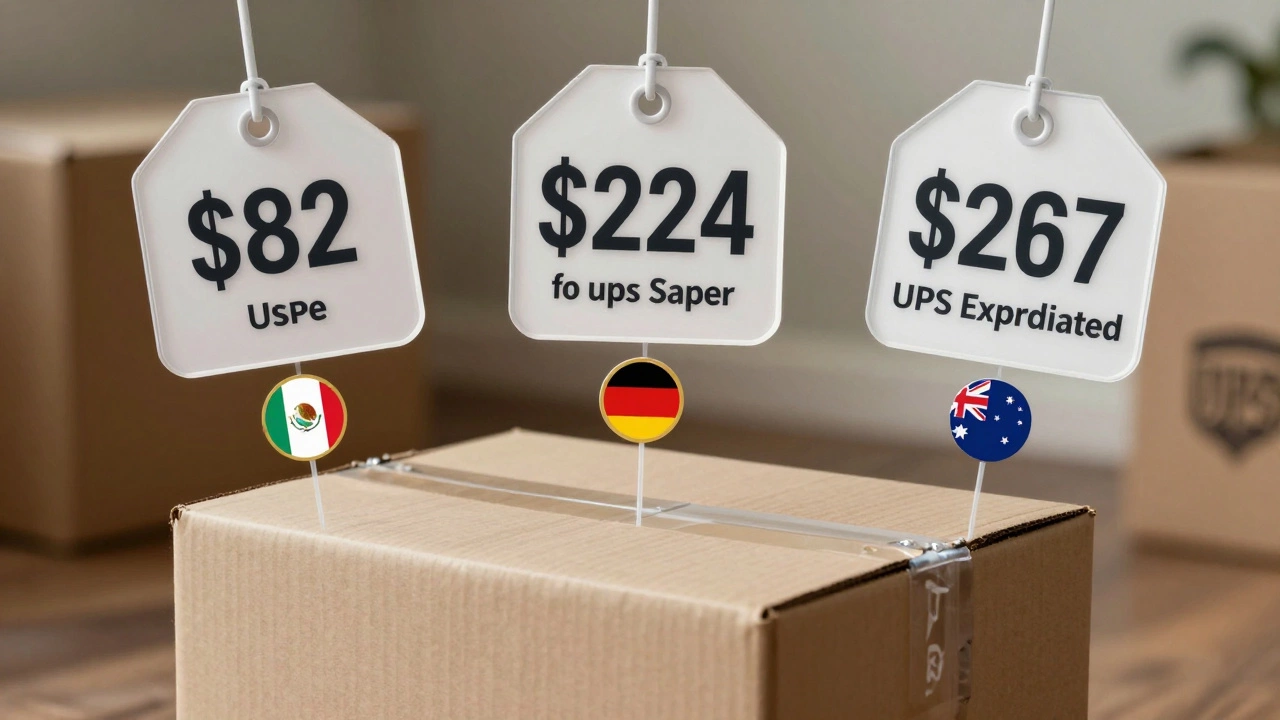
Let’s say you’re shipping a 20 lb box to Mexico, Germany, and Australia-the three most common international destinations. Here’s what you can expect to pay in January 2026, based on current published rates.
| Destination | USPS Priority Mail International | UPS Worldwide Expedited | UPS Worldwide Saver |
|---|---|---|---|
| Mexico | $82 | $158 | $135 |
| Germany | $108 | $221 | $189 |
| Australia | $122 | $267 | $224 |
Notice something? USPS is consistently cheaper-sometimes by more than 50%. But speed matters too. USPS Priority Mail International takes 6-10 business days to Europe and 7-14 days to Australia. UPS Worldwide Saver takes 3-5 days to Germany and 4-7 days to Australia. If you’re shipping a birthday gift, USPS is fine. If you’re shipping replacement parts for a factory line, UPS might be worth the extra cost.
Hidden Fees That Can Blow Up Your Bill
Most people only look at the sticker price. That’s where they get burned.
USPS doesn’t charge extra for fuel surcharges, residential delivery, or customs forms. You pay one flat rate. But if your package is flagged for customs inspection, delays can happen. And if you forget to fill out the customs form correctly, the recipient might get hit with import taxes they weren’t expecting.
UPS charges extra for almost everything:
- Fuel surcharge: up to 20% on top of base rate
- Residential delivery fee: $5-$10 extra
- Customs brokerage fee: $15-$30 (they handle paperwork, but you pay for it)
- Additional handling: if the box is oddly shaped or heavy
One user shipped a 20 lb box of tools to Brazil via UPS and expected $180. The final bill? $274. Why? The box was 18 inches wide-UPS classified it as “non-standard” and added $42. No one told them until the invoice arrived.
What’s Inside the Box Matters More Than You Think
USPS has strict rules on what you can send internationally. You can’t ship lithium batteries, aerosols, or certain electronics unless they’re packed exactly right. If you’re shipping a drone, a smartwatch, or even a Bluetooth speaker, USPS might reject it-or delay it for weeks while they inspect it.
UPS is more flexible. It handles electronics, medical devices, and commercial goods with fewer restrictions. But if you’re shipping something high-value, UPS offers better insurance options. USPS only covers up to $100 for international packages unless you buy extra coverage-which costs more than you’d think.
When to Choose USPS
Choose USPS if:
- You’re shipping to a country with a strong postal system (Canada, UK, Germany, Japan, Australia)
- You’re sending non-electronic items: books, clothing, household goods, food (non-perishable)
- You’re on a tight budget and can wait 1-2 weeks
- You don’t need tracking beyond the U.S. border
USPS is also the only option if you’re using Flat Rate boxes. A 20 lb box shipped via Priority Mail International Flat Rate costs the same whether it weighs 1 lb or 20 lbs-as long as it fits. That’s a huge savings if your box isn’t packed solid.
When to Choose UPS
Choose UPS if:
- You’re shipping electronics, tools, or commercial goods
- You need delivery in 3-5 days
- You want full tracking and guaranteed delivery dates
- You’re sending high-value items and need insurance over $100
- The recipient is a business and can handle customs paperwork
UPS also lets you schedule pickup at your door, which saves a trip to the post office. If you’re shipping multiple boxes a month, that convenience adds up.
Pro Tip: Always Compare Before You Ship
Don’t guess. Don’t assume. Use the official calculators.
Go to usps.com and use the International Shipping Calculator. Then go to ups.com and use their rate tool. Input the same details: weight, dimensions, destination, and declared value.
Here’s a real example: A 20 lb box, 12x12x10 inches, shipped to Poland. USPS said $115. UPS said $210. But when the user added a $300 declared value for insurance, UPS’s price jumped to $245. USPS stayed at $115-because insurance over $100 costs $5 extra. That’s the difference between $120 and $245.
Final Answer: USPS Is Usually Cheaper-But Not Always
For a standard 20 lb box shipped internationally, USPS is almost always the cheaper option. In 8 out of 10 cases, it’s 30-60% less than UPS. But if speed, reliability, or the type of items you’re sending matter more than cost, UPS is worth the extra money.
There’s no single winner. The right choice depends on your priorities. Ask yourself: Is this a gift? A business shipment? A replacement part? How soon does it need to arrive? What’s in the box? Answer those, and the decision becomes obvious.
Can I ship a 20 lb box with USPS without paying extra for insurance?
Yes. USPS includes up to $100 of insurance for free on Priority Mail International. If your items are worth more, you can add extra coverage for $5-$15, depending on value. UPS includes $100 by default too, but charges more to increase coverage.
Does UPS deliver to PO Boxes internationally?
No. UPS cannot deliver to PO Boxes anywhere in the world. If your recipient only has a PO Box, you must use USPS. This is a major limitation for rural areas and some countries where PO Boxes are the norm.
Is it cheaper to ship multiple 20 lb boxes at once?
Yes, but only with UPS. UPS offers volume discounts for businesses shipping 5+ packages per week. USPS doesn’t offer volume discounts for individuals. If you’re shipping 3+ boxes to the same country, combine them into one larger box-it’s cheaper than sending three separate 20 lb boxes.
What happens if my package gets held at customs?
With USPS, delays can last weeks while local postal services process paperwork. With UPS, they handle customs clearance for you-but you pay a brokerage fee. If the recipient owes import taxes, UPS will notify them and collect payment before delivery. USPS leaves that entirely to the recipient, which can cause the package to sit unused.
Can I drop off a 20 lb box at any UPS Store or Post Office?
Yes. Both UPS Stores and Post Offices accept 20 lb boxes. But only UPS Stores can help you print labels, handle customs forms, and schedule pickups. Post Offices only accept pre-labeled packages. If you’re new to international shipping, UPS Stores offer more support.
Next Steps: What to Do Today
Here’s your simple action plan:
- Measure your box: write down length, width, height in inches.
- Weigh it on a scale-make sure it’s exactly 20 lbs or under.
- Go to USPS.com and enter your destination and declared value.
- Go to UPS.com and do the same.
- Compare the total price, delivery time, and insurance.
- Choose the one that fits your needs-not the one you assumed was cheaper.
Don’t overthink it. Most people save $50-$100 just by checking both options. And if you’re shipping regularly, keep a log of what worked best. Over time, you’ll know exactly which carrier to use for each destination.