Is It Cheaper to Ship a Heavy Box with UPS or USPS?
International Shipping Cost Calculator
Calculate Your Shipping Costs
Enter your package details to see which carrier is cheaper for your specific shipment.
Shipping a heavy box internationally isn’t just about speed-it’s about money. If you’ve ever stared at a scale with a 30-pound box and a shipping quote that made your eyes water, you know the struggle. UPS and USPS are the two biggest names people turn to, but which one actually saves you cash when the weight climbs past 10 pounds? The answer isn’t simple, but it’s not magic either. Let’s break it down with real numbers, real limits, and real situations you might actually face.
USPS vs UPS: The Weight Threshold That Changes Everything
USPS has a hard cap: they won’t ship any single package over 70 pounds. UPS handles up to 150 pounds. So if your box is heavier than 70 pounds, USPS is out. Done. No debate. But if you’re under that limit, things get interesting.
For packages under 20 pounds, USPS Priority Mail International often wins on price. A 10-pound box shipped to the UK? USPS might charge $75. UPS could charge $140. That’s nearly half the cost. Why? USPS uses a flat-rate pricing model for many international destinations. You pay the same whether your box weighs 5 pounds or 20-as long as it fits in the box. UPS, on the other hand, charges by the pound and by the distance. Every extra pound adds up fast.
But here’s the catch: USPS flat rates only apply to specific box sizes. If your item is bulky but light-like a stuffed toy or a pillow-you’re golden. If it’s dense and heavy, like tools or books, you might need a custom box. That’s where USPS loses its edge. Once you go beyond their flat-rate dimensions, they switch to dimensional weight pricing, and suddenly, your 18-pound box might cost more than you expected.
Dimensional Weight: The Hidden Cost Killer
Both carriers use dimensional weight (also called volumetric weight) for heavier or bulky items. It’s not about actual weight-it’s about how much space your box takes up in a plane or truck. UPS calculates it with a formula: (length × width × height) ÷ 139. USPS uses 166 for international shipments. That means a big, light box can get hit with a high charge.
Let’s say you’re shipping a 15-pound box that’s 18×18×18 inches. UPS: (18×18×18) ÷ 139 = 42 pounds dimensional weight. You pay for 42 pounds, not 15. USPS: (18×18×18) ÷ 166 = 35 pounds. Still higher than actual weight, but better than UPS. If your box is under 20 pounds and compact, USPS wins. If it’s bulky? UPS might still be cheaper if your actual weight is above 30 pounds.
Destination Matters More Than You Think
USPS has better rates to certain countries because of postal agreements. For example, shipping to Canada, the UK, Australia, and Germany often has lower USPS rates than UPS. But to Brazil, Nigeria, or India? UPS might be the only reliable option-and sometimes cheaper, because USPS doesn’t offer direct service to those places. You’d have to use a third-party forwarder, which adds cost and delay.
Also, USPS doesn’t offer door-to-door delivery in many countries. Your package might arrive at a local post office and sit there for days while you chase down a pickup notice. UPS delivers right to your door, even in remote areas. That convenience costs more, but if you’re shipping business inventory or gifts for family who can’t travel to pick it up, it’s worth the extra $30-$50.
Tracking, Insurance, and Delivery Speed
USPS Priority Mail International includes $100 insurance. UPS includes $100 too, but you can buy more. If you’re shipping electronics, jewelry, or expensive gear, you’ll want to upgrade. UPS makes it easy. USPS makes you fill out forms and wait for approval.
Speed? UPS is faster. Most international UPS shipments arrive in 3-5 business days. USPS Priority Mail International takes 6-10 days, sometimes longer. If you’re shipping for a birthday, a deadline, or a product launch, UPS wins. If you’re sending books, clothes, or non-urgent documents, USPS gives you breathing room-and savings.
Real-World Example: 25-Pound Box to Germany
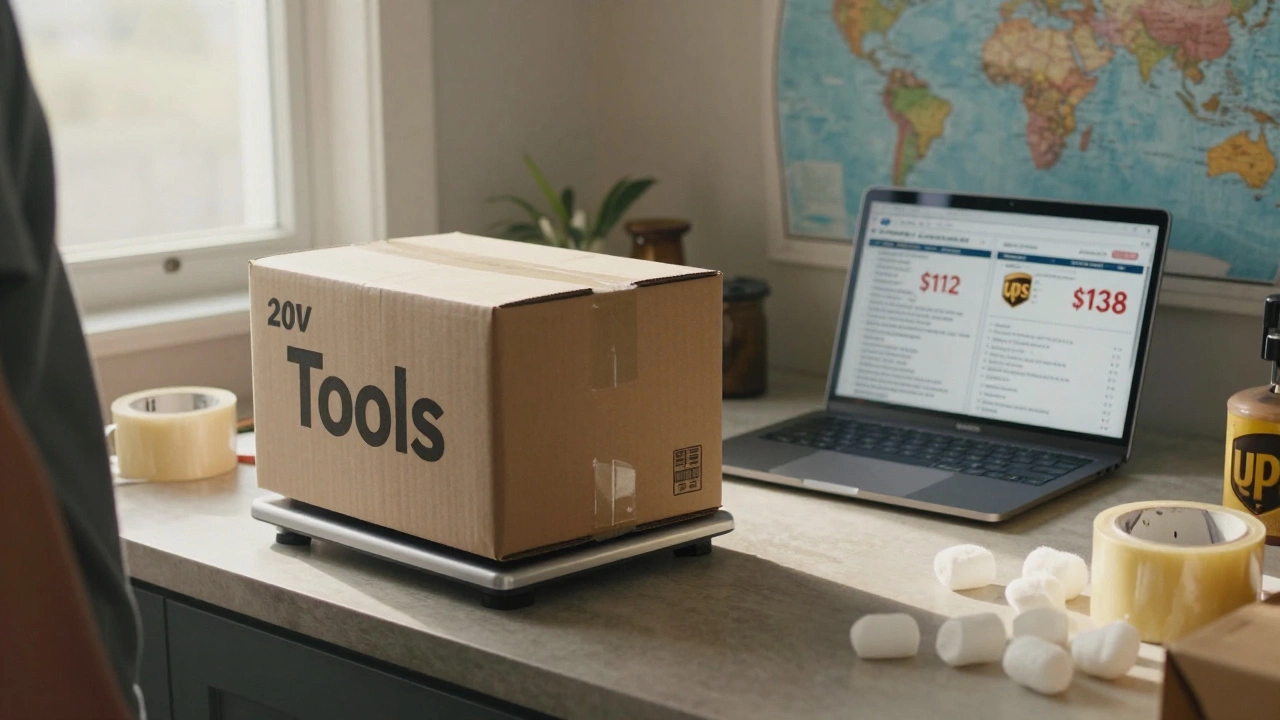
Let’s say you’re shipping a box of tools to Berlin. It weighs 25 pounds and measures 16×12×12 inches.
- USPS: Too big for flat rate. Dimensional weight = (16×12×12) ÷ 166 = 14 pounds. You pay for 25 pounds (actual weight is higher). Cost: $112.
- UPS: Actual weight 25 lbs, dimensional weight = (16×12×12) ÷ 139 = 17 pounds. You pay for 25. Cost: $138.
USPS wins by $26. But if the box was 20×20×20 inches?
- USPS: Dimensional weight = (20×20×20) ÷ 166 = 48 pounds. You pay for 48. Cost: $215.
- UPS: Dimensional weight = (20×20×20) ÷ 139 = 57 pounds. You pay for 57. Cost: $275.
Now UPS is more expensive-but both are overpriced. You’d be better off splitting the box into two smaller ones or using a freight service.
When UPS Is the Only Smart Choice
There are times when USPS just won’t cut it:
- You need guaranteed delivery by a specific date.
- You’re shipping to a country where USPS doesn’t have a direct agreement.
- Your package is over 70 pounds.
- You need full tracking and signature confirmation.
- You’re shipping commercial goods and need a commercial invoice pre-filled.
UPS also offers customs clearance services built into their system. USPS makes you print and attach forms yourself. If you’ve ever had a package stuck in customs for weeks because of a missing form, you know how valuable that is.
Pro Tip: Always Compare on the Same Day
Shipping rates change daily. Fuel surcharges, seasonal demand, and currency fluctuations all affect prices. A quote you get on Monday might be $20 higher on Wednesday. Always enter your exact weight, dimensions, and destination into both carriers’ websites on the same day. Don’t trust last week’s numbers.
Also, check if you qualify for discounts. If you ship regularly, UPS offers business accounts. USPS offers discounted rates through online postage services like Pirate Ship or Shippo. You can save up to 40% off retail prices with these tools.
Bottom Line: Which One Should You Pick?
If your box is under 20 pounds, compact, and going to a country with strong USPS ties (Canada, UK, Australia, Germany, Japan), go with USPS. You’ll save money and still get decent delivery times.
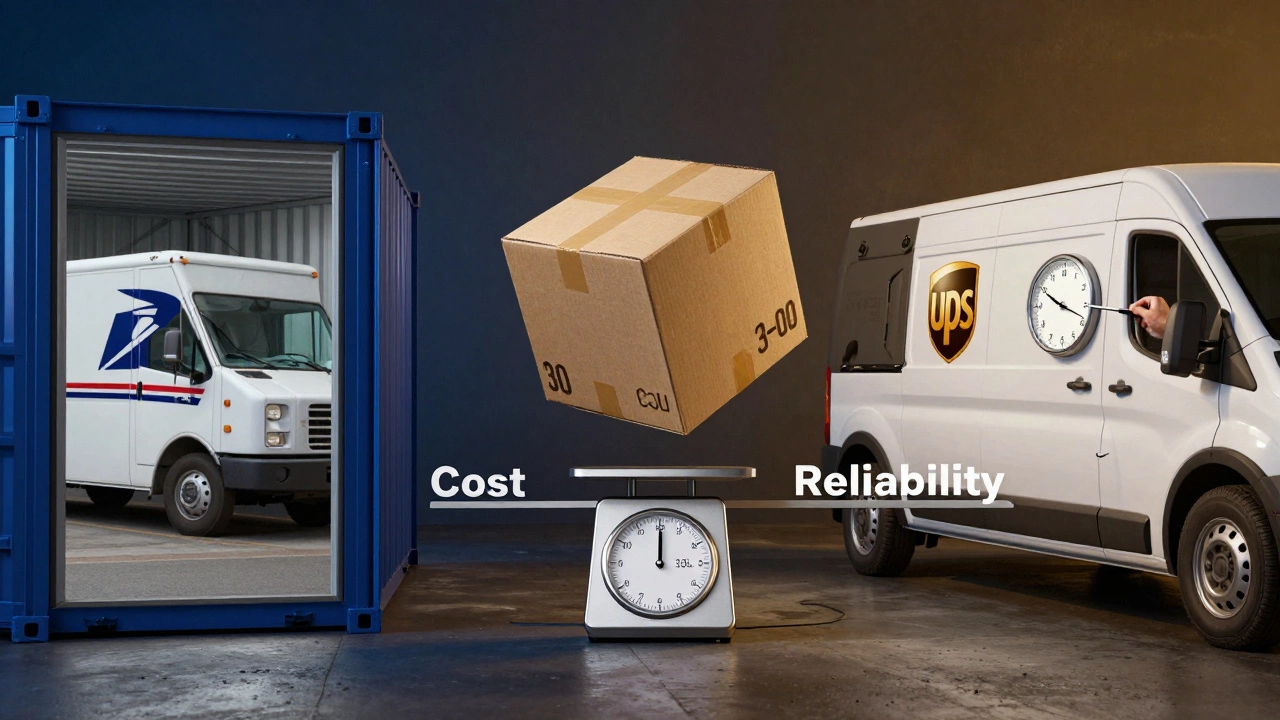
If your box is over 20 pounds, bulky, going to a country without strong postal ties, or you need guaranteed speed and reliability-go with UPS. You’ll pay more, but you won’t risk delays, lost packages, or customs headaches.
And if you’re shipping over 70 pounds? Neither UPS nor USPS is your best bet. Look into freight carriers like DHL Freight, FedEx Freight, or local international movers. They handle pallets, crates, and heavy machinery-and often cost less per pound than parcel services.
There’s no universal winner. But if you know your weight, your dimensions, your destination, and your deadline-you’ve already won half the battle.