How to Reduce Overseas Shipping Costs: Proven Strategies for 2025
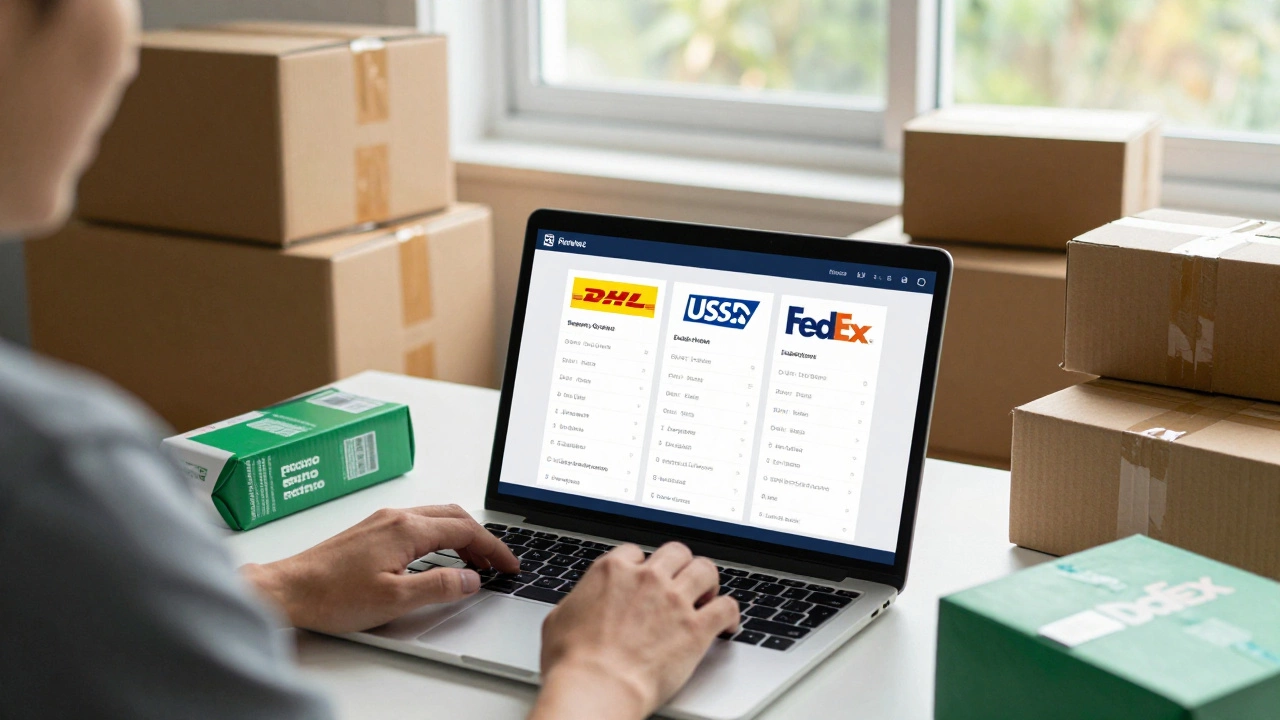
Dimensional Weight Calculator
Calculate dimensional weight to avoid hidden shipping fees. Carriers charge based on the larger of actual weight or dimensional weight.
Shipping goods overseas doesn’t have to drain your budget. If you’re sending packages abroad-whether you’re an online seller, a small business owner, or someone sending gifts to family-you’ve probably seen how quickly shipping fees add up. The good news? There are real, practical ways to cut those costs without sacrificing speed or reliability. In 2025, with new carrier rules, digital tools, and smarter packing habits, you can slash your overseas shipping bills by 30% or more.
Choose the Right Shipping Method
Not all international shipping is created equal. You’ve got three main options: express couriers, standard postal services, and freight shipping. Each has a different price point and speed.Express services like DHL, FedEx, or UPS are fast-often 2-5 days-but they cost 3-5 times more than standard options. Use these only for urgent items like medical supplies or time-sensitive parts.
For most small parcels, national postal services like New Zealand Post, Australia Post, or USPS offer better value. They use local networks abroad to deliver, which cuts down on last-mile costs. A 2kg package to the UK might cost $45 via DHL but only $22 via postal service.
If you’re shipping 50kg or more, freight shipping (either LCL or FCL) becomes the smart move. LCL (Less than Container Load) lets you share a container with others. A 200kg shipment to Canada might cost $800 via air freight but only $220 via LCL sea freight. It takes longer-3-6 weeks-but for non-perishable goods, that’s a no-brainer.
Optimize Package Size and Weight
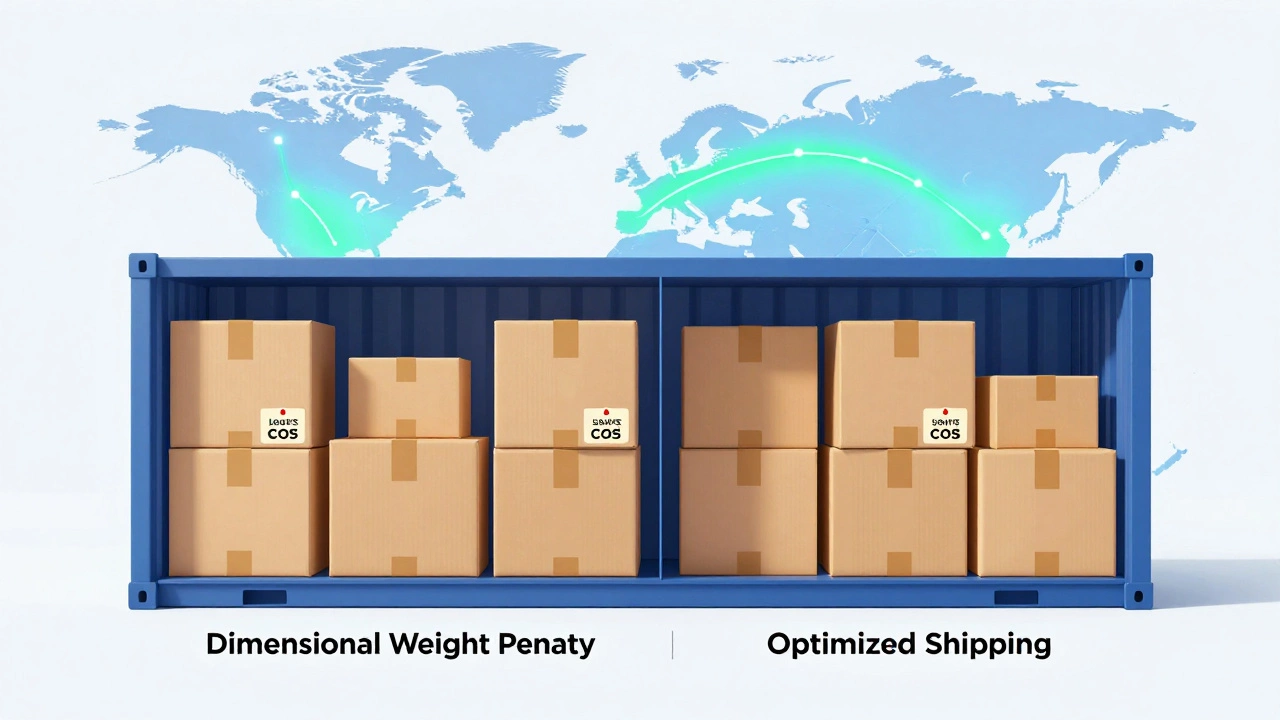
Carriers don’t just charge by weight. They charge by dimensional weight-a formula based on package volume. This trips up a lot of people.Dimensional weight = (Length × Width × Height) ÷ dimensional factor. Most international carriers use 5000 for metric (cm) or 139 for imperial (inches). If your box is big but light, you’ll pay for the space it takes up, not just the weight.
Example: A 30cm × 30cm × 30cm box weighing 1.5kg has a dimensional weight of (30×30×30) ÷ 5000 = 5.4kg. You’ll pay for 5.4kg, not 1.5kg. That’s 260% more than you think.
Solution? Pack tight. Use mailers or rigid boxes that fit the product snugly. Remove air. Don’t use oversized boxes just because they’re free. If you’re shipping 10 identical items, ship them together in one box instead of 10 separate ones. You’ll save on handling fees and dimensional charges.
Use Local Warehousing
If you sell regularly to the same countries-say, the US, UK, or Germany-consider storing inventory there. This is called local fulfillment.Instead of shipping one item at a time from New Zealand, you send a bulk shipment overseas once every 2-3 months. Then, local warehouses handle the final delivery. A parcel shipped from a US warehouse to a customer in California costs around $3.50. Shipping the same item from Wellington? $28.
Platforms like Amazon FBA, ShipBob, or Easyship integrate with local fulfillment centers. You pay a small monthly fee and per-item storage cost, but your shipping rates drop dramatically. For businesses shipping over 50 items/month to the same region, this cuts costs by 60-70%.
Compare Carrier Rates with Online Tools
Don’t just use the first carrier you find. Rates vary wildly-even between the same company’s different branches.Tools like Shippo, Parcel Monkey, or Easyship let you compare real-time quotes from 15+ carriers in seconds. You can filter by price, delivery time, or customs handling. One seller in Christchurch used Shippo to find a Hong Kong-based carrier that charged 40% less than New Zealand Post for shipments to Southeast Asia.
These platforms also auto-generate customs forms, which reduces delays and avoids costly penalties. Manual paperwork errors cause 18% of international shipments to be held up at customs. Automated forms cut that risk to under 3%.
Know Your Customs Rules
Customs fees and duties are often the hidden cost that blows up your shipping budget. Many sellers assume the buyer pays them-but that’s not always true.In the EU, if your package is worth more than €150, the recipient pays VAT. In the US, items under $800 are duty-free. In Australia, anything over AUD 1,000 triggers GST and possible import tax.
Here’s what you can do:
- Break up large shipments into smaller ones under duty thresholds.
- Clearly label items with accurate values and HS codes (Harmonized System codes). Mislabeling = fines or seizure.
- Use a courier that offers DDP (Delivered Duty Paid). They collect taxes upfront, so your customer isn’t surprised. It builds trust.
One Auckland-based jewelry seller started using DDP for all US shipments. Their return rate dropped by 42% because customers weren’t hit with surprise fees.
Consolidate Shipments
If you’re sending multiple items to the same person or country, combine them. One big shipment is cheaper than ten small ones.Let’s say you’re shipping 5 different products to a customer in Canada. Instead of sending them separately, bundle them into one box. You pay one base fee, one customs form, and one handling charge. That’s 60-70% less than sending them individually.
Even better: use a freight forwarder. They collect your packages from multiple suppliers, consolidate them into one shipment, and handle the entire international leg. You pay one flat rate. Companies like Flexport or Freightos specialize in this for small businesses.
Ship During Off-Peak Times
Like airfare, shipping prices spike during holidays and peak seasons. Black Friday, Christmas, and back-to-school periods see 25-40% rate hikes.Plan ahead. If you know you’ll have holiday sales, ship inventory overseas in September or October-not November. Avoid sending packages the week before Christmas. Carriers are overloaded. Rates go up. Delays happen.
Even within the year, some months are cheaper. January and August are typically low-demand months for international freight. You can save 15-20% by scheduling shipments then.

Use Eco-Friendly Packaging to Save Money
It sounds odd, but sustainable packaging can cut costs. Lightweight, recyclable mailers and paper-based padding are cheaper than plastic bubble wrap and foam peanuts.Plus, many countries now charge extra for non-recyclable packaging. The EU’s Single-Use Plastics Directive fines companies that use plastic fillers. New Zealand Post gives a 5% discount on international shipments using certified eco-packaging.
Switch to molded pulp, recycled paper, or compostable air pillows. You reduce weight, avoid penalties, and appeal to eco-conscious buyers who are willing to pay more for sustainable brands.
Negotiate With Carriers
Even small businesses can get better rates. If you’re shipping more than 20 packages a month, call your carrier directly. Ask for a business account.Many carriers have hidden discount tiers. One Wellington-based retailer was paying $38 per package to the UK. After asking for a volume discount, they got $29-with no change in service. They didn’t even need to commit to a contract.
Tip: Mention competitors’ rates. Say, “I’m getting $25 from another provider for the same service.” Often, they’ll match it to keep your business.
Track and Audit Your Shipping Costs
You can’t fix what you don’t measure. Keep a simple spreadsheet: date, destination, weight, carrier, cost, and delivery time.After 3 months, look for patterns. Are you overpaying for shipments to Brazil? Is one carrier consistently late? Are you accidentally shipping items that cost more to send than they sell for?
One online seller in Dunedin found that 12% of their shipments were to countries where the shipping cost exceeded the item’s profit margin. They stopped selling to those markets-and their overall profit jumped 22%.
Review your shipping costs quarterly. Even small tweaks-like switching carriers or adjusting packaging-add up fast.