Who Is the Biggest Logistics Company in the World Today?

Logistics Company Selector
Find the best logistics provider for your shipment
Based on the article's analysis of the world's top logistics companies, this tool will recommend which company is best suited for your specific shipping needs.
When you order something online and it shows up at your door in two days, someone behind the scenes is running one of the most complex machines on the planet: global logistics. But who actually runs the biggest one? It’s not just about how many trucks they have or how many packages they move-it’s about reach, infrastructure, revenue, and the ability to move anything, anywhere, on any schedule. The answer might surprise you.
It’s Not Who You Think
Many people assume Amazon is the biggest logistics company. After all, they deliver millions of packages a day, own their own planes, and even have delivery vans with their logo on them. But Amazon isn’t a logistics company by primary business model. They’re a retailer that built logistics to support their retail operations. Their logistics arm, Amazon Logistics, moves a ton of stuff-but it’s mostly for Amazon’s own sales. They don’t offer shipping services to other businesses the way a true logistics provider does. The real giants are the ones who move goods for everyone else: retailers, manufacturers, hospitals, governments. And when you look at total revenue, global network size, and workforce, one name stands out: DHL.DHL: The Global Powerhouse
DHL, owned by the German postal giant Deutsche Post, reported over €80 billion in revenue in 2024. That’s more than FedEx, more than UPS, and more than all other competitors combined in international express delivery. They operate in over 220 countries and territories. Even in places where other companies won’t go-remote islands, conflict zones, Arctic supply routes-DHL shows up. They don’t just move envelopes. DHL handles oversized machinery, life-saving vaccines, military equipment, and high-value electronics. Their air fleet includes over 270 aircraft. Their ground network spans 450,000 delivery vehicles. They have 600,000 employees worldwide. That’s bigger than the population of many small countries. Their dominance isn’t accidental. DHL built its network piece by piece over 50 years. They bought local couriers in emerging markets early. They invested in customs clearance tech before anyone else. They understood that in logistics, the hardest part isn’t moving the box-it’s getting it past borders, taxes, and paperwork. DHL made that their specialty.FedEx and UPS: The American Contenders
FedEx and UPS are massive. Both are American companies with deep roots in domestic shipping. FedEx reported $90 billion in revenue in 2024, but that includes a lot of freight and supply chain services beyond express delivery. UPS brought in $100 billion, mostly from U.S. ground delivery and warehouse operations. But here’s the catch: most of their revenue comes from within North America. FedEx’s international revenue is about 25% of its total. UPS’s international business is around 18%. DHL’s international revenue? Over 70%. That’s the difference between being a national leader and a global one. UPS has the largest ground network in the U.S. FedEx has the fastest overnight air service. But if you need to ship a pallet from Jakarta to Lagos, then to Kinshasa, and get it cleared through customs in under 72 hours? DHL is the only one with the infrastructure to make that happen reliably.Why Size Matters in Logistics
Bigger isn’t always better-but in logistics, scale creates real advantages. The bigger the network, the more you can consolidate shipments. That lowers costs. The bigger the fleet, the more flexibility you have with routing. The bigger the workforce, the better you can handle spikes during holiday seasons or global disruptions. DHL’s size lets them offer services others can’t. For example, they have dedicated lanes for pharmaceuticals that meet strict temperature and security standards. They run 24/7 customs brokerage teams in 150 countries. They even have specialized teams that handle the logistics of moving wind turbine blades or MRI machines across continents. Smaller companies can be faster or cheaper in local markets. But when you’re shipping across six borders, dealing with three different currencies, and needing real-time tracking with compliance documentation? You need a company that’s built for the global game.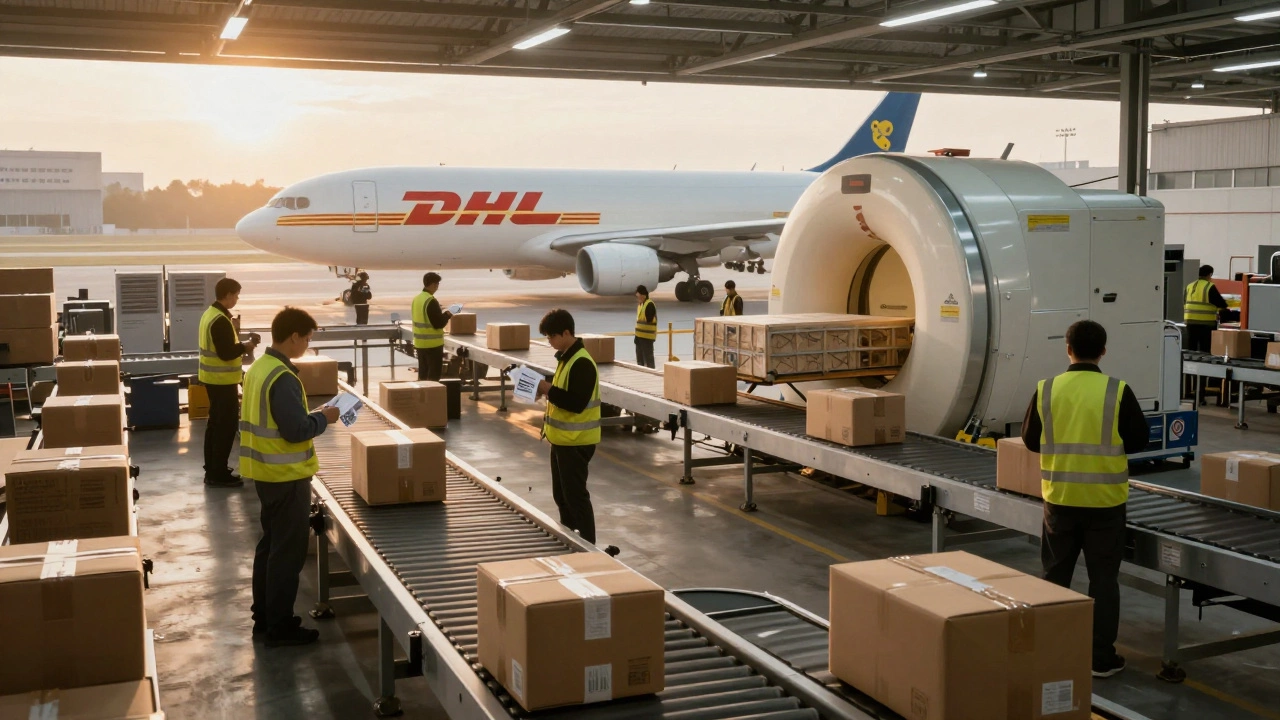
What About Alibaba’s Cainiao?
You’ve probably heard of Cainiao, Alibaba’s logistics arm. It’s growing fast. Cainiao doesn’t own trucks or planes. Instead, it’s a digital platform that connects carriers, warehouses, and delivery partners across Asia and beyond. They’ve built an impressive tech stack-AI-powered routing, automated sorting centers, and real-time tracking visible to customers. But Cainiao doesn’t operate its own delivery trucks in most countries. It’s a coordinator, not a carrier. That’s a different business model. Think of it like Uber: they don’t own cars, but they connect riders to drivers. Cainiao does the same with logistics. It’s powerful, especially in e-commerce, but it’s not the same as owning the entire supply chain from warehouse to doorstep.The Real Winner: Who Moves the Most?
If you measure by revenue, DHL wins. If you measure by packages delivered, UPS leads in volume-mostly because of its massive U.S. domestic network. If you measure by speed and reliability in international shipping, DHL still leads. If you measure by tech innovation, Cainiao is rising fast. But when you combine all the factors-global presence, infrastructure ownership, workforce, revenue, and ability to handle complex, high-stakes shipments-DHL is the undisputed leader. They’re the only company that can move a shipment from a factory in Vietnam to a hospital in Brazil, through five customs checkpoints, without a single delay.What This Means for You
If you’re a small business shipping internationally, you don’t need DHL for every package. Sometimes, a local courier or a budget option like SF Express or Aramex works better. But if you’re shipping high-value goods, time-sensitive medical supplies, or complex machinery? DHL’s network is your safest bet. If you’re a consumer, you might see FedEx or UPS on your doorstep because they dominate North America. But behind the scenes, your online order from Europe or Asia likely traveled on a DHL plane before it reached your local carrier. The biggest logistics company isn’t the loudest. It doesn’t run flashy ads during the Super Bowl. It just shows up-everywhere, every day-moving the world’s goods, quietly and reliably.
How the Big Three Compare
| Company | Revenue | Global Presence | Employees | Key Strength |
|---|---|---|---|---|
| DHL | €80+ billion | 220+ countries | 600,000+ | International express, customs expertise |
| UPS | $100 billion | 220+ countries | 550,000+ | U.S. ground delivery, warehouse networks |
| FedEx | $90 billion | 220+ countries | 550,000+ | Express air freight, time-definite delivery |
Notice something? UPS and FedEx have higher total revenue, but DHL earns more from international shipping-where margins are higher and competition is tougher. That’s why DHL is the true global leader.