Which Side of the Curtain Should Face Outside? A Practical Guide
Curtain Orientation Guide
Select your curtain characteristics below to get the recommended orientation for hanging.
You’ve just bought a gorgeous set of curtains. The color is perfect, the length is right, and you’re ready to hang them. But then you pause, holding the panel in mid-air, wondering: which way do they go? Is there actually a "right" side facing the street, or are we overthinking it?
Here’s the short answer: for most modern curtains, the finished, smooth side faces out toward the room, and the rougher, often lined side faces the window. But that simple rule hides a few important details about fabric types, linings, and how light hits your windows. Getting this wrong can make expensive drapes look cheap, cause uneven fading, or even let more heat into your home than you’d like.
The General Rule: Finished Side Out
Curtains are window coverings typically made from fabric, designed to control light, privacy, and temperature. When manufacturers sew them, they usually treat one side as the "face" and the other as the "back." The face is the pretty side-the one with the sheen, the pattern, or the smooth weave. The back is where the seams are hidden, where the header tape is stitched, and often where a lining is attached.
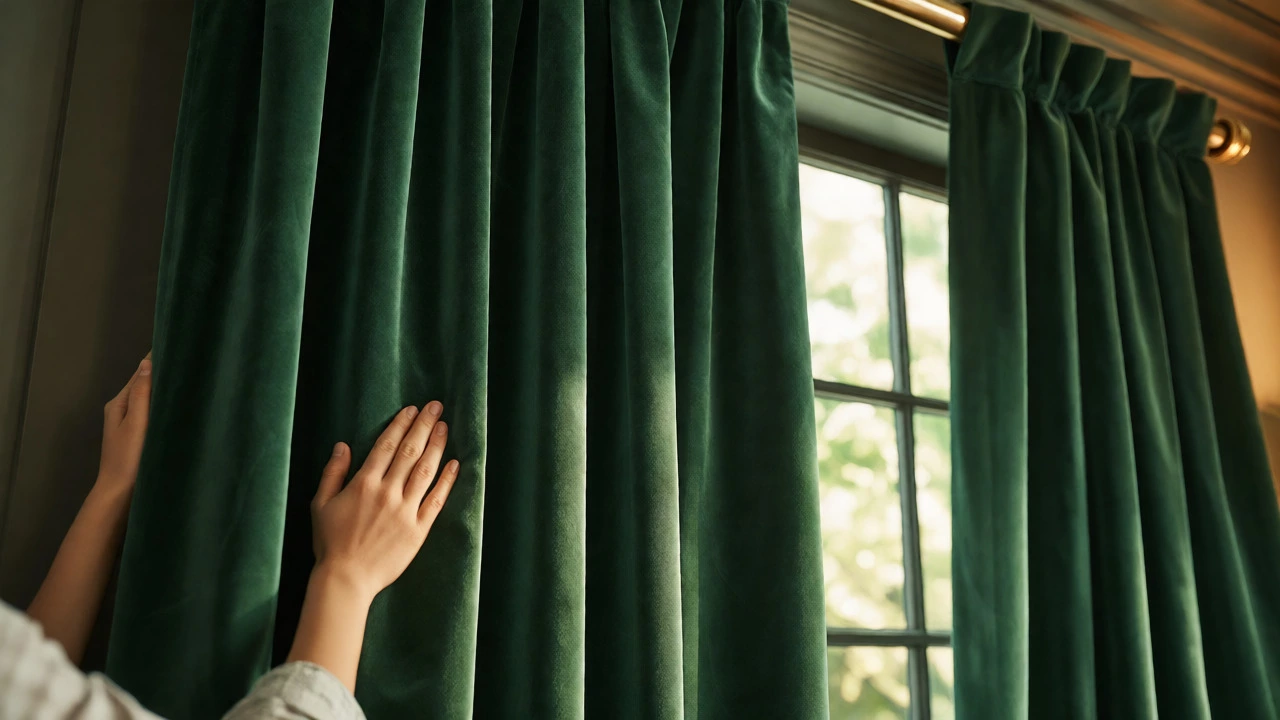
Why does this matter? Because fabrics have a direction. Velvet, for example, has a pile-a nap-that changes color depending on which way you stroke it. If you hang velvet with the nap facing the window, sunlight will hit the fibers at an angle that might make the color look dull or muddy. Facing the nap toward the room ensures the rich, deep color you paid for is what you see when you walk in.
Even without a nap, many fabrics have a slight sheen or texture difference between front and back. Manufacturers assume you want the best-looking side visible to people inside the house. After all, you spend more time looking at the room than staring directly at the glass.
When Linings Change the Equation
If your curtains come with a separate lining, things get a bit more technical. Linings serve two main jobs: protecting the outer fabric from sun damage and adding weight so the curtains hang properly. Usually, the lining is attached to the back of the curtain panel. This means the lining naturally ends up facing the window.
But here’s where people get confused. Some high-end blackout linings are white or cream-colored on the side that touches the window glass. Others are black. Does the color of the lining matter? Yes, but not for the reason you think. It matters for heat reflection and light leakage.
| Curtain Type | Recommended Orientation | Reasoning |
|---|---|---|
| Unlined Sheers | Either side (usually symmetrical) | No distinct face/back; light passes through equally. |
| Lined Drapes | Face out, Lining in (towards window) | Protects decorative fabric from UV rays; hides stitching. |
| Blackout Curtains | Face out, Blackout layer towards window | Prevents light bleed; keeps room dark for sleep. |
| Velvet/Napped Fabric | Nap facing into the room | Enhances color depth and richness under indoor lighting. |
A white-lined curtain facing the window reflects some heat back outside, helping keep your room cooler in summer. A black-lined curtain absorbs heat, which can help warm a room in winter but might make the fabric hotter. If you live in Wellington, where the southerly winds bring chill but the sun still shines brightly during the day, balancing these factors helps with energy efficiency.
Decoding Fabric Nap and Texture
Not all fabrics play nice with symmetry. Materials like Velvet, Suede, and certain Taffeta weaves have a directional grain called a nap. Think of it like brushing a cat-if you brush against the fur, it looks different than if you brush with it.
For napped fabrics, the standard advice is to orient the nap so it runs downward and faces into the room. Why? Because when light hits the fabric from the window, you want the fibers to catch the light in a way that highlights their luster. If the nap faces the window, the light source is behind the fibers relative to your eye, often resulting in a flatter, less vibrant appearance.
How do you check? Run your hand down the fabric. If it feels smooth going down and rough going up, that’s the nap direction. Hang the curtain so the smooth direction points down and away from the window. If you get it backwards, the curtains might look patchy or discolored in certain lights.
Privacy and Light Control Considerations
Sometimes, aesthetics take a backseat to function. If you live on a busy street or in an apartment block close to neighbors, privacy is king. In these cases, the question isn’t just about beauty-it’s about opacity.
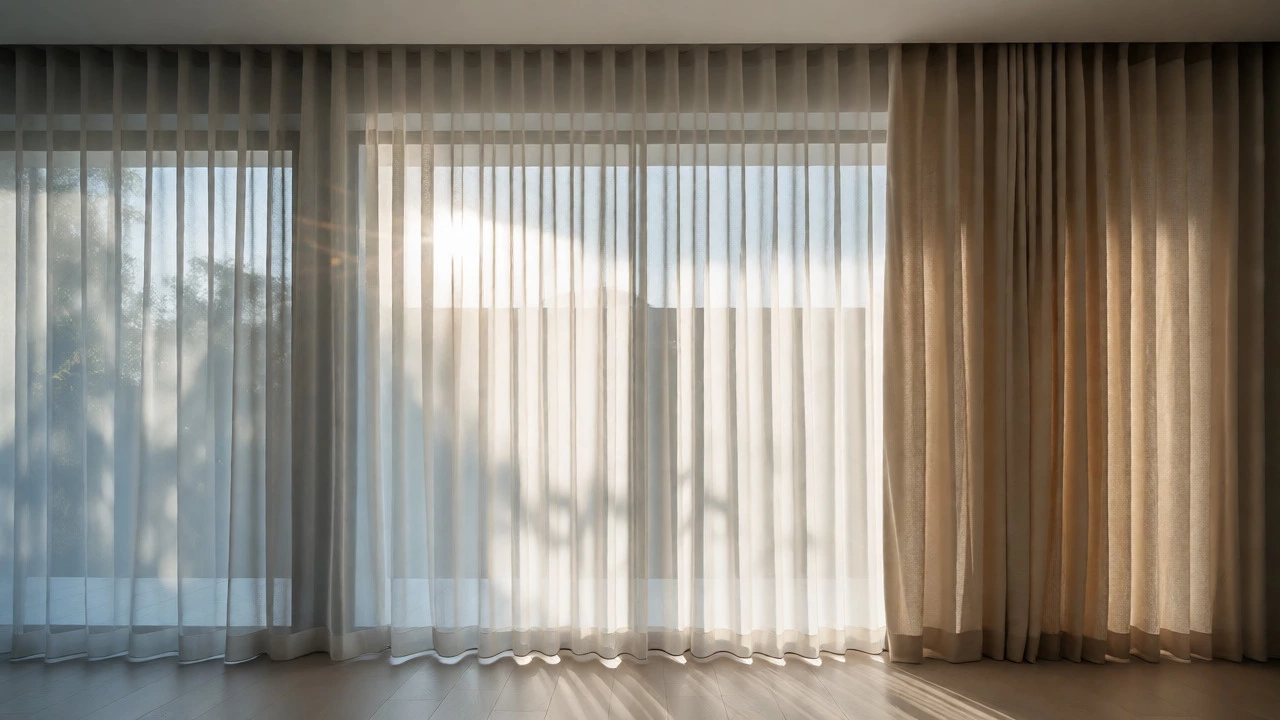
Thin cotton or linen curtains might be semi-sheer. If you hang them with the textured side facing out, the texture might cast interesting shadows inside, but it also means passersby see the texture too. Usually, this doesn’t matter much. However, if you have a specific privacy concern, consider using double layers: a sheer curtain closest to the glass and a heavier drape further into the room.
In this setup, the sheer acts as a daytime privacy screen while letting light in. The heavy drape provides night-time privacy and insulation. Here, the orientation of the heavy drape follows the standard rule (pretty side in), but the sheer can often go either way unless it has a printed pattern. If the sheer has a print, the print should face the room so you enjoy it, not the street.
Common Mistakes to Avoid
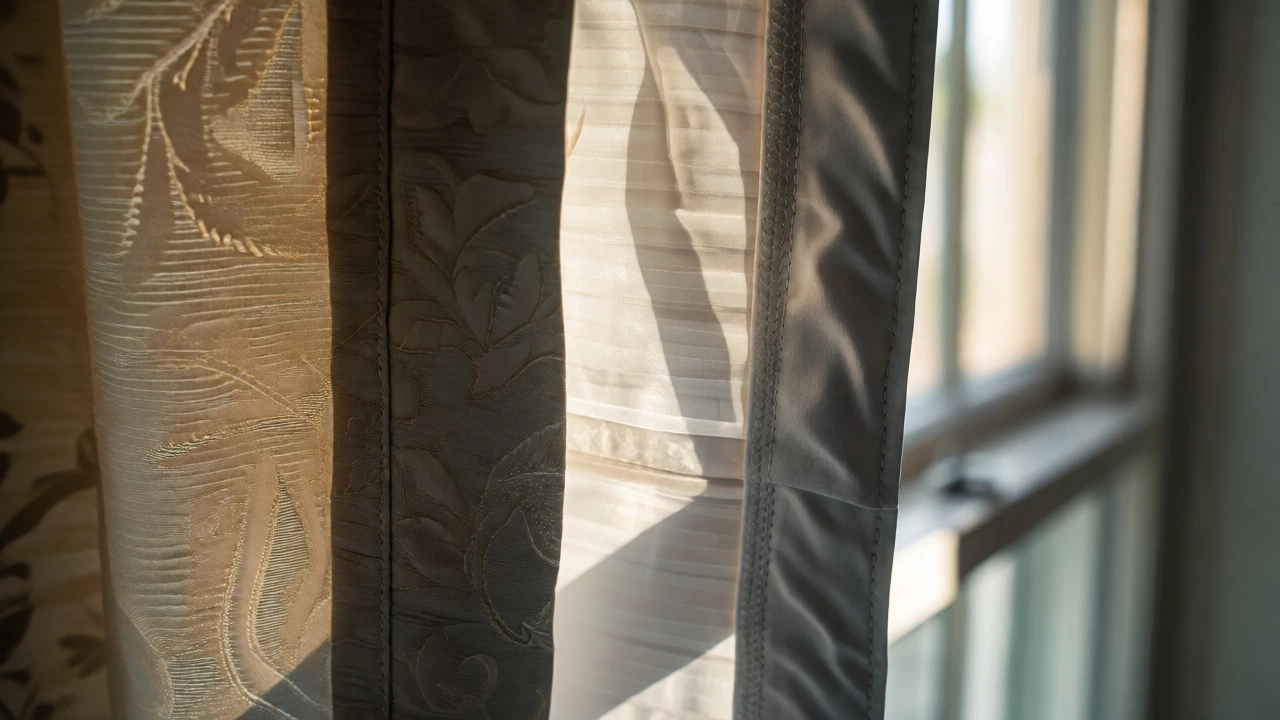
One frequent error is assuming all curtains are reversible. They aren’t. Check the hem. On most mass-produced curtains, the bottom hem is finished cleanly on one side and folded over on the other. The clean side goes out. Another mistake is ignoring the header. The pleats or rings are constructed to look best from the front. Hanging them backward makes the hardware look messy and the folds uneven.
Also, don’t forget about fading. Direct sunlight bleaches colors. If you hang a delicate silk curtain with the fragile side facing the window, it will degrade faster. The lining acts as a shield. Always ensure the lining is between the sun and the decorative fabric. If your curtains aren’t lined, consider buying a separate liner or accepting that the life span of the fabric will be shorter.
Special Cases: Outdoor Curtains and Cafe Styles
What if you’re hanging curtains on a porch or balcony? Outdoor curtains are different. They are often made from synthetic materials like polyester or olefin, which are weather-resistant and frequently solution-dyed. These fabrics are often more uniform and less prone to fading issues related to nap. For outdoor use, durability trumps aesthetics. You might choose the side that resists water better or holds its shape better against wind. Often, these are reversible, so flip them occasionally to balance wear.
Cafe curtains, which only cover the lower half of a window, follow the same rules as full-length drapes. Pretty side in, rough side out. Since they don’t reach the floor, dirt accumulation isn’t as big a worry, but light exposure still affects color longevity.
Quick Checklist Before You Hang
- Check the Label: Most quality curtains have a tag indicating "Front" or "Back." Trust the manufacturer.
- Inspect the Seams: The side with visible stitching or raw edges is the back.
- Feel the Nap: For velvet or suede, run your hand down. Smooth side down = good.
- Look for Lining: If there’s a lining, it always goes toward the window.
- Test the Light: Hold the curtain up to a lamp. See which side glows better. Choose the side that looks richer indoors.
Frequently Asked Questions
Do I really need to line my curtains?
You don't strictly *need* to, but you should. Linings protect the outer fabric from UV fading, add weight for better hanging, and improve thermal insulation. Without a lining, thin fabrics will fade quickly and may feel flimsy.
Can I wash curtains before hanging them?
Yes, and you often should, especially for cotton or linen, to prevent shrinking after installation. Always check the care label first. Washing can also soften stiff new fabrics, making them hang more naturally.
What if my curtains are reversible?
If both sides look identical, you can choose based on preference. Some people prefer the side that matches their wall color, while others prefer the side that contrasts. With reversible curtains, there is no functional downside to either choice.
Does the direction affect cleaning?
Not significantly. Dust settles on both sides, though the side facing the room gets more direct contact. Regular vacuuming with a brush attachment helps maintain cleanliness regardless of orientation.
How do I know which side is the front if there are no tags?
Look for clues: the smoother side is usually the front. The side with the header tape pockets or hooks is the back. Also, patterns often look sharper and more defined on the front side.