What Size Boxes Does USPS Have for Priority Mail? Full Guide to Dimensions and Uses
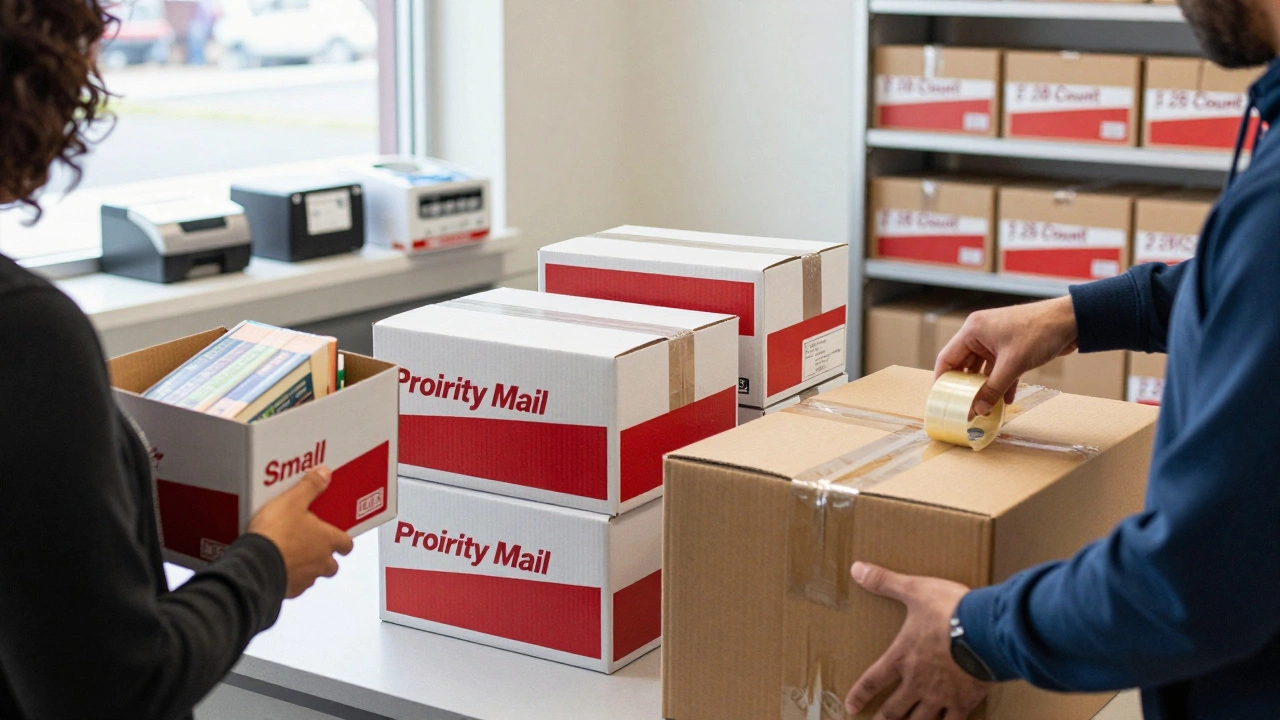
USPS Priority Mail Box Size Calculator
Measure Your Item
When you need to ship something fast - like a birthday gift, a replacement part, or a small business order - USPS Priority Mail is one of the most reliable options for next-day or two-day delivery across the U.S. But if you’ve ever stood in front of a USPS counter wondering, ‘Which box do I grab?’, you’re not alone. The good news? USPS offers a set of standardized Priority Mail boxes that are free, pre-printed with the right labels, and designed to fit common shipping needs.
USPS Priority Mail Boxes: The Official Options
USPS doesn’t make you buy boxes. They give them to you for free - yes, really. You can pick them up at any Post Office, or order them online in packs of 10 or 25. There are nine official Priority Mail box sizes, each with exact dimensions and weight limits. These aren’t just cardboard containers; they’re engineered for speed, durability, and stacking in sorting centers.
Here’s the full list of what’s available as of 2026:
- Priority Mail Small Flat Rate Box - 8 11/16” x 5 7/16” x 1 3/4” (holds up to 70 lbs)
- Priority Mail Medium Flat Rate Box (1) - 11” x 8 1/2” x 5 1/2” (70 lbs max)
- Priority Mail Medium Flat Rate Box (2) - 14” x 12” x 3 1/2” (70 lbs max)
- Priority Mail Large Flat Rate Box - 12” x 12” x 5 1/2” (70 lbs max)
- Priority Mail Large Flat Rate Box (Alternative) - 11 1/4” x 8 3/4” x 6” (70 lbs max)
- Priority Mail Regional Rate Box A (East) - 12” x 12” x 4” (20 lbs max)
- Priority Mail Regional Rate Box B (East) - 13 5/8” x 11 5/8” x 3 3/8” (20 lbs max)
- Priority Mail Regional Rate Box A (West) - 12” x 12” x 4” (20 lbs max)
- Priority Mail Regional Rate Box B (West) - 13 5/8” x 11 5/8” x 3 3/8” (20 lbs max)
Notice something? The Flat Rate boxes all have the same price no matter where you’re sending them in the U.S. - $9.65 for Small, $15.75 for Medium, and $21.90 for Large as of January 2026. That’s a big deal if you’re shipping across the country. Regional Rate boxes are cheaper but only work for shorter distances - think neighboring states.
Flat Rate vs. Regional Rate: What’s the Difference?
Flat Rate boxes are your go-to for long-distance shipping. Whether you’re sending a book from New York to California or a laptop from Florida to Washington, the price stays the same. The box size is the only factor - not weight, not distance. As long as it fits and doesn’t exceed 70 lbs, you’re covered.
Regional Rate boxes, on the other hand, are designed for shorter hauls. They’re cheaper than Flat Rate, but only if your package travels within a specific zone. For example, a Regional Rate Box A going from Chicago to Milwaukee might cost $7.95, but the same box going from Chicago to Denver could cost $12.50. You need to know your destination zone to use these correctly.
Most small businesses and home shippers stick with Flat Rate. Why? Simplicity. You don’t need to look up zones. You don’t need to weigh the box before printing the label. Just pack it, seal it, drop it off.
What Fits in Each Box?
Choosing the right box isn’t just about size - it’s about what you’re sending. Here’s what actually fits:
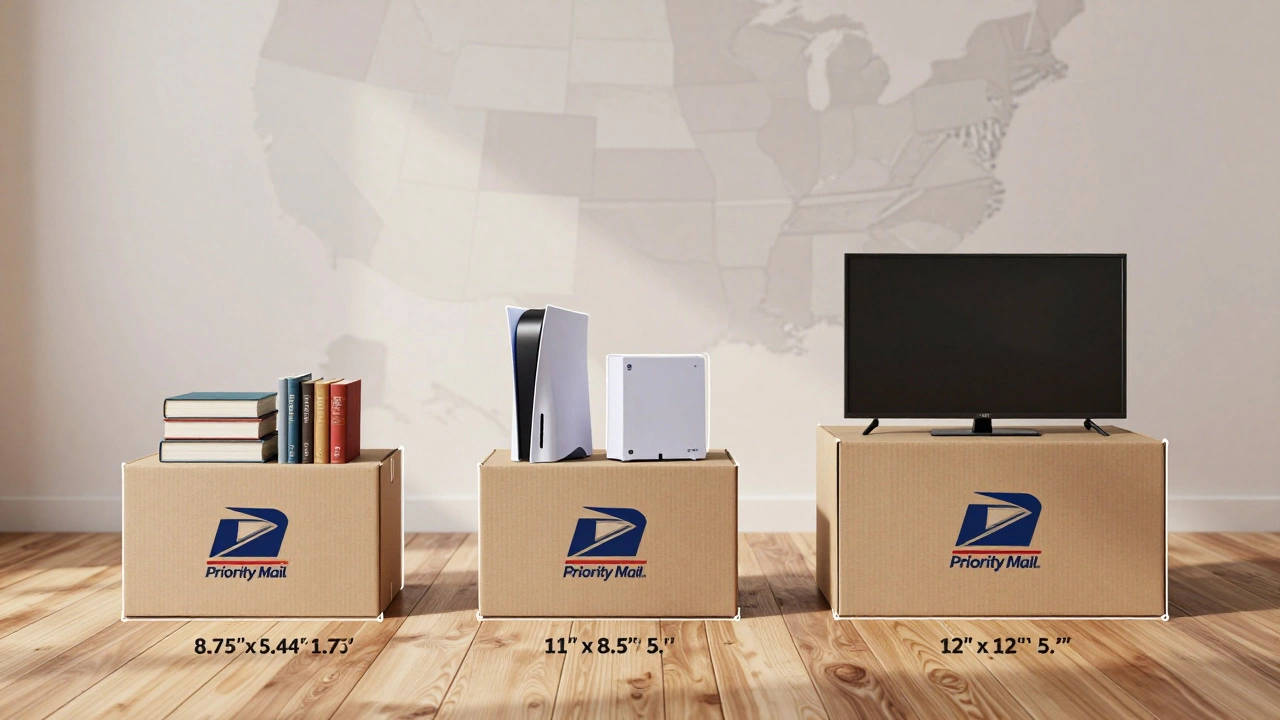
- Small Flat Rate Box: Perfect for books, DVDs, small electronics, jewelry boxes, or a pair of shoes. It’s the size of a large paperback.
- Medium Flat Rate Box (1): Fits a small gaming console, a stack of 15-20 books, or a set of kitchenware like plates and mugs.
- Medium Flat Rate Box (2): Deeper and wider - great for board games, photo albums, or a small printer.
- Large Flat Rate Box: This is the one you grab for a small TV, a bicycle seat, a stack of clothing, or a collection of art prints. It’s roughly the size of a carry-on suitcase.
- Regional Rate Boxes: Ideal for heavier but compact items - think canned goods, tools, or small appliances - if you’re shipping within 200 miles.
Pro tip: If your item doesn’t fill the box, don’t just stuff it with paper. Use bubble wrap or packing peanuts. Empty space means your item can shift during transit. And USPS doesn’t pay for damage caused by poor packing.
Can You Use Your Own Box?
Yes - but only if you’re not using Flat Rate pricing. If you want to pay by weight and distance (not a flat fee), you can use your own box or any USPS-branded Priority Mail envelope. But if you want the Flat Rate price, you must use the official USPS box. No exceptions.
Many people try to save money by reusing Amazon boxes or old shipping cartons. That’s fine for regular Priority Mail (non-Flat Rate), but if you slap a Flat Rate label on a non-USPS box, the package will be rejected or reclassified - and you’ll get charged the higher rate.
Weight Limits and What Happens If You Go Over
All Priority Mail boxes have a 70-pound limit. That’s the federal weight cap for any single parcel shipped via USPS. If your box weighs more than 70 lbs, you can’t ship it as Priority Mail - you’ll need to switch to FedEx or UPS Ground.
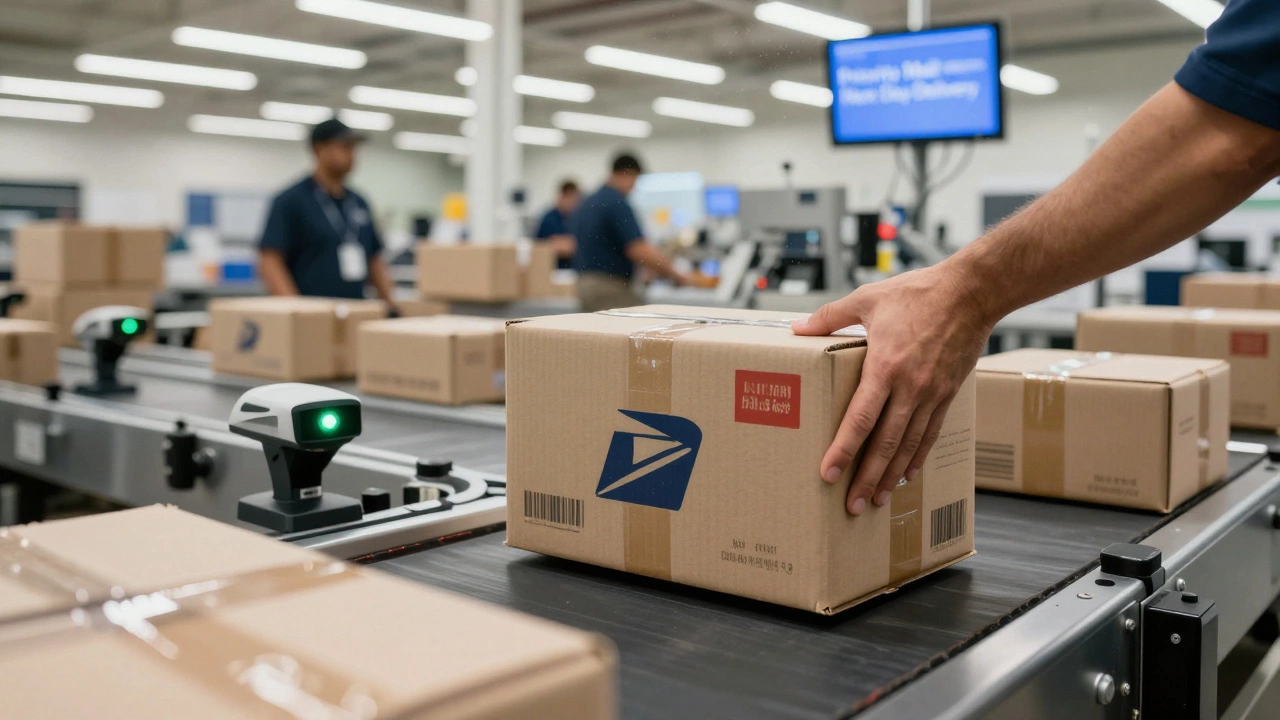
USPS scanners at distribution centers check weight automatically. If your box is over the limit, it gets diverted to a manual sorting area. You’ll get an email from USPS asking you to pay the difference or pick it up. In most cases, they’ll just reclassify it as Priority Mail Parcel Post - which is slower and costs more.
Always weigh your package before you print the label. A kitchen scale works fine. If you’re shipping a box of books, estimate: one hardcover book is about 1.5 lbs. Multiply that by how many you’ve packed.
How to Get Free USPS Priority Mail Boxes
Getting the right box is easy:
- Visit any U.S. Post Office - ask for ‘Priority Mail Flat Rate Boxes’ at the counter.
- Order them online at usps.com/shop - choose packs of 10 or 25. Free shipping to your door.
- Some post offices have self-service kiosks where you can print labels and pick up boxes.
Don’t buy boxes from Amazon or Walmart unless you’re using them for non-Flat Rate shipping. You’ll pay $2-$5 per box - money you don’t need to spend.
What to Avoid When Packing
Here are the most common mistakes people make:
- Using tape that isn’t strong enough - use packing tape, not masking or duct tape.
- Leaving old labels or barcodes on reused boxes - cover them completely.
- Overpacking - if the box bulges or won’t close, it’s too full.
- Shipping liquids, batteries, or aerosols without proper labeling - these require special handling and aren’t allowed in Flat Rate boxes without approval.
- Forgetting to include a return address - it’s required by law.
Also, never use string or twine to seal a box. It comes loose in transit. Always use tape - and tape all seams, especially the flaps.
Is Priority Mail Really Next Day?
USPS Priority Mail guarantees delivery in 1-3 business days. But in practice, most urban and suburban deliveries arrive in 1-2 days. If you drop your package off before 2 p.m. in a major city, it often arrives the next day - especially if it’s going to a nearby metro area.
Here’s what to expect:
- Same metro area: Next-day delivery is common.
- Neighboring state: Usually 2 days.
- Coast to coast: Typically 2 days, rarely 3.
Weekend drop-offs? If you drop your package off on Saturday, it won’t be processed until Monday. That adds a day. Plan ahead.
When to Choose Priority Mail Over Other Services
Priority Mail beats FedEx and UPS for small, lightweight items under 5 lbs - especially if you’re not in a hurry for same-day delivery. It’s cheaper than overnight services and faster than standard ground shipping.
Use it when:
- You need reliability without paying for overnight.
- You’re shipping to rural areas - USPS covers more addresses than FedEx or UPS.
- You want free packaging and tracking included.
- You’re shipping during holidays - Priority Mail has higher on-time rates than other carriers during peak season.
Don’t use it if:
- You need delivery by 10 a.m. - use Priority Mail Express instead.
- Your item weighs over 70 lbs.
- You’re shipping internationally - Priority Mail doesn’t cover that.
Can I reuse an old Priority Mail box?
Yes, you can reuse a Priority Mail box - as long as you cover or remove any old labels, barcodes, or text. If the box is damaged or the flaps won’t close securely, use a new one. USPS doesn’t mind if you reuse their boxes, but they won’t guarantee delivery if the box looks worn or mislabeled.
Do all Priority Mail boxes have the same price?
Only the Flat Rate boxes do. Small, Medium, and Large Flat Rate boxes all have fixed prices regardless of distance. Regional Rate boxes vary by zone. If you use your own box, you pay by weight and distance - which can be cheaper for very light items under 1 lb.
What’s the biggest Priority Mail box?
The largest standard Priority Mail box is the Large Flat Rate Box, measuring 12” x 12” x 5.5”. It can hold up to 70 pounds. There’s also a Priority Mail Large Flat Rate Box (alternative size) at 11.25” x 8.75” x 6”, which is slightly taller but narrower. Both are priced the same.
Can I ship fragile items in Priority Mail boxes?
Yes, but you must pack them properly. Use bubble wrap, foam inserts, or crumpled paper to cushion the item. Don’t let it rattle inside the box. Label it ‘Fragile’ if you want, but USPS doesn’t offer special handling for fragile items - so packing is your responsibility.
How do I know if my package is too heavy?
Weigh it before you print the label. Use a kitchen scale or a hanging scale. If you don’t have one, estimate: a 12” x 12” x 5.5” box filled with books will hit 70 lbs fast - 40 hardcovers is about 60 lbs. When in doubt, go lighter or split into two boxes.
Final Tip: Always Check the USPS Website Before You Ship
USPS updates rates and box availability twice a year - usually in January and July. The prices listed here are current as of January 2026, but always double-check usps.com before you print your label. Sometimes they add new box sizes or change Regional Rate zones. A quick check saves you money and stress.
For next-day delivery, Priority Mail is still the most balanced choice: affordable, reliable, and easy. Just pick the right box, pack it well, and drop it off early. You’ll be surprised how often it arrives faster than you expected.