What is the Generic Term for Dining Utensils? A Guide to Cutlery and Flatware
Dining Utensil Terminology Finder
Not sure which word to use? Select the scenario that best describes your situation below to find the most appropriate term.
Regional/UK Style
I am in the UK, Australia, or New Zealand, or I want to emphasize the 'cutting' aspect.
Retail/North American
I am shopping in a US store or referring to the 'flat' profile of the set.
Casual/Metallic
I'm speaking casually about shiny metal forks and spoons.
Formal/Full Set
I mean everything on the table, including plates and glasses.
Generic/Diverse
The tools are plastic, bamboo, or I want to be technically inclusive.
Recommended Term:
Quick Guide: Which Term Should You Use?
- Cutlery: Best for tools that cut (knives) or the general set in UK/Australian English.
- Flatware: The industry standard in North America for forks, spoons, and knives.
- Silverware: Used casually for any metal utensils, regardless of whether they are actually silver.
- Tableware: The widest possible term, including plates and glasses.
The Big Three: Cutlery, Flatware, and Silverware
If you're looking for the "correct" word, you have to look at the map. In the UK, Australia, and New Zealand, Cutlery is the go-to term. It stems from the word "cut," highlighting the knife's role in the set. If you ask for the cutlery in a London cafe, they know exactly what you mean: the knives, forks, and spoons. Across the pond in the United States, people prefer Flatware. This term describes the physical shape of the tools-they are "flat" compared to rounded kitchen pots. If you're shopping at a big-box retailer in Ohio, the signs will almost always say "Flatware Sets." It's a more clinical, commercial term that ignores the material entirely. You can have plastic flatware or stainless steel flatware. Then there is Silverware. This is where things get messy. Technically, silverware refers to utensils made of real silver. However, most of us use it as a generic term for anything shiny and metallic. You might tell a guest, "The silverware is in the second drawer," even if those tools are actually made of stainless steel. Using "silverware" for non-silver items is one of those linguistic habits that has just stuck around.| Term | Primary Region | Implied Material | Key Characteristic |
|---|---|---|---|
| Cutlery | UK / Commonwealth | Any | Emphasis on cutting tools |
| Flatware | North America | Any | Emphasis on flat profile |
| Silverware | Global (Casual) | Silver or Steel | Emphasis on metallic luster |
| Tableware | Global (Formal) | Ceramic/Glass/Metal | Includes all table settings |
The Hierarchy of Tableware
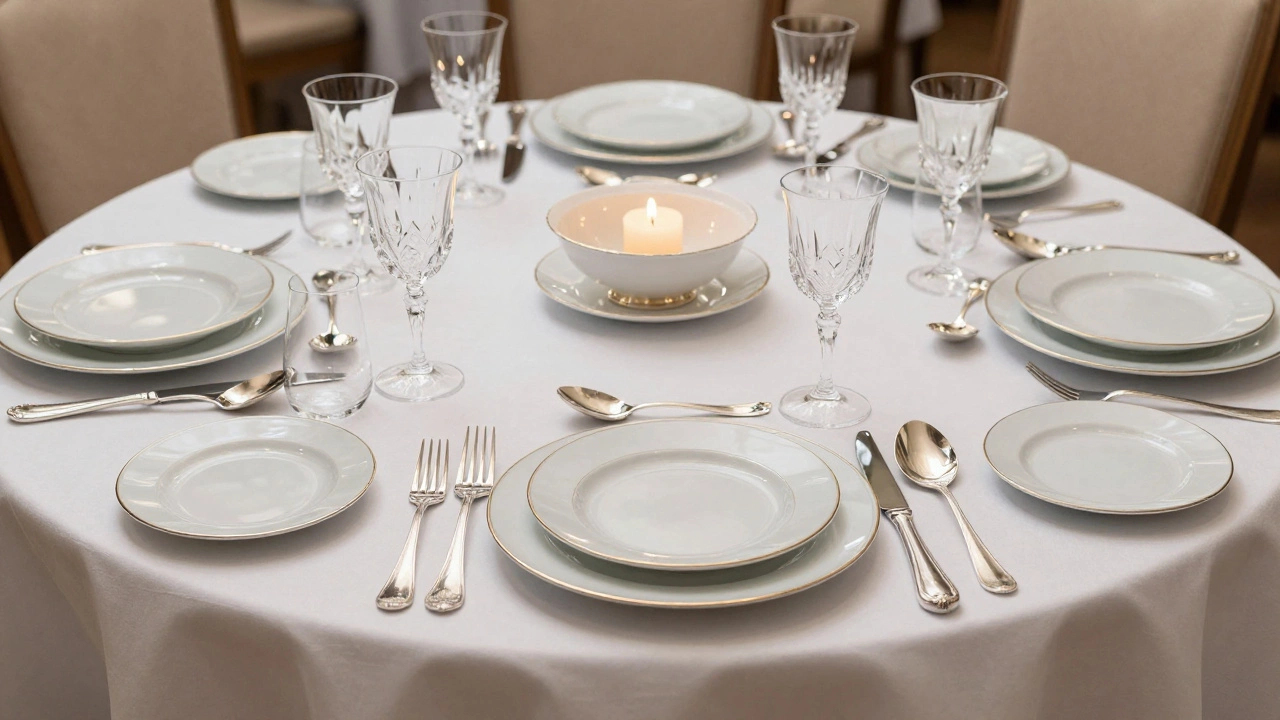
To really understand where these tools fit, we need to zoom out. Tableware is the parent category. It encompasses everything that touches the table. If you imagine a full dinner setting, the plate, the water glass, the linen napkin, and the fork are all part of the tableware. Within tableware, we find the Dinnerware (the plates, bowls, and platters) and the dining utensils (the tools used to move food from the plate to your mouth). When you start getting into the specifics of utensils, you realize there's a massive variety. You have your standard place setting, but then you have specialty tools. Think about a steak knife-that's a specialized piece of cutlery. Or a soup spoon-that's a specific type of flatware. By using the generic term "dining utensils," you cover all these bases without having to list every single item in the drawer.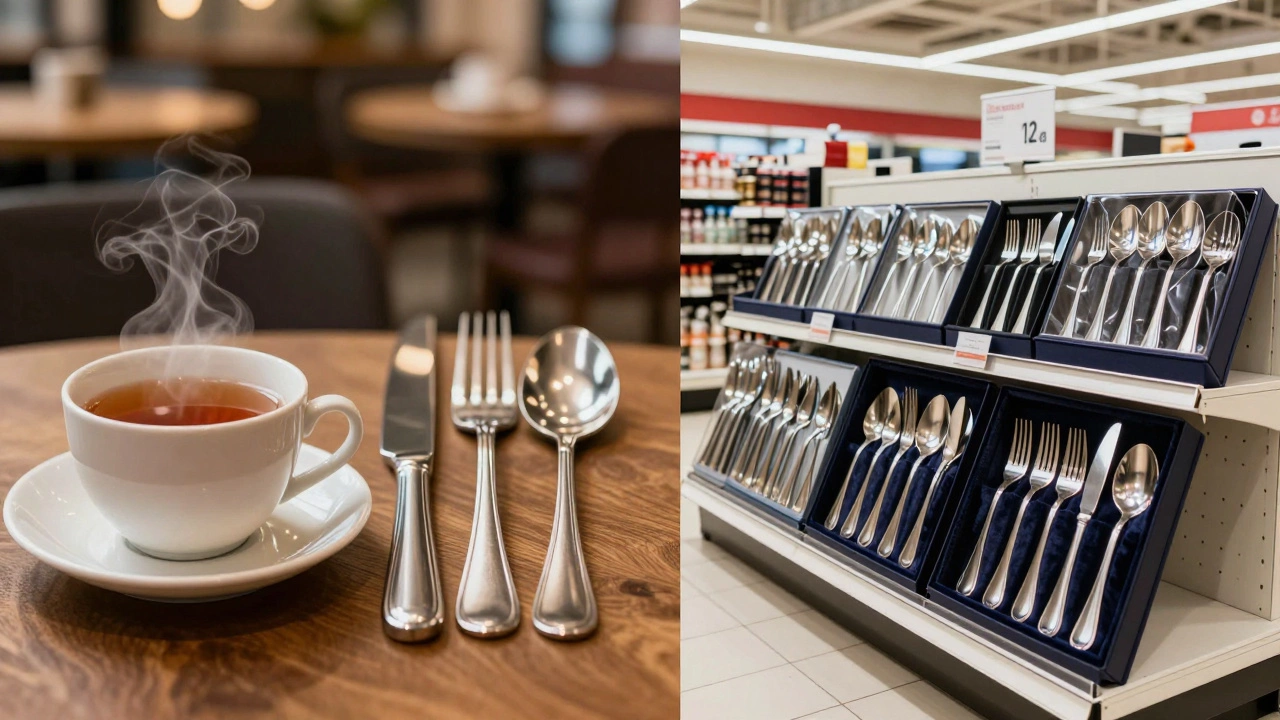
Materials and Their Impact on Naming
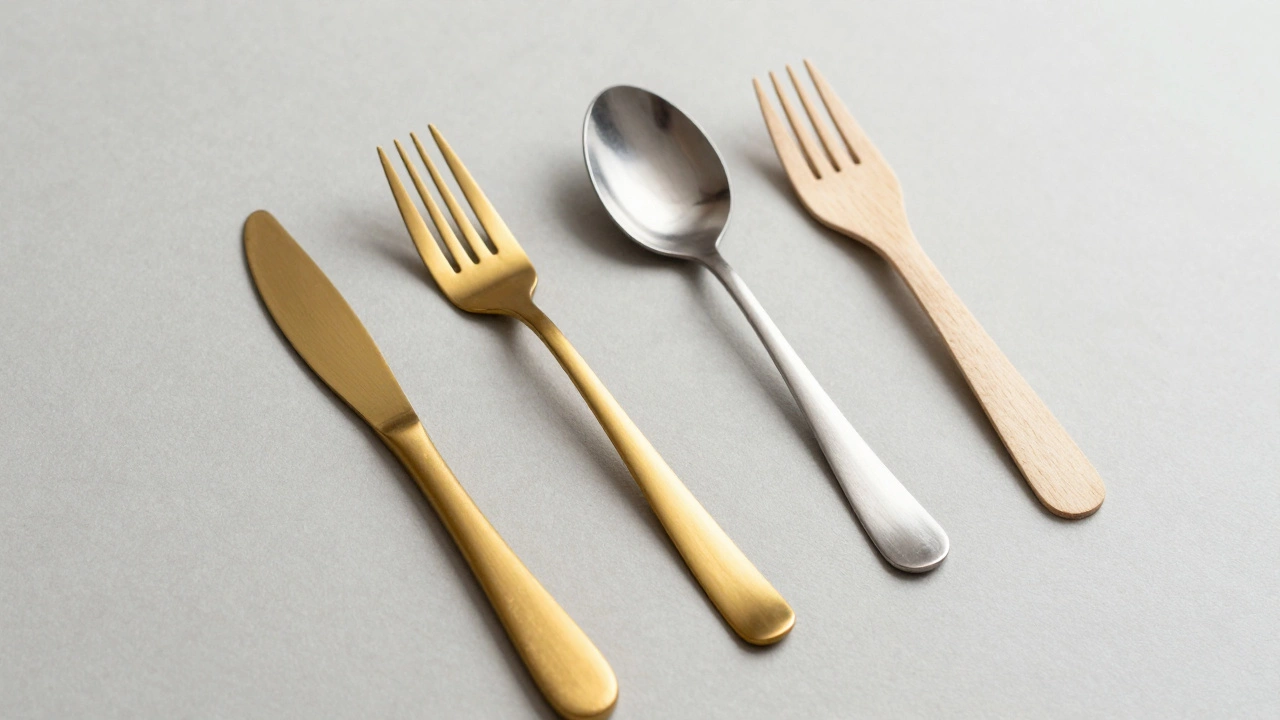
Why do we even have so many words for the same thing? A lot of it comes down to the materials used over the last few centuries. In the past, owning real silver was a status symbol. If you had a set of sterling silver forks, you were wealthy. This is why "silverware" became the prestige term. Eventually, Stainless Steel revolutionized the kitchen. Launched in the early 20th century, it provided the look of silver without the tarnishing or the massive price tag. Because stainless steel became the default, the term "silverware" started to lose its literal meaning and became a general term for any metal fork or spoon. Today, we see a shift toward sustainable materials. You'll find utensils made from bamboo, recycled plastics, or even biodegradable cornstarch. In these cases, calling them "silverware" makes no sense, and "cutlery" feels a bit too formal. This is where the term "dining utensils" or "eating utensils" is most useful-it's a safe, accurate description regardless of whether the fork is made of metal, wood, or plastic.Practical Use: When to Use Which Term
If you're writing a formal invitation or a menu, you might want to use "cutlery" or "tableware" to sound more polished. If you're talking to a contractor about designing a kitchen drawer, "flatware organizer" is the term they'll recognize because it's a commercial industry standard. Think about the context of a fast-food environment. You wouldn't usually ask for a "flatware set" at a burger joint; you'd ask for "plastic utensils." The word "utensil" implies a tool for a specific task. It's functional and direct. Here is a simple rule of thumb for your daily life:- Use Dining Utensils when you want to be technically correct and inclusive of all materials.
- Use Cutlery if you're in London, Sydney, or Wellington.
- Use Flatware if you're shopping for a new set in a US department store.
- Use Silverware when you're speaking casually with friends and the tools are metal.
Common Pitfalls and Misunderstandings
One of the biggest mistakes people make is using "cutlery" to refer to everything in the kitchen. A spatula, a whisk, and a peeler are Kitchen Utensils, but they are not dining utensils. You don't use a whisk to eat your dinner. Dining utensils are strictly those used at the table. If you call your cooking spoons "cutlery," a chef might look at you funny. Similarly, confusing "tableware" with "flatware" can lead to errors in ordering. If you order a "tableware set" from a supplier, you might get a box of plates and glasses, whereas a "flatware set" will only contain the knives, forks, and spoons. Keep an eye on the word "silverware" as well. If you are buying high-end antiques, ensure you are actually buying sterling silver. Many items labeled as "silverware" in a casual setting are actually silver-plated or just stainless steel. In the world of antiques, the distinction between silver and silver-plate is a matter of hundreds of dollars.Is there a difference between cutlery and flatware?
Essentially, they refer to the same things: forks, spoons, and knives. The main difference is regional. "Cutlery" is the preferred term in the UK, Australia, and New Zealand, while "flatware" is the standard term in North America. Technically, cutlery emphasizes the cutting tool (the knife), whereas flatware emphasizes the flat shape of the utensils.
What is the most professional term to use in a business setting?
If you are in the hospitality or retail industry, "flatware" is often the most professional term for the items themselves, and "tableware" is used when referring to the entire suite of items including plates and glassware. If you are writing for a global audience, "dining utensils" is the clearest and most inclusive choice.
Does "silverware" always mean the items are made of silver?
No. In modern casual conversation, "silverware" is used as a generic term for any metal utensils, including those made of stainless steel. However, in formal or antique contexts, silverware specifically refers to items made of sterling silver.
What is the difference between kitchen utensils and dining utensils?
Kitchen utensils are tools used for food preparation, such as spatulas, tongs, and whisks. Dining utensils (or cutlery/flatware) are the specific tools used to eat a meal, such as forks, spoons, and butter knives.
What is tableware?
Tableware is the overarching category that includes everything used to set a table for a meal. This includes the dining utensils (flatware), the plates and bowls (dinnerware), and the glasses or cups (glassware).