What is the Feminine of Daddy? Understanding Terms of Endearment

Parental Terms Finder
Select the context or region that best fits your search to find the most appropriate feminine equivalent of "Daddy".
Find the Feminine Counterpart
Click on a card above to see the specific equivalent for that region or context!
-
Select an option to see the description.
You've probably noticed that language isn't always a straight line. If you're looking for the feminine of daddy, the most direct answer is Mommy is the feminine counterpart to daddy, serving as a term of endearment for a mother, typically used by children or in intimate family settings. But if you dig a little deeper, you'll find that these words aren't just about labels-they're about the emotional connection and the specific way we view caregivers in different cultures.
Quick Summary: Key Takeaways
- The direct feminine equivalent of "daddy" is "mommy."
- These terms are categorized as hypocorisms, which are pet names or simplified forms of words.
- Regional variations include "mummy" (UK/Australia) and "mama" (universal).
- The choice of word often reflects the age of the speaker and the closeness of the relationship.
The Linguistic Side of Family Names
In linguistics, words like "daddy" and "mommy" fall into a category called Hypocorisms. These are terms of endearment or simplified forms of words used to convey affection, often characterized by repetitive sounds (reduplication) that are easier for toddlers to pronounce. When a child first starts talking, they don't usually start with complex consonants. They go for the easy ones: 'd' and 'm'.
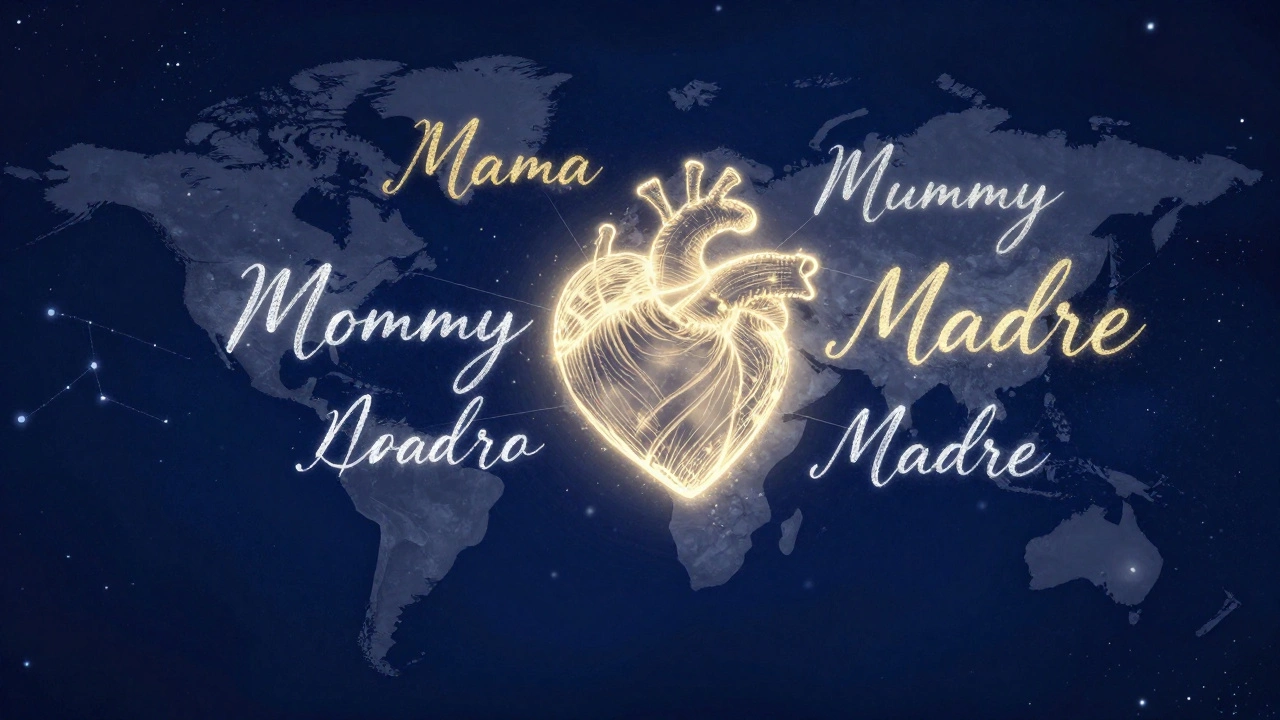
Why do we use these specific sounds? It's not a coincidence. Across many languages, the sounds for parents are remarkably similar. For instance, in Mandarin, "papa" and "mama" are used, and in Spanish, it's "papá" and "mamá." This is because the bilabial sounds (sounds made with both lips) are some of the first that human infants can produce. So, when we ask what the feminine of daddy is, we're really looking at the other side of this biological and linguistic coin.
Regional Variations and Global Shifts
Depending on where you are in the world, the "feminine of daddy" might change slightly in spelling or pronunciation. If you're in London or Sydney, you'll likely hear Mummy instead of the American "mommy." This isn't just a spelling difference; it's a cultural marker. The "u" sound in the British version feels softer and more traditional to those regions.
Then you have Mama. While "mommy" is a child's word, "mama" often transcends age. In many cultures, a grown adult might still call their mother "mama" as a sign of deep respect and lifelong bonding. It’s a more universal term that appears in everything from Swahili to Vietnamese. If "daddy" is the casual, affectionate term for a father, "mama" is the ancestral, foundational term for the mother.
| Masculine Term | Feminine Term | Primary Region | Tone/Context |
|---|---|---|---|
| Daddy | Mommy | North America | Child-like / Affectionate |
| Daddy | Mummy | UK / Australia | Child-like / Traditional |
| Papa | Mama | Global / Multi-lingual | Foundational / Universal |
| Father | Mother | Formal English | Official / Distant |
The Psychology of Using 'Mommy' and 'Daddy'
Have you ever wondered why some people stop using these words the moment they hit ten years old, while others use them their whole lives? The shift from "mommy" to "mom" or "mother" represents a transition in the child's perception of the parent. "Mommy" implies a caregiver who provides absolute safety and nurturing. It's a word of dependence.
When a person moves toward "Mom," they are acknowledging the parent as an individual with their own life, rather than just a source of care. However, using the feminine of daddy in adulthood often happens during moments of vulnerability. If someone is sick or feeling overwhelmed, they might revert to calling their mother "mommy" because it triggers a psychological sense of security and comfort that the formal "mother" doesn't provide.
Beyond the Nuclear Family
Language is evolving, and the terms we use for parents are shifting to fit new family structures. Not everyone has a traditional mother and father. Some people use terms like "parent," "guardian," or even unique nicknames that replace the standard feminine of daddy. For example, in some households, a stepmother or a primary female caregiver might be called "mommy" despite not being the biological mother. This shows that the word is more about the role of the nurturer than the biological connection.
There are also non-binary terms emerging. Some parents prefer gender-neutral terms like "papi" or "mami" used interchangeably, or entirely new words like "zaza" or "nibi" to avoid the gendered baggage that comes with "mommy" and "daddy." Even though "mommy" remains the linguistic answer, the emotional answer is whatever word makes the child and the caregiver feel most connected.
Common Pitfalls in Translation
One mistake people often make when translating the "feminine of daddy" into other languages is assuming it's a one-to-one swap. For example, in some languages, there is a huge difference between the word for the mother (the biological entity) and the word for the person who performs the mothering role. In some Romance languages, the distinction between a formal "Madre" and an affectionate "Mamá" is much sharper than the difference between "Mother" and "Mommy" in English.
Another point of confusion is the use of these terms in slang. In modern internet culture, "daddy" has taken on a meaning that isn't related to fatherhood at all, often referring to a protector or a figure of authority and attraction. When this happens, the feminine equivalent isn't always "mommy." In those specific slang contexts, the counterpart might be "mother" (often used in LGBTQ+ ballroom culture to signify a mentor or leader), proving that the feminine of a word can change entirely based on the social circle you're in.
Is 'mommy' the only feminine version of 'daddy'?
Linguistically, 'mommy' is the direct counterpart. However, depending on the region and the level of formality, 'mummy', 'mama', 'mom', and 'mother' all serve as feminine equivalents. The choice depends on whether you are looking for a term of endearment or a formal title.
Why do children say 'daddy' and 'mommy' instead of 'father' and 'mother'?
This is due to the ease of articulation. The 'm' and 'd' sounds are bilabial or alveolar, meaning they are among the easiest sounds for a developing infant to produce. 'Father' and 'Mother' require more complex tongue and throat movements that toddlers haven't mastered yet.
What is the difference between 'mommy' and 'mummy'?
The difference is primarily geographical. 'Mommy' is the standard American English spelling and pronunciation, while 'mummy' is used in British, Australian, and Canadian English. Both carry the same emotional weight and meaning.
Can 'mama' be considered the feminine of 'daddy'?
Yes. While 'mommy' is the most rhythmic match for 'daddy', 'mama' is the most universal feminine equivalent across different languages and cultures, often representing the primal bond between a child and mother.
Does the term 'mommy' change as a child grows up?
Usually, yes. Most children transition from 'mommy' to 'mom' as they enter adolescence to sound more mature. However, many adults continue to use 'mommy' in private or during times of emotional distress to evoke a sense of childhood security.
What's Next?
If you're interested in how family language shapes our identities, you might want to explore the concept of kinship terms in other cultures. Understanding why we call our parents what we do opens a door to understanding how different societies view the roles of men and women in the home. You could also look into the history of the English language to see how "mother" and "father" evolved from Old English roots into the affectionate versions we use today.