What Is the Average Price of a Good Rug? Real Costs by Type, Size, and Material
Rug Price Calculator
Select your rug parameters to see price estimates.
How much should you really pay for a rug that lasts? It’s not just about looking nice underfoot - a good rug holds up to foot traffic, doesn’t shed like crazy, and stays flat without curling at the edges. But prices swing wildly: you can find one for $50 or pay $5,000. So what’s fair? Here’s what you actually get at different price points.
What Makes a Rug "Good"?
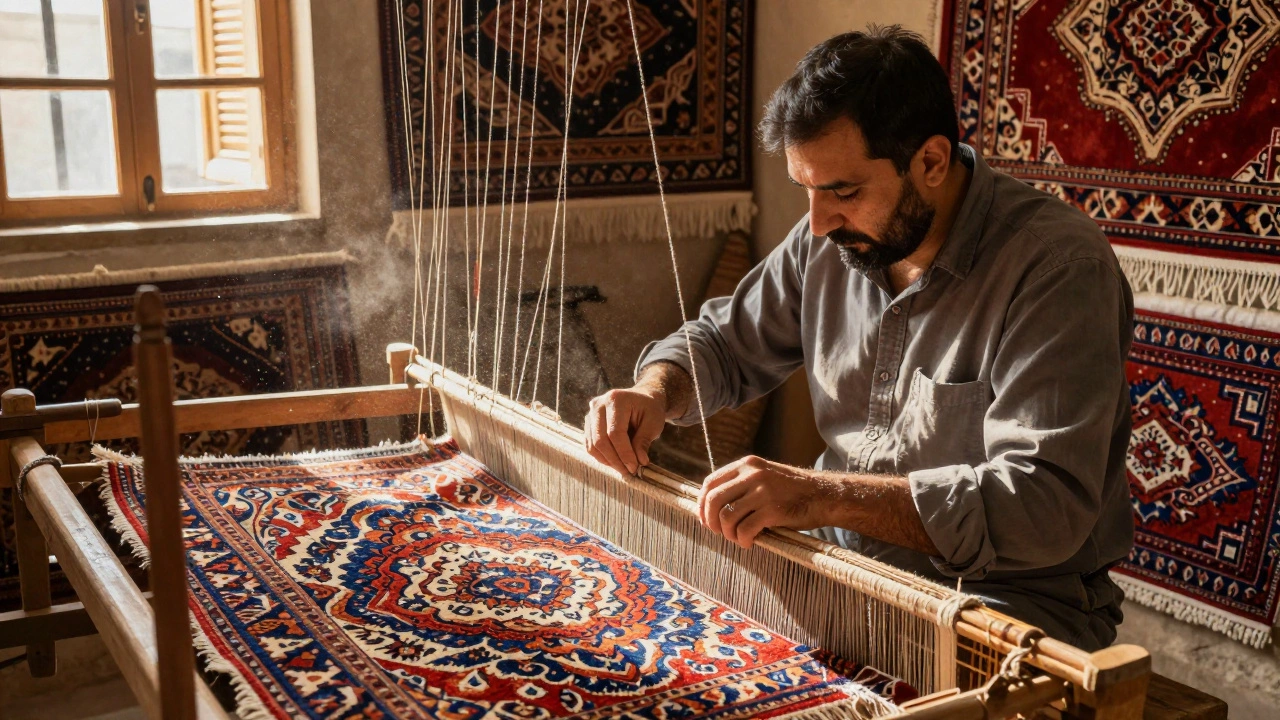
A good rug isn’t just about thickness or color. It’s about construction, materials, and how it’s made. Machine-made rugs are cheaper because they’re produced fast on industrial looms. Hand-knotted rugs take weeks or months to make, one knot at a time. That labor adds cost - but also durability. A hand-knotted wool rug can last 50 years. A cheap polyester rug might look fine for a year, then flatten out and start unraveling.
Material matters too. Wool is the gold standard. It’s naturally stain-resistant, fire-retardant, and holds color well. Cotton rugs are soft and easy to clean but don’t handle heavy traffic. Synthetic fibers like nylon or polypropylene are affordable and moisture-resistant, which makes them good for basements or kids’ rooms. Silk rugs are luxurious but delicate - they’re for show, not daily use.
Price Ranges by Rug Type
Let’s break it down by what you’re actually buying.
- Machine-made synthetic rugs (polyester, polypropylene): $30-$200. These are common at big-box stores. Good for temporary use or low-traffic areas. They fade in sunlight and flatten fast under heavy furniture.
- Machine-made wool rugs: $100-$500. A step up. These hold their shape better and have richer colors. Great for living rooms or bedrooms. Brands like Safavieh and Loloi offer solid options in this range.
- Hand-tufted wool rugs: $300-$1,500. Made by pushing yarn through a backing with a tool, then glued. Faster than hand-knotting but still involves skilled labor. These are dense, plush, and often have intricate designs. They’re a sweet spot for quality and price.
- Hand-knotted wool or wool/silk rugs: $1,000-$10,000+. These are the real deal. Knot density (knots per square inch) determines quality. A rug with 100-200 KPSI is good. Over 300 KPSI is fine craftsmanship. Persian and Turkish rugs fall here. A 9x12 hand-knotted wool rug with 200 KPSI? Expect $3,000-$6,000.
- Flatweave rugs (kilim, dhurrie): $150-$1,200. No pile. Woven flat like a tapestry. Lightweight, reversible, and easy to roll up. Great for modern spaces. Wool flatweaves hold up better than cotton ones.
Size Changes Everything
Price isn’t just about material - it’s about square footage. A 5x8 rug costs less than half of a 9x12, even if they’re the same style. But here’s the trick: most people underestimate how big their room needs. A rug too small makes a room feel disjointed. The rule of thumb? All furniture legs should sit on the rug. In a living room, that usually means at least 8x10. In a bedroom, the rug should extend at least 18 inches past each side of the bed.
Small rugs (3x5 or under) are often $50-$200. Medium (5x8 to 8x10): $200-$1,200. Large (9x12 and up): $800-$10,000+. A 9x12 hand-knotted wool rug can easily cost $4,000. But a 9x12 machine-made wool rug? Around $800.
Where You Buy Matters
Buying online from Wayfair or Amazon gives you low prices but no touch-and-feel. You might get a rug that looks different in person, or has a weird smell from shipping. Local rug stores often have higher prices, but you can see the weave, feel the pile, and sometimes negotiate. Antique shops or importers might offer hand-knotted rugs at lower prices if they’re not brand-new or have minor flaws - but know what you’re looking at.
Don’t be fooled by "luxury" branding. A rug labeled "Persian-style" doesn’t mean it’s from Persia. Most are machine-made in India or Turkey. Look for "hand-knotted," "100% wool," and "knots per square inch" in the product details. If it’s not there, assume it’s synthetic and mass-produced.
What You Get for $500
If your budget is around $500, you’re in the sweet spot for most households. That gets you a:
- 8x10 machine-made wool rug with a durable backing
- 7x10 hand-tufted wool rug with a detailed pattern
- 5x8 hand-knotted wool rug (smaller size, but still authentic)
These rugs will last 10-15 years with normal use. They don’t shed excessively, resist fading, and hold up to vacuuming. You won’t need to replace it every few years. That’s real value.
What You’re Paying For (Beyond the Rug)
When you pay more, you’re paying for:
- Time: One hand-knotted rug can take 6-12 months to make. That’s hundreds of hours of skilled labor.
- Materials: Natural dyes from plants and insects cost more than chemical ones. Wool from high-altitude sheep is denser and warmer.
- Design: Traditional patterns are passed down through generations. A single motif can take days to plan and execute.
- Longevity: A $1,000 rug might last 30+ years. A $100 rug might last 3. That’s $33/year vs. $330/year.
Think of it like shoes. You wouldn’t buy $30 sneakers for daily hiking. A rug is the same - it’s underfoot every day. Spend wisely.
Red Flags to Avoid
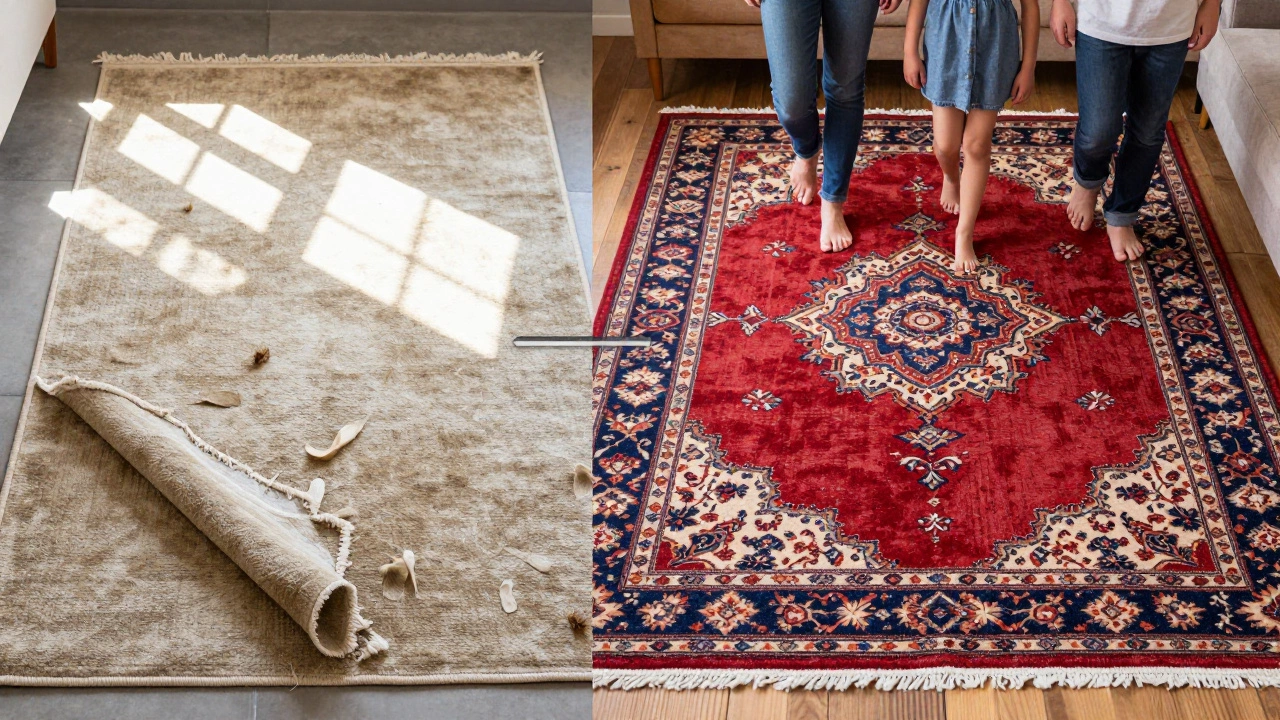
Watch out for these signs you’re getting a low-quality rug:
- "Polyester" or "synthetic" isn’t listed - but the price is too low to be wool.
- It sheds heavily for more than a few weeks after unrolling.
- The backing feels flimsy or peels away easily.
- Colors bleed when you dab with a wet cloth.
- It smells like chemicals - a sign of cheap glue or dyes.
- "Made in China" with no details on construction or material.
Also avoid rugs labeled "vintage" or "antique" unless you can see proof. Most are new reproductions.
Best Value Picks by Room
Here’s what works best in real homes:
- Living room: 8x10 hand-tufted wool rug. Budget $400-$800. Adds warmth and anchors the space.
- Bedroom: 9x12 machine-made wool rug. Budget $600-$900. Soft under bare feet and hides pet hair.
- Kids’ room: 5x8 stain-resistant synthetic rug. Budget $100-$200. Easy to clean, bright colors.
- Dining room: 8x10 flatweave wool rug. Budget $300-$600. Low pile, easy to vacuum under chairs.
- Entryway: 2x3 durable cotton or jute rug. Budget $50-$120. Traps dirt, doesn’t slip.
Final Advice: Buy Once, Buy Right
There’s no magic number for "the average price of a good rug" - because good means different things to different people. But if you want something that lasts, looks better over time, and doesn’t make you regret your purchase, aim for $300-$1,000. That’s where quality, durability, and beauty intersect.
Don’t buy the cheapest one. Don’t buy the most expensive one unless you’re collecting. Buy the one that matches your life. A family with dogs and kids needs durability. A quiet apartment might want a silk accent rug. Know your needs. Then spend accordingly.
What is the average price of a good rug for a living room?
For a living room, a good rug is typically 8x10 feet and made of wool. Expect to pay between $400 and $900 for a machine-made or hand-tufted wool rug. Hand-knotted rugs in this size start around $1,500 and go up from there. Avoid rugs under $200 - they’ll flatten quickly and look worn within a year.
Is a $100 rug worth buying?
A $100 rug is fine for temporary use - like a rental apartment, a kids’ playroom, or a seasonal decor swap. But it won’t last. Most are made of polyester or polypropylene, shed heavily, fade in sunlight, and flatten under furniture. If you plan to keep it for more than two years, spend more. You’ll save money long-term by not replacing it.
Why are hand-knotted rugs so expensive?
Hand-knotted rugs are expensive because each knot is tied by hand, one at a time. A single 9x12 rug can take 6-18 months to complete, using hundreds of thousands of knots. The materials are natural - wool, silk, cotton - and often dyed with plant-based pigments. Skilled artisans in countries like Iran, India, and Turkey make these, and their labor is paid fairly. That craftsmanship, time, and material quality justify the cost.
Can I find a good rug on sale?
Yes, but be careful. Major sales (Black Friday, end-of-season) often discount machine-made rugs that were marked up artificially. Look for sales at local rug stores or reputable online retailers like Rugs USA or The Rug Company. Avoid "going out of business" sales on Amazon or eBay - those are usually low-quality imports. A real discount on a hand-tufted wool rug might be 15-25% off the regular price.
Do I need a rug pad?
Yes, always. A rug pad prevents slipping, reduces wear on the rug’s backing, cushions your steps, and blocks noise. For a $500 rug, spending $50-$100 on a good pad is smart. Felt or rubber pads work best. Avoid cheap foam pads - they compress and cause the rug to wrinkle. A pad doubles the life of your rug.