What Is Bedding in Marriage? Understanding the Tradition and Its Meaning
Historical Marriage Bedding Timeline
Explore how the historical practice of bedding in marriage evolved from medieval times to modern day. This tradition served as a public proof of marital consummation in many cultures.
Medieval Europe established bedding traditions as legal proof of marriage consummation. Communities developed rituals to prevent disputes over property and inheritance.
Records show church courts in England handling marriage cases based on bedding evidence. Witnesses were crucial for legal validation.
The practice began fading as Enlightenment ideas about privacy and personal dignity changed social norms.
Final recorded bedding ceremony in Devon, England. Groom (19) and bride (17) were escorted to bed by the entire parish according to local vicar's diary.
Practice vanished in rural America, including among Amish and Mennonite communities.
Only seen in historical reenactments or period dramas. Modern equivalents might include playful "bedding parties" without legal significance.
This timeline is based on historical records from the article. The bedding tradition varied by region and cultural context.
Note: The practice was primarily about legal and social proof, not romantic intimacy. Modern couples don't require public verification of their marriage.
When you hear the word "bedding," you probably think of sheets, pillows, or a cozy mattress. But in the context of marriage, "bedding" means something very different - and it’s a tradition that goes back hundreds of years. It’s not about comfort. It’s about proof.
What Does "Bedding in Marriage" Actually Mean?
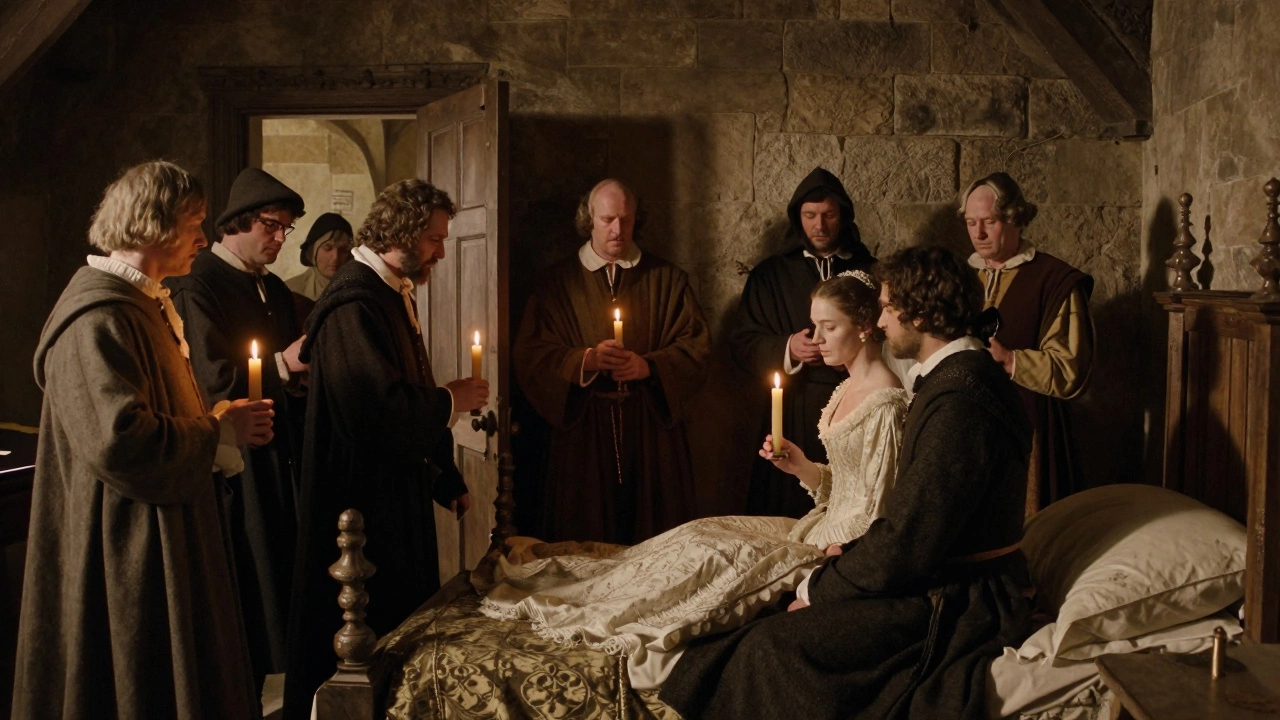
Bedding in marriage refers to an old custom where, after a wedding ceremony, the newly married couple would be publicly escorted to their bedroom and put to bed - often in front of witnesses. This wasn’t a romantic moment. It was a legal and social formality. The point? To prove the marriage had been consummated.
In medieval Europe and parts of England, a marriage wasn’t considered fully valid unless it was consummated. Without physical proof, a husband could later claim the marriage was void - usually to avoid financial obligations or to marry someone else. So communities developed a way to prevent fraud: they watched.
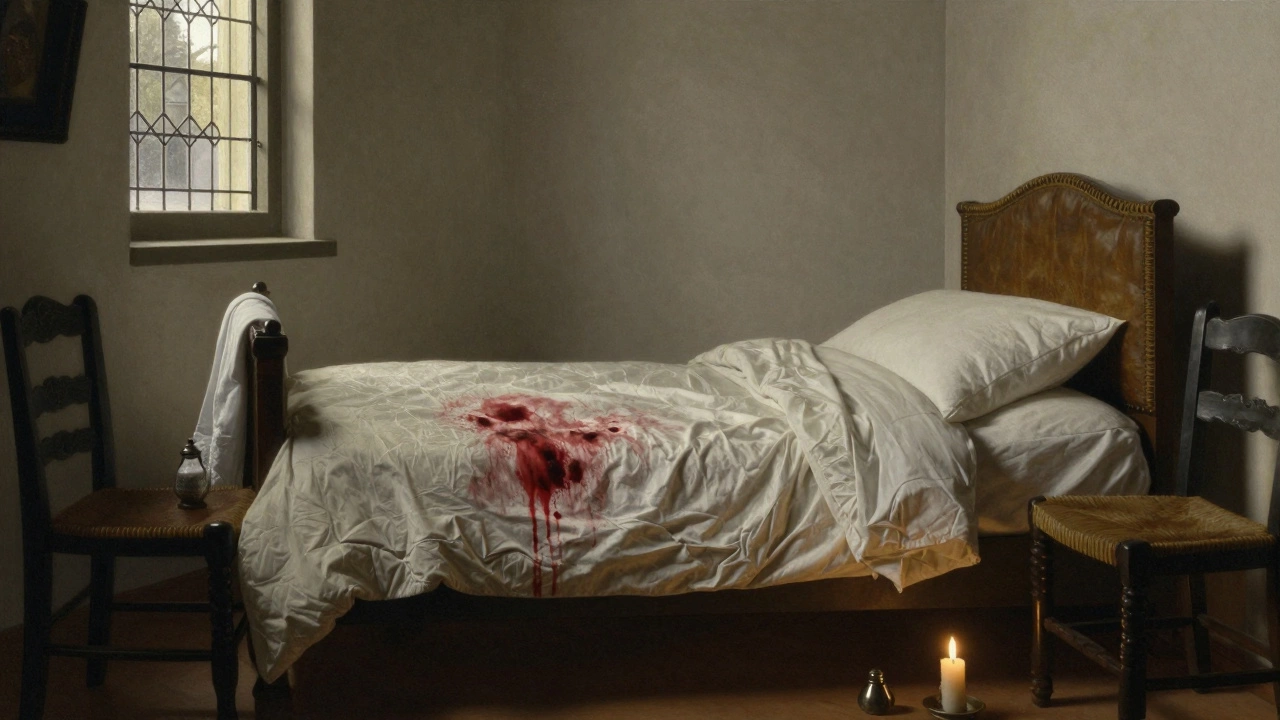
It wasn’t about voyeurism. It was about accountability. Neighbors, friends, sometimes even the local priest would walk the couple to their chamber. They’d help them undress, lay them down, say a prayer or two, and then leave. Sometimes they’d even lock the door from the outside. The next morning, the groom might show off a blood-stained sheet as evidence - though this was more myth than common practice.
Why Did This Tradition Exist?
Marriage wasn’t just a personal union back then - it was a contract. Property, inheritance, social status, and even political alliances depended on it. If a bride was a virgin and the marriage was consummated, her dowry was secure. If not, the groom could legally annul the union. That put enormous pressure on both sides.
The bedding ceremony acted as a public record. No one could later say, "We never actually slept together." It removed doubt. In a time before birth control, paternity tests, or legal documentation, the community served as the judge.
There are records from 16th-century England where church courts heard cases about whether a marriage was consummated. One man claimed his wife was "too cold" to lie with him. Another said his bride was "too heavy" to move. Courts relied on witness testimony - and the bedding ceremony was the strongest evidence.
How Did It Work in Practice?
The ritual varied by region, but the basics stayed the same:
- After the wedding feast, guests would escort the couple to the marital chamber.
- They’d remove their clothes - sometimes with playful teasing, sometimes with stern seriousness.
- They’d be tucked into bed, often with symbolic items: a loaf of bread, a salt cellar, or a candle.
- Prayers were said for fertility and protection.
- Witnesse would leave, sometimes locking the door.
- The next morning, the groom might display the sheets as proof - though this was rare and often symbolic.
In some parts of Germany, the couple was forced to sleep in the same bed as the best man and maid of honor - all in their nightclothes. It was meant to ensure "proper" behavior. In rural Scotland, the bedding lasted all night, with people singing songs outside the door until dawn.
When Did It Stop?
The practice began fading in the 1700s as ideas about privacy and personal dignity changed. The Enlightenment pushed for individual rights over communal control. By the 1800s, most of Europe had abandoned the custom.
In England, the last recorded bedding ceremony was in 1834, in a small village in Devon. The groom was 19, the bride 17. The local vicar recorded it in his diary: "They were put to bed by the whole parish. No one left until the door was shut."
In the U.S., it lingered longer in rural areas - especially among Amish and Mennonite communities - but even there, it vanished by the early 1900s. Today, it’s mostly found in historical reenactments or period dramas.
Is It Still Done Today?
Not officially. But you might see echoes of it.
Some modern couples still have "bedding parties" - but they’re just fun, playful events. Friends might help decorate the bed, give gifts like lingerie or scented candles, and joke about "making sure they sleep well." No one’s checking for proof of consummation.
There’s also a cultural shift: today, privacy is sacred. The idea of strangers watching you undress, or needing to prove you had sex, feels invasive. And rightly so.
But here’s the twist: even though the ritual is gone, the underlying concern hasn’t disappeared. Many cultures still place pressure on newlyweds to "prove" their relationship is real - through pregnancy, social media posts, or public displays of affection. The bedding ceremony is gone. The anxiety? Still here.
What Does It Mean for Us Now?
Understanding this tradition isn’t about nostalgia. It’s about perspective.
Marriage used to be about contracts, property, and social order. Now it’s about love, choice, and partnership. The bedding ceremony reminds us how far we’ve come - and how recently we were treated like property.
It also shows how rituals evolve. What was once a legal requirement became a joke, then a memory, then a footnote in history books. But the human need for validation? That never really goes away.
Today, we don’t need a crowd to witness our marriage. We have marriage licenses, photos, vows, and shared lives. We don’t need a stained sheet to prove our love. We live it.
So when you hear "bedding in marriage," don’t think of sheets. Think of control. Think of fear. Think of a world where your body wasn’t your own - and how far we’ve come since then.