What is a Japanese ladle called? The name, uses, and types of Japanese soup spoons
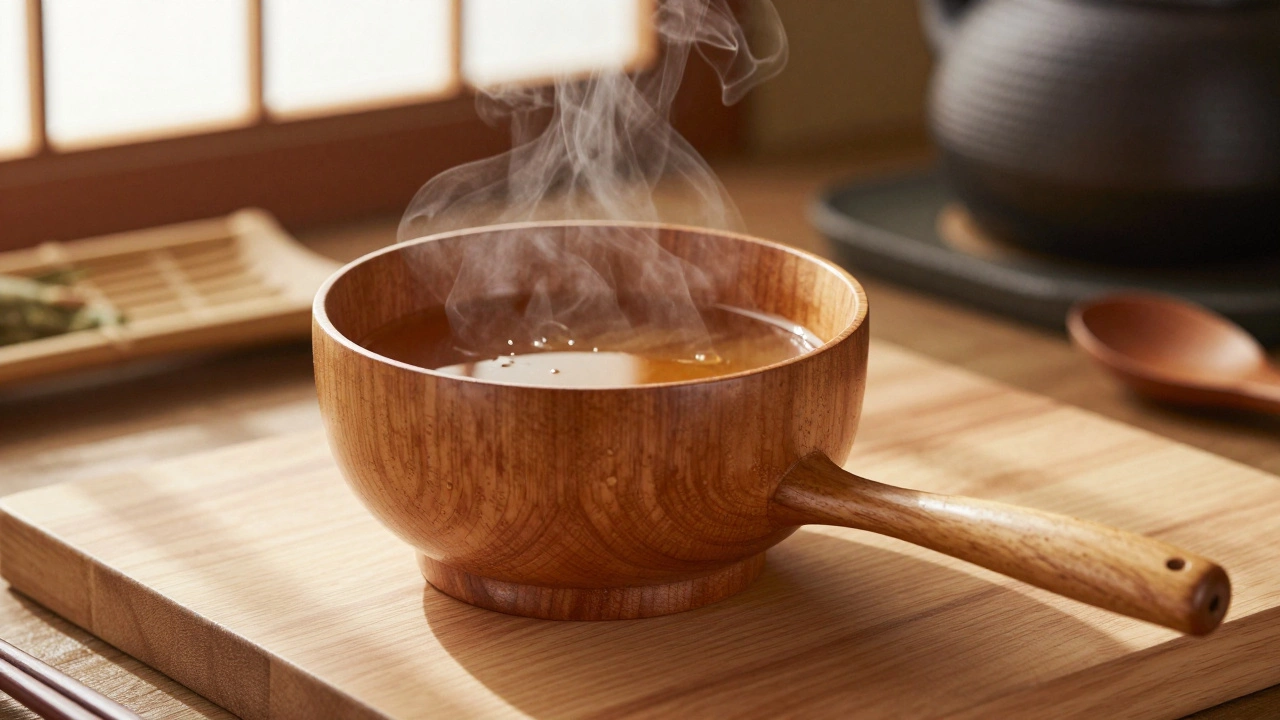
If you've ever watched a Japanese chef serve miso soup or scoop rice at a traditional meal, you've probably noticed the long-handled, deep-bowled spoon they use. It's not just any ladle-it's built for purpose, crafted for balance, and shaped by centuries of tradition. So what is a Japanese ladle called? The answer is shakushi (杓子).
What is a shakushi?
A shakushi is a traditional Japanese ladle, usually made from wood, bamboo, or sometimes lacquered metal. Unlike Western ladles, which are often deep and narrow, a shakushi has a wide, flat bowl that’s slightly rounded at the bottom. The handle is long and slender, often made from the same material as the bowl, and it’s designed to rest comfortably in your palm without slipping. The shape isn’t accidental-it’s engineered to scoop liquids without dripping, and to gently lift delicate ingredients like tofu or fish without breaking them.
The word shakushi comes from two Japanese characters: shaku (杓), meaning "ladle," and shi (子), a suffix that softens the noun. It’s not just a tool-it’s part of Japanese culinary culture. You’ll find shakushi in homes, restaurants, tea ceremonies, and even shrines, where it’s used to pour sacred water.
Why wood? The material matters
Most authentic shakushi are made from wood-usually hinoki (Japanese cypress), cedar, or bamboo. These materials are lightweight, naturally antibacterial, and gentle on cookware. A wooden shakushi won’t scratch your ceramic pots or stainless steel bowls, which is why many Japanese kitchens avoid metal ladles for everyday use.
Hinoki wood is especially prized because it has a subtle, pleasant scent and resists warping even after repeated exposure to hot water. Over time, a well-used shakushi develops a smooth, oiled patina that looks better with age. Some families even pass down their shakushi through generations, treating them like heirlooms.
Modern versions sometimes use bamboo or lacquered wood for durability, but purists still prefer untreated hinoki. Metal shakushi exist, but they’re rare and usually reserved for ceremonial purposes, like pouring sake or temple offerings.
How is a shakushi different from a regular ladle?
Western ladles are designed for volume-they hold as much liquid as possible. A Japanese shakushi is designed for control. Its wide, shallow bowl lets you skim the surface of soups, gently lift floating ingredients, and pour without splashing. The long handle gives you better leverage when reaching into deep pots, and the slight curve of the bowl helps guide the flow of liquid.
Here’s a quick comparison:
| Feature | Shakushi | Western Ladle |
|---|---|---|
| Bowl Shape | Wide, shallow, slightly rounded | Deep, narrow, cup-like |
| Material | Wood, bamboo, lacquered wood | Stainless steel, plastic, silicone |
| Handle Length | Long (20-25 cm) | Short to medium (10-15 cm) |
| Primary Use | Serving soup, rice, sauces, ceremonial pouring | Transferring large volumes of liquid |
| Drip Control | Excellent-flat edge prevents dripping | Often drips unless tilted precisely |
That flat edge along the rim of the shakushi? It’s not a flaw-it’s a feature. When you lift it from the pot, the liquid runs smoothly along the edge and stops, so you don’t drip soup all over the stove or table. It’s a small detail, but one that makes a big difference in a busy kitchen.
How do you use a shakushi?
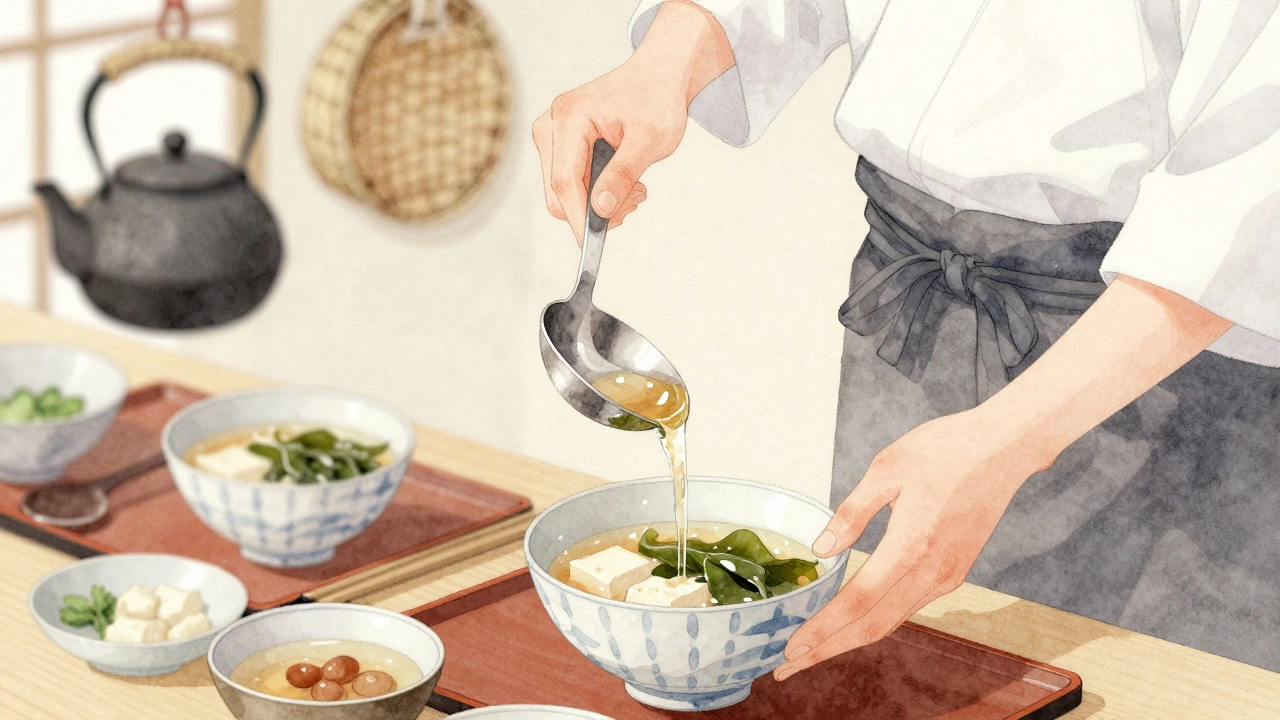
Using a shakushi is simple, but there’s a rhythm to it. Hold it like a pencil, not a hammer. Your thumb rests on top of the handle, fingers curled underneath. When scooping, dip the bowl just below the surface of the liquid-don’t plunge it deep. Let the bowl fill naturally, then lift slowly. The wide shape lets you control how much you pour by tilting the ladle slightly.
It’s especially useful for:
- Serving miso soup without disturbing the tofu or seaweed
- Pouring dashi stock into individual bowls
- Transferring rice from a pot to a serving dish
- Adding soy sauce or mirin from a large container
- Pouring water in tea ceremonies or shrine rituals
Many Japanese home cooks use a shakushi for everything from morning miso to evening udon. It’s not just for fancy meals-it’s part of daily life.
Where can you buy a real shakushi?
Authentic shakushi are made in Japan, often by small artisans in regions known for woodworking, like Takaoka in Toyama Prefecture or Hida in Gifu. You’ll find them in Japanese kitchen stores, specialty online shops, or even at cultural fairs.
Look for signs of quality:
- Smooth, hand-sanded surface-no rough edges
- Wood grain that runs naturally through the handle and bowl
- No varnish or plastic coating-just natural oil finish
- Weight that feels balanced, not too heavy or too light
Prices range from $15 for a basic bamboo version to over $60 for a hand-carved hinoki piece. Don’t be fooled by cheap imitations made from plastic or painted wood-they won’t last, and they won’t perform the same way.
What else is a shakushi used for?
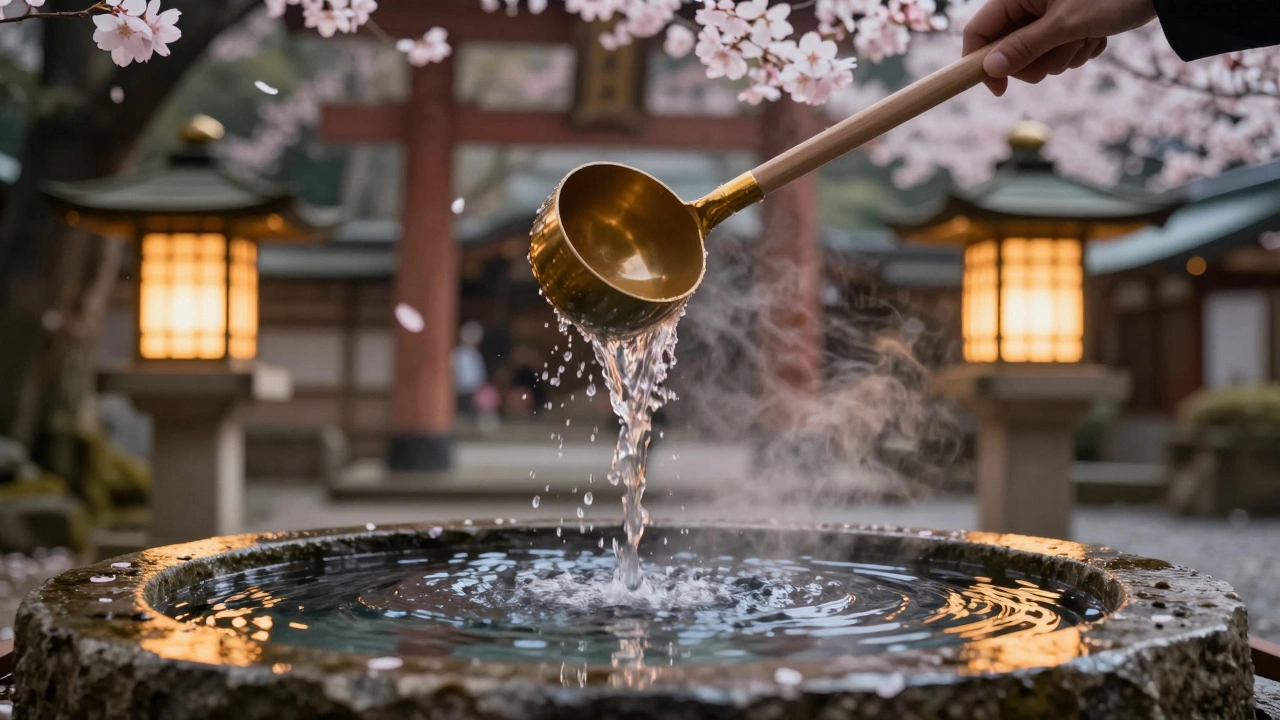
Outside the kitchen, the shakushi appears in Japanese rituals. In Shinto shrines, it’s used to pour purified water over hands before entering sacred spaces. In tea ceremonies, it’s sometimes used to transfer hot water from the kettle to the tea bowl. Even in Buddhist temples, monks use it to serve rice offerings.
It’s also a symbol of generosity. In traditional Japanese households, serving food with a shakushi is seen as an act of care. The way you pour matters-too fast, and it’s rude; too slow, and it’s awkward. The shakushi teaches patience and mindfulness, even in something as simple as ladling soup.
Can you use a shakushi outside Japanese cooking?
Absolutely. Many chefs around the world now use shakushi for serving sauces, soups, and even desserts. Its drip-free design makes it ideal for drizzling olive oil over salads or pouring honey over yogurt. Home cooks in New Zealand, the U.S., and Europe are discovering how useful it is for everyday tasks.
It’s not a replacement for your metal ladle-just a better tool for certain jobs. If you make soup often, or serve rice at family dinners, a shakushi will make your kitchen feel more thoughtful. It’s one of those tools that doesn’t just do a job-it elevates it.
How to care for your shakushi
Wood needs a little attention. Never put your shakushi in the dishwasher. Don’t soak it in water for long periods. After use, rinse it with warm water, wipe it dry immediately, and let it air-dry upright.
Every few months, rub a drop of food-safe mineral oil or walnut oil along the handle and bowl. This keeps the wood from drying out and cracking. If it starts to feel rough, lightly sand it with fine-grit paper (400+ grit), then re-oil.
A well-cared-for shakushi can last decades. Some are passed down like family heirlooms, their surfaces glowing with use.
Is a shakushi the same as a Japanese soup spoon?
Yes, a shakushi is the Japanese term for a traditional soup ladle. While some people call it a "Japanese soup spoon," it’s not a spoon in the Western sense-it’s a ladle with a wide, flat bowl designed for precise pouring, not just scooping.
Can I use a shakushi for stirring?
Not really. A shakushi isn’t designed for stirring-it’s too wide and shallow for that. Use a wooden spatula or a long-handled spoon for stirring soups or sauces. The shakushi is for serving and pouring, not mixing.
Do I need a shakushi if I don’t cook Japanese food?
You don’t need one, but you might appreciate it. If you serve soups, sauces, or rice often, the shakushi’s drip-free design and gentle handling make it a useful addition to any kitchen. It’s not about nationality-it’s about function.
Why is the handle so long?
The long handle lets you reach deep into large pots without leaning over or burning your hand. It also gives you better control when pouring slowly, which is essential for delicate dishes like miso soup or clear broth.
Are there different sizes of shakushi?
Yes. Smaller ones (about 15 cm) are used for tea ceremonies or serving sauces. Larger ones (20-25 cm) are for soups and rice. Most home kitchens use the medium size, around 20 cm, which works for everything from miso to curry.
Final thought: More than a tool
A shakushi isn’t just a ladle. It’s a quiet piece of Japanese craftsmanship that rewards attention. It doesn’t shout for attention like a flashy stainless steel pot or a colorful silicone spatula. But if you use it regularly, you’ll start to notice how it changes the way you cook-slower, steadier, more intentional. In a world full of fast tools, the shakushi reminds you that some things are better done with care.