What is a $20 Bill Called? Understanding US Currency Nicknames
$20 Bill Nickname & Security Checker
What do you call it?
Click a nickname to see its origin and usage context.
Spot the Counterfeit
Check off the real security features of a $20 bill.
Have you ever handed over a crisp green note at the checkout counter and wondered what it’s actually called beyond just "twenty dollars"? Most of us treat money as a simple tool for exchange, but the United States paper currency has a rich history packed with nicknames, historical figures, and design quirks. If you are asking what is a $20 bill called, the answer isn't just one word. It depends on whether you are talking to a historian, a casual shopper, or someone who appreciates American heritage.
The official name is straightforward: it is a United States Federal Reserve Note. However, in everyday conversation, culture, and history, this specific denomination carries several distinct identities. Let’s break down exactly what these names mean, why they exist, and how they connect to the person staring back at you from the front of the bill.
The Official Designation: A Federal Reserve Note
When you look closely at the top edge of any modern US banknote, you will see the words "Federal Reserve Note." This is the legal tender designation issued by the central banking system of the United States. Unlike coins, which are produced by the U.S. Mint, paper money is printed by the Bureau of Engraving and Printing (BEP) under the Department of the Treasury.
This distinction matters because it defines the bill's value. A Federal Reserve Note represents a debt owed by the federal government to the bearer. In practical terms, this means it is backed by the full faith and credit of the United States. When you hold a $20 bill, you are holding a piece of economic infrastructure that has evolved significantly since its inception. The current series features enhanced security threads, color-shifting ink, and microprinting designed to thwart counterfeiters.
The Historical Name: Jacksonian
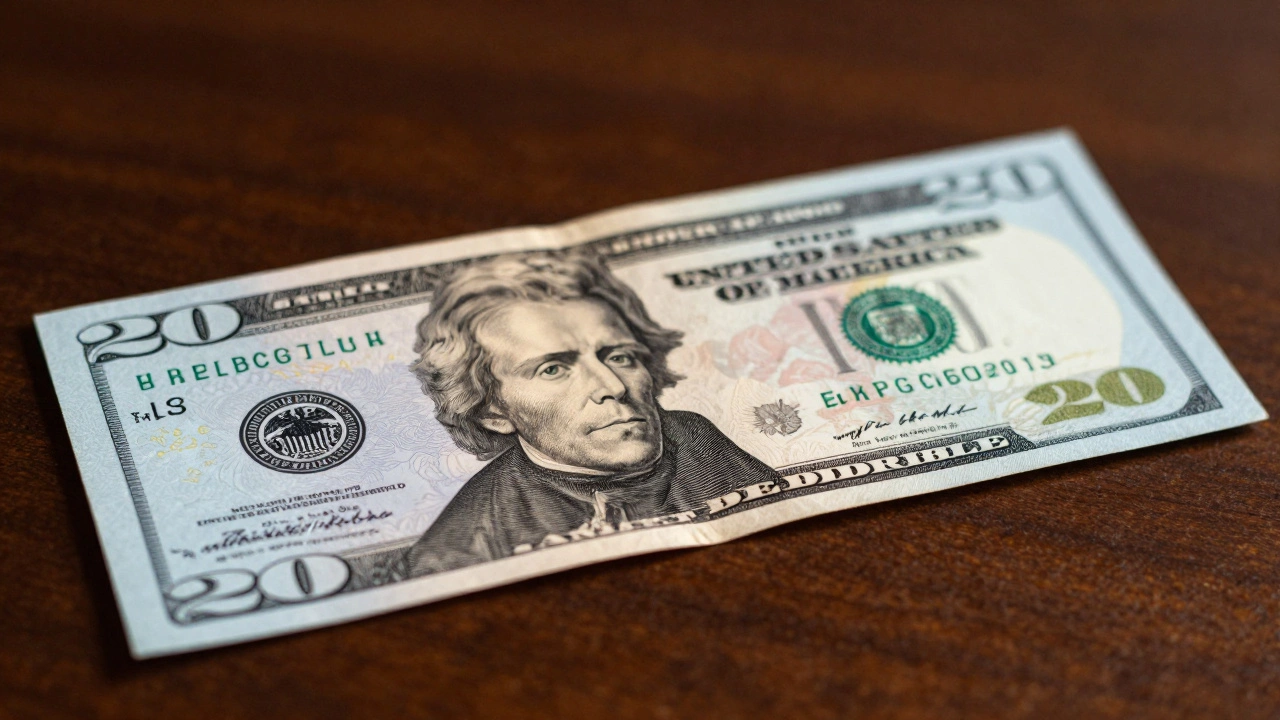
If you want to sound like you know your numismatics (the study of currency), you might refer to the $20 bill as a "Jacksonian." This nickname comes directly from the portrait featured on the obverse (front) side of the note: Andrew Jackson. He was the seventh President of the United States, serving from 1829 to 1837.
Jackson’s presence on the $20 bill is not arbitrary. His political career was defined by his stance against the Second Bank of the United States. Ironically, he fought hard to dismantle the national banking system, yet his image now adorns the primary unit of fiat currency issued by the Federal Reserve. This creates a fascinating historical irony that often sparks debate among historians and economists. For collectors and enthusiasts, identifying the bill by its subject-calling it a Jacksonian-is a common practice, similar to calling a $5 bill a "Lincoln" or a $100 bill a "Benjamin Franklin" (though Franklin was never president).
Common Slang and Colloquialisms
In daily life, people rarely use formal titles for their money. Instead, we rely on slang that evolves with pop culture, regional dialects, and generational shifts. Here are the most common ways people refer to a $20 bill:
- Double Ten: This is perhaps the most logical colloquialism. Since two $10 bills equal $20, "double ten" is frequently used in retail settings, gambling environments, and casual transactions. It is clear, concise, and universally understood across different regions of the US.
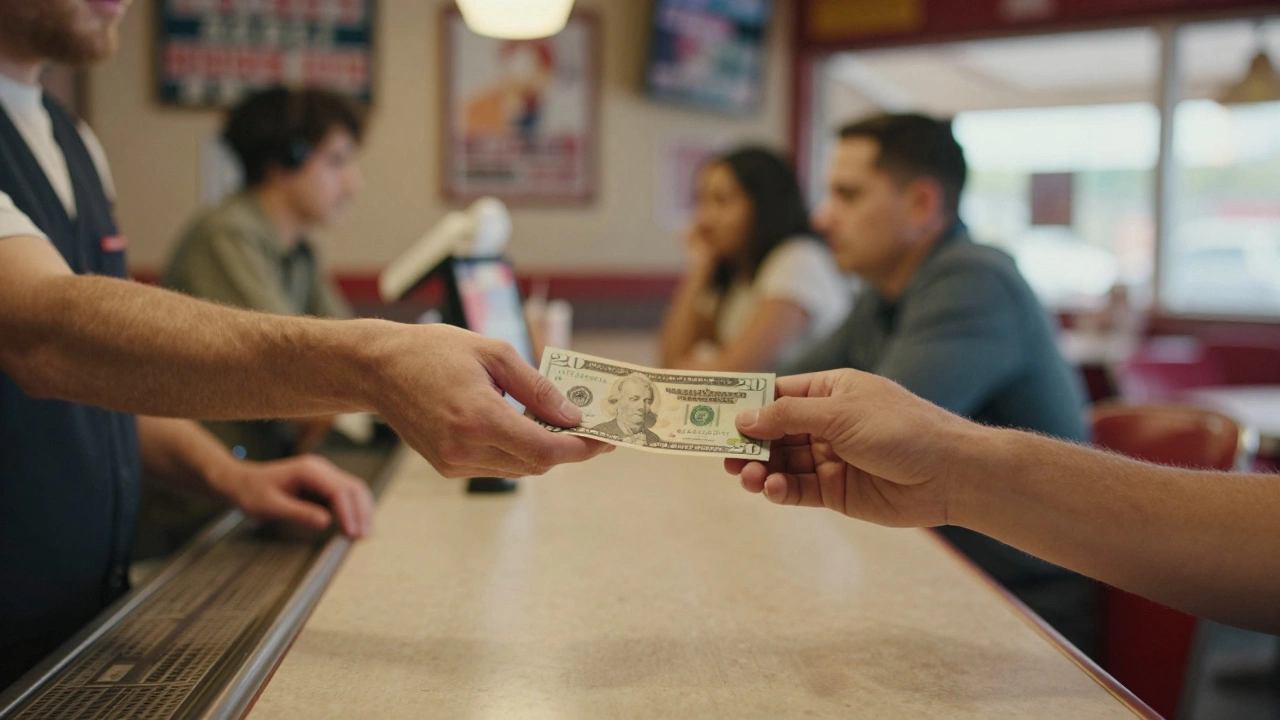
- Jackson: Similar to the numismatic term, many people simply call the bill by the face on it. "Hand me a Jackson" is a standard request in bars, restaurants, and stores. It is shorter than saying "twenty-dollar bill" and avoids confusion with other denominations.
- Twenty Spot: This term is older, rooted in mid-20th-century American slang where "spot" referred to a specific amount of money. You might hear this from older generations or in period dramas set in the 1940s or 50s. While less common today, it still holds cultural resonance.
- Greenback: While this term technically applies to all US paper currency due to the green ink used on the reverse side, it is sometimes used loosely to refer to any bill, including the $20. However, it is not specific to the twenty-dollar denomination.
Why Andrew Jackson? The Story Behind the Face
To truly understand what the $20 bill is called, you have to understand who it represents. Andrew Jackson was a complex figure. He was a war hero, known as "Old Hickory" for his toughness, and a populist leader who championed the common man against elite institutions. His placement on the $20 bill dates back to 1928, when the US standardized the size and appearance of paper currency.
Before 1928, bills varied wildly in size and design. Some were larger than today’s notes, while others were smaller. The standardization process allowed for machine counting and easier handling. Jackson was chosen for the $20 denomination partly because of his prominence in American history and partly due to the tradition of featuring presidents on higher-value notes. Interestingly, Jackson was also featured on the $20 gold certificate in the 19th century, cementing his association with this value long before the Federal Reserve Note era.
Recent years have seen intense debate about keeping Jackson on the $20 bill. Critics point to his role in the Indian Removal Act and the Trail of Tears, arguing that his legacy does not align with modern values. Proposals have been made to replace him with Harriet Tubman, an abolitionist and humanitarian. As of 2026, the design remains unchanged, but the conversation continues to shape public perception of the currency.
Design Evolution: From Large Notes to Modern Security
The physical appearance of the $20 bill has changed dramatically over time. Understanding these changes helps explain why certain nicknames persist while others fade.
| Year/Era | Key Features | Nickname Context |
|---|---|---|
| Pre-1928 | Varying sizes, intricate vignettes, large denominations | Often called by serial number or bank name |
| 1928-1995 | Standardized small size, black and green ink, no major security features | "Jackson" becomes common slang |
| 1995-2003 | Introduction of security thread, watermark, and microprinting | Focus shifts to anti-counterfeiting |
| 2003-Present | Color-shifting ink, blue security ribbon, raised printing | Modern "Federal Reserve Note" identity solidified |
The 2003 redesign introduced the famous blue security ribbon woven into the paper. This feature makes the bill instantly recognizable and difficult to replicate. The addition of color-specifically the red and blue accents-was part of a broader effort to update US currency aesthetics, which had remained largely monochromatic for decades. These visual cues help users identify the bill quickly, reinforcing its identity as a distinct entity within the monetary system.
Cultural Impact and Misconceptions
Money is more than just value; it is a cultural artifact. The $20 bill appears frequently in music, film, and literature. Rap songs often reference "twenties" or "Jacksons" to signify wealth or street credibility. Movies depict characters counting stacks of twenties to show illicit gains or sudden fortune. These portrayals reinforce the bill’s status as a symbol of accessible luxury-it is enough to buy something meaningful but not so much that it feels abstract.
A common misconception is that the $20 bill is always worth exactly $20. In reality, its purchasing power fluctuates with inflation. A $20 bill in 1950 could buy significantly more goods than it can today. Adjusted for inflation, the $20 bill of 2026 has roughly the same purchasing power as a $2.50 bill in 1950. This economic reality underscores the importance of understanding money not just as a static object, but as a dynamic measure of value.

How to Identify a Genuine Bill
With the rise of sophisticated counterfeiting techniques, knowing how to verify a $20 bill is essential. Here are the key security features to check:
- Security Thread: Embedded vertically in the paper, to the left of Jackson’s portrait. It reads "USA TWENTY" and glows blue under ultraviolet light.
- Watermark: Look through the bill toward the light. You should see a faint image of Andrew Jackson’s face to the right of the portrait.
- Color-Shifting Ink: The numeral "20" in the lower right corner changes from copper to green when you tilt the bill.
- Microprinting: Tiny text reading "THE UNITED STATES OF AMERICA" is visible along the border of the portrait frame. It requires magnification to read clearly.
- Raised Printing: Run your finger over the main portrait and the lettering. You should feel a slight texture difference compared to the rest of the bill.
These features make the $20 bill one of the most secure denominations in circulation. Counterfeiters struggle to replicate the combination of embedded threads, specialized inks, and precise engraving. If a bill feels smooth, lacks color shift, or has blurry printing, it is likely fake.
Global Perspective: How Other Countries Handle Currency
While the US uses portraits of historical figures, other countries take different approaches. Canada features contemporary leaders and Indigenous figures on its polymer notes. The Euro uses architectural styles rather than people. Japan depicts artists and scientists. Comparing these systems highlights the unique American tradition of honoring presidents on currency. It also raises questions about whose stories are told through money and whose are omitted.
For travelers, understanding these differences is crucial. A $20 bill is only valid in the US and its territories. Attempting to use it abroad will result in rejection. Always convert currency before traveling to avoid unfavorable exchange rates and potential scams. Digital payment methods are increasingly replacing cash globally, but the physical $20 bill remains a vital part of the US economy.
The Future of the Twenty-Dollar Bill
As digital payments grow, the role of physical cash is evolving. Central banks worldwide are exploring Central Bank Digital Currencies (CBDCs). The US Federal Reserve has conducted research into a potential digital dollar, which could eventually supplement or replace paper notes. However, there is no immediate plan to eliminate the $20 bill. Cash remains important for privacy, accessibility, and emergency preparedness.
Until a digital alternative becomes mainstream, the $20 bill will continue to circulate. Its name may shift again if the portrait changes, but its function will remain constant. Whether you call it a Jackson, a double ten, or simply a twenty, it serves as a tangible link to America’s past and present. Understanding its history and features enriches your interaction with everyday commerce.
Who is on the $20 bill?
The person on the $20 bill is Andrew Jackson, the seventh President of the United States. He served from 1829 to 1837 and was a prominent military leader and politician known for his populist policies and opposition to the national bank.
Why is it called a Jackson?
It is called a "Jackson" because Andrew Jackson’s portrait is featured on the front of the note. This naming convention is common in the US, where bills are often referred to by the face depicted on them, such as "Washington" for the $1 bill or "Hamilton" for the $10 bill.
Is the $20 bill being redesigned?
There have been ongoing discussions and proposals to replace Andrew Jackson with Harriet Tubman on the $20 bill. However, as of 2026, the design has not officially changed. Any future updates would require extensive legislative and administrative processes.
What is the difference between a Federal Reserve Note and a Silver Certificate?
A Federal Reserve Note is the current form of US paper currency, backed by the full faith and credit of the US government. Silver Certificates were issued until 1963 and represented a claim to redeem the note for actual silver bullion. They are no longer in circulation and are considered collectibles.
Can I use a $20 bill internationally?
No, the US $20 bill is only legal tender in the United States and its territories. While some businesses in tourist areas may accept US dollars, it is not guaranteed. Travelers should exchange their currency for local money or use international payment methods to ensure smooth transactions.