What Doctors Say About Adjustable Beds: Medical Benefits & Risks

Adjustable Bed Position Simulator
Medical Benefits Active
Gravity keeps stomach acid below the esophagus.
Relaxes psoas muscle and flattens lower back.
Prevents tongue from blocking airway.
Optimal circulation and spinal decompression.
Most of us spend roughly a third of our lives in bed. That is about 26 years of lying down. For decades, the standard advice was simple: get a flat mattress and call it a night. But medical professionals are shifting their stance. If you ask what doctors say about adjustable beds, the answer is rarely a hard "no." In fact, for specific conditions, they often recommend them as part of a treatment plan.
However, these beds aren't magic cures. They are mechanical tools designed to change your body's position relative to gravity. Whether an adjustable base helps or hurts depends entirely on your health profile. Let’s look at what the medical community actually thinks about these devices, focusing on who benefits, who should avoid them, and how accessories like specialized cushions play into the picture.
The Medical Case for Elevation
When physicians discuss adjustable beds, they are usually talking about two positions: Zero Gravity and Head-Up Tilt (HUT). The core mechanism here is gravity assistance. By raising your legs above your heart level, you help blood return to the central circulation. This reduces swelling in the ankles and feet, a common complaint for people with venous insufficiency or those who stand all day.
Cardiologists often approve this feature for patients with mild congestive heart failure. Elevating the legs reduces the workload on the heart by decreasing preload-the amount of blood returning to the heart while it rests. It’s not a replacement for medication, but it can make sleeping more comfortable and reduce nighttime bathroom trips caused by fluid redistribution.
| Condition | Doctor Recommendation | Key Benefit |
|---|---|---|
| GERD / Acid Reflux | Highly Recommended | Keeps stomach acid below the esophagus using gravity |
| Lumbar Disc Herniation | Recommended (with caution) | Reduces pressure on spinal discs when knees are bent |
| Obstructive Sleep Apnea | Moderately Recommended | Opens airways slightly better than flat sleeping |
| Severe Scoliosis | Consult Specialist | Custom positioning may be required; generic settings might hurt |
Why Gastroenterologists Love Them
If there is one condition where doctors universally agree on the benefit of adjustable beds, it is Gastroesophageal Reflux Disease (GERD). When you lie flat, gravity no longer keeps stomach acid in your stomach. It flows back up into the esophagus, causing burning pain and potential tissue damage.
Raising the head of the bed by six to eight inches creates a gravitational barrier. Proton pump inhibitors (PPIs) treat the chemical aspect of reflux, but the adjustable bed treats the mechanical aspect. Studies have shown that elevating the upper body significantly reduces the frequency of nocturnal reflux episodes. It is a non-pharmacological intervention that works alongside medication.
For this to work, however, you cannot just pile up pillows. Piling pillows bends your neck forward, which can compress the airway and increase abdominal pressure, making reflux worse. An adjustable base lifts your entire torso, keeping the spine aligned while creating the necessary angle.
The Back Pain Debate
Back pain is the most common reason people buy adjustable beds, but the medical advice here is nuanced. Orthopedic surgeons and physiotherapists generally agree that finding the right sleeping posture is critical for spinal health. For many people with lower back pain, sleeping completely flat causes the lumbar spine to arch excessively, straining the muscles and ligaments.
Bending the knees slightly-often achieved by raising the foot section of the bed-flattens the lower back against the mattress. This relaxes the psoas muscle, a large hip flexor that can pull on the spine when tight. This position mimics the fetal curl but without the extreme curvature that might restrict breathing.
However, doctors warn against staying in one elevated position for too long if you have limited mobility. If you cannot easily move from the raised position to a flat one to get out of bed, you risk stiffness. The motorized controls must be accessible, and the transition speeds should be slow enough to prevent dizziness.

Sleep Apnea and Airway Alignment
Obstructive Sleep Apnea (OSA) occurs when the throat muscles relax and block the airway. While a CPAP machine is the gold standard for treatment, some doctors suggest that sleeping with the head elevated can reduce the severity of mild cases.
Elevating the head prevents the tongue and soft tissues from falling back as far into the throat. It doesn't cure apnea, but it can reduce the number of apneic events per hour. For patients who struggle with CPAP compliance, an adjustable bed might offer a slight improvement in oxygen saturation levels during sleep, though it should never replace prescribed therapy for moderate to severe OSA.
The Role of Cushions and Mattress Compatibility
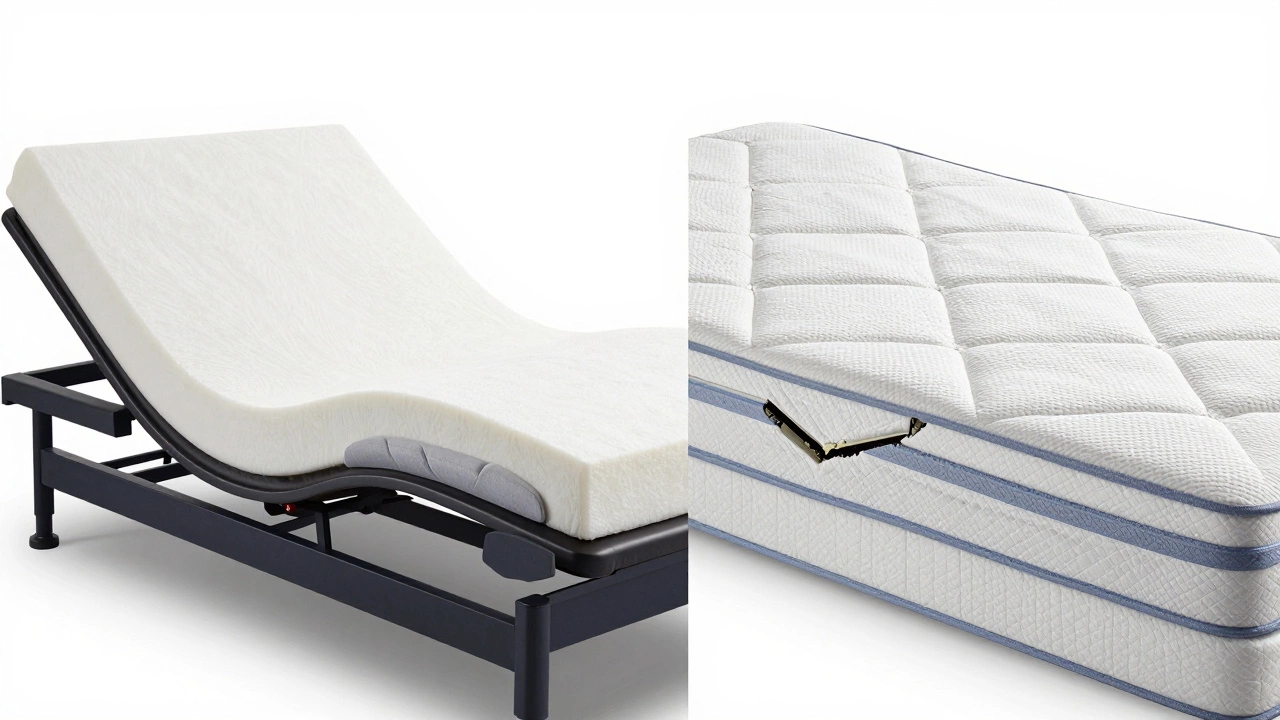
You might notice that adjustable beds are often sold separately from mattresses, or paired with specific types. This is because not all mattresses bend well. Memory foam and latex are flexible enough to articulate with the base without cracking or losing support. Traditional innerspring mattresses, however, can develop permanent creases or broken coils if bent repeatedly.
This is where specialized cushions come into play. Standard pillows often slide off or fail to provide adequate support when the head of the bed is raised. Wedge cushions or contoured lumbar supports can bridge the gap between the mattress and your body.
Doctors often recommend adding a thin lumbar cushion under the lower back if the bed's articulation isn't quite enough to relieve tension. Similarly, a knee pillow placed between the legs when side-sleeping on an adjustable base can maintain hip alignment. These small additions ensure that the mechanical adjustment of the bed translates into actual physiological relief.
Who Should Avoid Adjustable Beds?
Despite the benefits, adjustable beds are not for everyone. Here are the groups that doctors advise to proceed with caution:
- People with Severe Osteoporosis: Sudden movements or awkward angles could increase fracture risk if the user falls or gets stuck.
- Those with Limited Upper Body Strength: If you cannot lift yourself up to exit the bed, relying solely on the remote control can be dangerous if the power fails or the battery dies.
- Individuals with Certain Neurological Conditions: Patients with advanced Parkinson’s or multiple sclerosis may find the moving parts disorienting or difficult to operate safely.
- Users of Heavy Hospital-Grade Equipment: Some medical devices attached to the patient may not be compatible with the movement of an adjustable base.
Practical Tips for Doctor-Approved Use
If your doctor gives you the green light, how do you use the bed correctly? First, start slowly. Do not jump straight into the full "Zero Gravity" preset. Raise the head and foot sections incrementally over several nights to let your body adjust. Your muscles need time to adapt to new angles.
Second, check your mattress thickness. Most adjustable bases require a mattress that is at least 8 to 10 inches thick to function properly. Thin mattresses may not articulate smoothly, leading to noise or uneven support.
Third, consider the electrical safety. Ensure the bed has a surge protector and that the wiring is tucked away so it doesn’t become a tripping hazard. For elderly users, models with emergency backup batteries are highly recommended by geriatric specialists.
Cost vs. Health Investment
Adjustable beds are an investment. A quality base can cost anywhere from $500 to $2,000, excluding the mattress. From a medical perspective, this cost needs to be weighed against the potential reduction in other healthcare expenses. If an adjustable bed reduces the need for strong painkillers, decreases ER visits for severe reflux, or improves sleep quality enough to enhance daily functioning, the return on investment can be significant.
Many insurance plans will not cover the bed itself, but they may cover a hospital-style bed if it is deemed medically necessary for home care. Always check with your provider before purchasing if you are hoping for reimbursement.
Do doctors really recommend adjustable beds for back pain?
Yes, but with caveats. Many orthopedic specialists recommend them for temporary relief of acute lower back pain by allowing the user to find a neutral spine position. However, they are not a cure for chronic structural issues like herniated discs. They are considered a supportive tool rather than a primary treatment.
Can an adjustable bed worsen my arthritis?
It can, if used incorrectly. Raising the legs can help with joint swelling, but getting in and out of a high, moving bed can strain arthritic hips and knees. Look for models with low-profile frames and easy-to-use remotes. Using a cushion to support joints during transitions is also advised.
Is sleeping in zero gravity position safe for everyone?
For most healthy adults, yes. However, people with certain respiratory conditions or those who experience vertigo should consult their doctor first. The position changes blood flow and inner ear balance, which can cause dizziness in susceptible individuals.
Do I need a special mattress for an adjustable bed?
You don't necessarily need a "special" brand, but you do need a flexible material. Memory foam, latex, and hybrid mattresses work best. Avoid traditional innerspring coils as they can break or lose shape when bent. A mattress thinner than 8 inches may also not articulate properly.
How do adjustable beds help with snoring?
Snoring is often caused by relaxed throat tissues blocking the airway. Elevating the head of the bed uses gravity to keep these tissues from collapsing backward. While it won't stop severe sleep apnea, it can significantly reduce snoring volume and frequency for mild cases.