What Are Some Logistics Companies? Top Players in Global Freight and Delivery
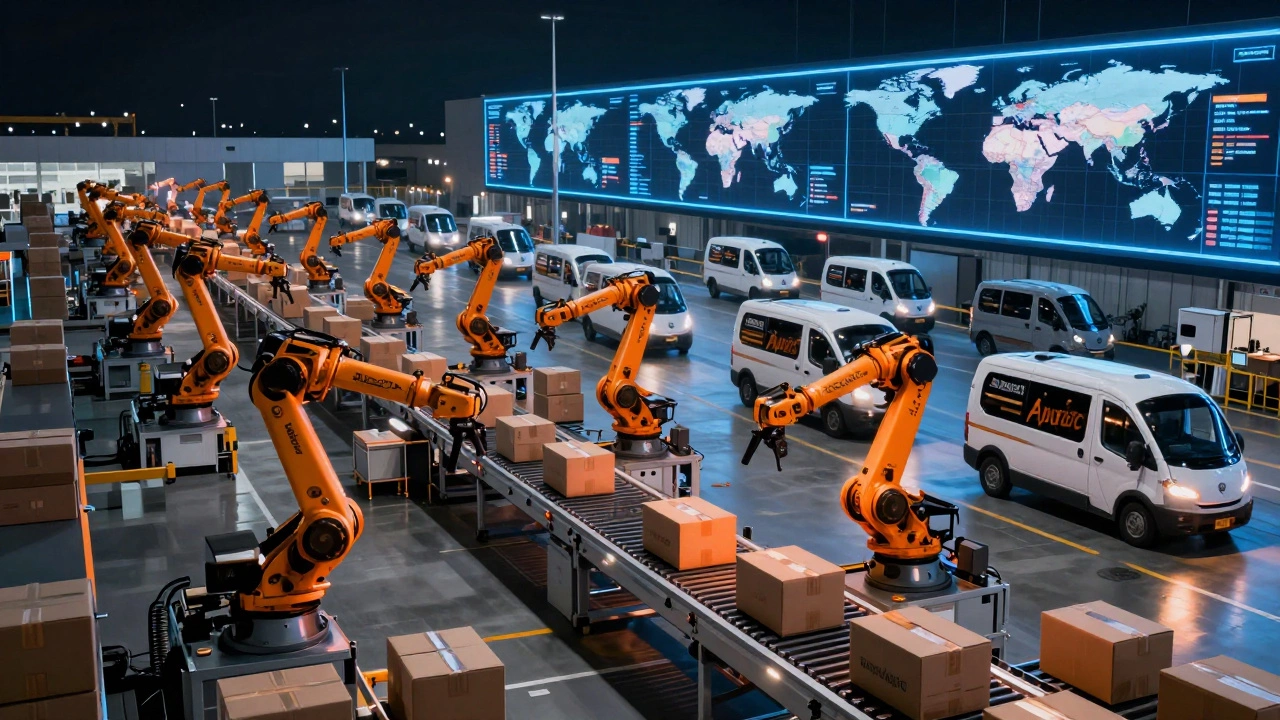
When you order something online and it shows up at your door in two days, you rarely think about the hundreds of moving parts behind that delivery. Behind every package is a complex network of logistics companies that move goods across cities, countries, and continents. These aren’t just truck drivers or delivery vans-they’re massive, tech-driven operations that handle everything from warehouse automation to customs clearance. So who are the real players making this happen?
Amazon Logistics
Amazon Logistics is a private delivery network built by Amazon to handle its own shipping needs, reducing reliance on third parties like UPS and FedEx. Started in 2018, it now operates over 1,000 fulfillment centers and 100,000 delivery vehicles across the U.S., Europe, and India. Unlike traditional carriers, Amazon Logistics doesn’t just deliver packages-it integrates directly with its own e-commerce platform, optimizing routes based on real-time demand. In 2025, it handled over 6 billion deliveries globally, making it the largest private logistics network in the world.
DHL Express
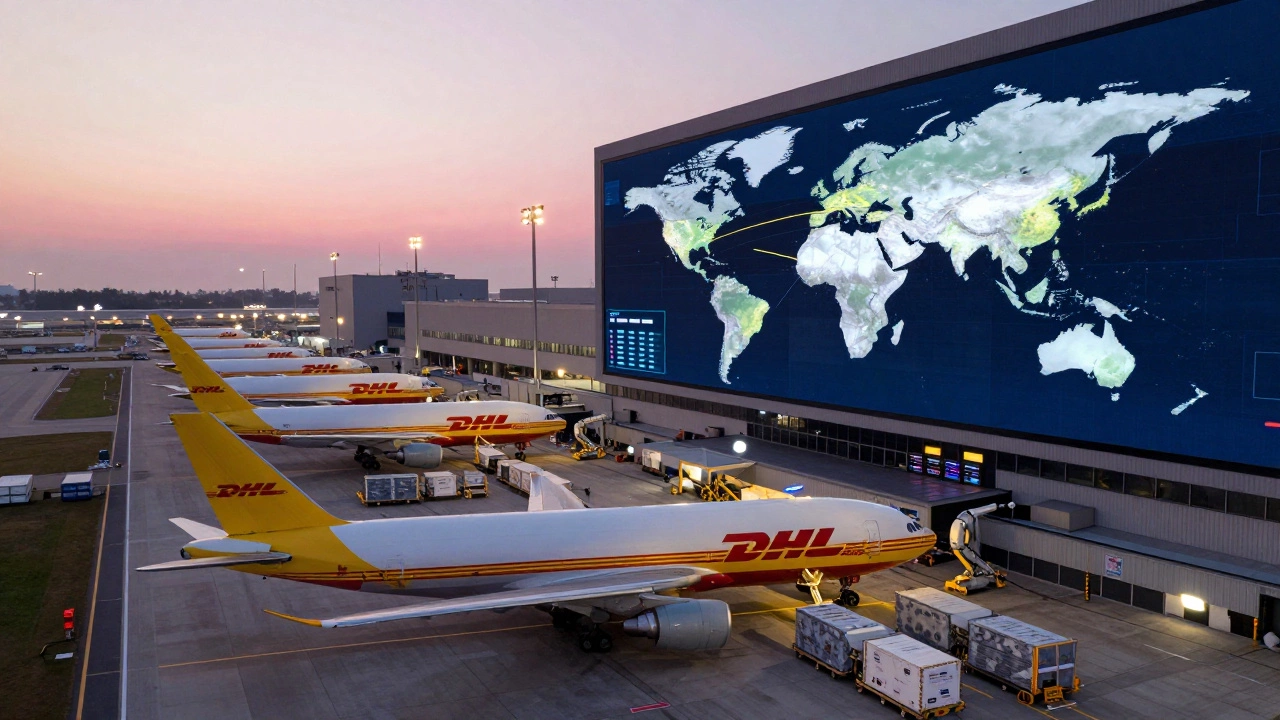
DHL Express is a German-based global courier service owned by Deutsche Post, specializing in international express delivery. With operations in over 220 countries, DHL moves more than 1.6 billion parcels annually. It’s the go-to for cross-border shipping, especially for businesses that need reliable customs clearance and time-definite delivery. Its network includes dedicated air fleets with over 280 aircraft and a massive ground infrastructure in Asia, Europe, and North America. DHL’s same-day delivery service in major cities like Tokyo, London, and Sydney has set the standard for urban logistics.
FedEx Corporation
FedEx is a U.S.-based multinational delivery services company that operates one of the largest air cargo fleets in the world. Founded in 1971, FedEx pioneered overnight shipping and still leads in time-sensitive freight. Its network includes 190,000 vehicles and 650 aircraft, serving over 220 countries. FedEx Ground handles domestic parcel delivery, while FedEx Freight focuses on less-than-truckload (LTL) shipping for businesses. In 2025, it processed over 18 million packages daily, with over 30% of its revenue coming from international shipments.
UPS (United Parcel Service)
UPS is a global logistics giant headquartered in Atlanta, known for its brown delivery trucks and highly optimized ground network. It operates the largest ground delivery fleet in the world-over 125,000 vehicles-and handles more than 25 million packages daily. UPS isn’t just about delivery-it owns a massive air hub in Louisville, Kentucky, that functions like a 24/7 airport for packages. Its supply chain solutions include warehousing, customs brokerage, and even healthcare logistics for pharmaceuticals. In 2025, UPS reported $95 billion in revenue, with over 40% from international services.
Maersk (A.P. Moller-Maersk)
Maersk is a Danish company that dominates global container shipping, moving nearly 15% of the world’s containerized cargo. While most people think of Maersk as a shipping line, it’s actually a full-service logistics provider. It operates over 700 container ships, manages 12 million TEUs (twenty-foot equivalent units) annually, and owns port terminals in 75 countries. Maersk also runs a digital freight platform called Maersk Flow, which lets customers track shipments in real time and automate documentation. It’s the backbone of global trade-without Maersk, half the products on your shelves wouldn’t move.
China Post
China Post is the national postal service of China and the largest logistics operator by volume in the world. It handles over 10 billion parcels annually, mostly from e-commerce giants like Alibaba and JD.com. While its domestic delivery is incredibly cheap, its international service-often called “ePacket”-is the most common way small packages from China reach buyers in the U.S., Europe, and Australia. Despite slower transit times compared to DHL or FedEx, China Post’s scale makes it indispensable for cross-border e-commerce. In 2025, it processed 37% of all global e-commerce shipments originating from Asia.
DB Schenker
DB Schenker is a German logistics provider and a subsidiary of Deutsche Bahn, specializing in freight forwarding and contract logistics. It’s one of the largest players in air and ocean freight, with operations in over 130 countries. DB Schenker doesn’t just move goods-it designs supply chains for manufacturers, retailers, and hospitals. Its cold chain logistics for vaccines and pharmaceuticals played a major role during the global pandemic. In 2025, it managed over 10 million tons of air freight and 4 million TEUs of ocean cargo, making it a critical link in global manufacturing networks.
Yamato Transport (Japan)
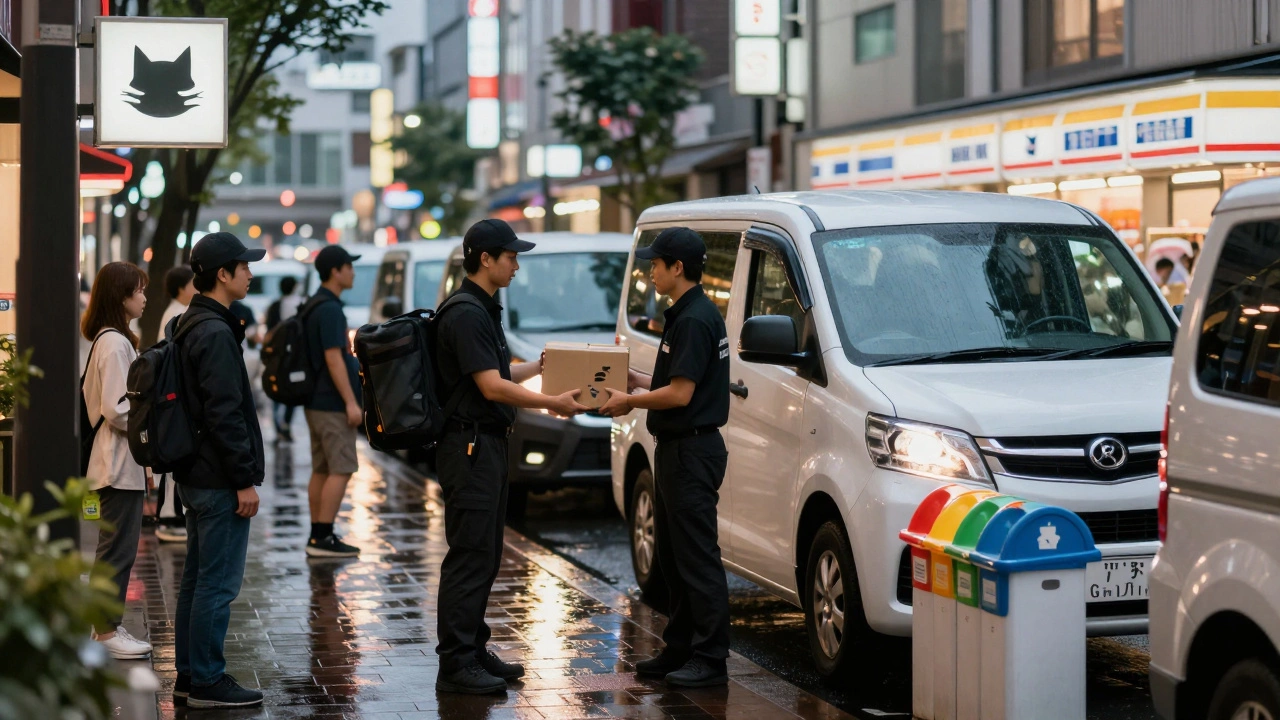
Yamato Transport is Japan’s leading domestic courier service, famous for its reliability and customer service. Known as “Kuroneko Yamato,” it delivers over 1.2 billion parcels annually, with a 99.9% on-time rate. Its signature black cat logo is everywhere in Japan, and its delivery system is so efficient that it can change delivery times on the same day, even if the customer calls at 10 p.m. Yamato also pioneered the concept of “one-stop” returns, allowing customers to drop off packages at convenience stores. It’s a model of precision logistics in a country where punctuality is non-negotiable.
Why These Companies Matter
These aren’t just names on a truck. They’re the hidden engines of the global economy. Amazon Logistics reshaped how we expect delivery speed. DHL and FedEx made international shipping reliable for small businesses. Maersk keeps factories running by moving raw materials. China Post enables millions of online shoppers to buy from overseas. And Yamato proves that logistics isn’t just about size-it’s about service.
If you run an online store, ship goods internationally, or rely on timely deliveries, understanding who’s moving your products matters. Choosing the right logistics partner can mean the difference between customer loyalty and lost sales. Some companies are best for speed. Others are best for cost. Some handle customs better. Others have better tracking.
What to Look For When Choosing a Logistics Provider
- Network coverage-Does the company deliver where you need it? Some only cover major cities.
- Tracking technology-Real-time updates, SMS alerts, and API integrations make a huge difference.
- Customs expertise-If you ship internationally, pick a provider with in-house customs brokers.
- Scalability-Can they handle your peak season? Many small carriers crack under holiday volume.
- Cost structure-Watch for hidden fees: fuel surcharges, residential delivery fees, or dimensional weight charges.
There’s no single "best" logistics company. The right one depends on your volume, destination, and service needs. A small business shipping to Canada might do better with Canada Post than FedEx. A manufacturer shipping machinery to Brazil might need DB Schenker’s freight-forwarding expertise. And if you’re selling on Amazon, Amazon Logistics could be your most efficient option.
| Company | Founded | Annual Volume | Key Strength | Best For |
|---|---|---|---|---|
| Amazon Logistics | 2018 | 6 billion+ deliveries | Speed, integration with e-commerce | Online retailers using Amazon |
| DHL Express | 1969 | 1.6 billion parcels | International speed and customs | Global B2B shipping |
| FedEx | 1971 | 18 million/day | Time-sensitive air freight | Urgent documents and high-value goods |
| UPS | 1907 | 25 million/day | Ground network and global scale | High-volume domestic and international |
| Maersk | 1904 | 12 million TEUs | Ocean freight and supply chain design | Manufacturers and bulk cargo |
| China Post | 1896 | 10 billion parcels | Low-cost e-commerce shipping | Small parcel e-commerce from Asia |
| DB Schenker | 1926 | 10M tons air, 4M TEUs ocean | Contract logistics and freight forwarding | Industrial supply chains |
| Yamato Transport | 1947 | 1.2 billion parcels | Reliability and customer service | Domestic Japan delivery |
What’s Next in Logistics?
The industry is changing fast. Autonomous trucks are being tested in Germany and Texas. Drones are delivering medical supplies in Rwanda and rural Australia. AI now predicts delivery delays before they happen. Companies are using blockchain to track goods from factory to doorstep. And sustainability is no longer optional-Maersk now runs ships on green methanol, and Amazon has ordered 100,000 electric delivery vans.
If you’re relying on logistics today, you’re not just buying a service-you’re betting on a system that’s evolving. The companies listed here aren’t static. They’re investing billions to stay ahead. The ones that survive will be the ones that combine scale, tech, and service.
Are there logistics companies that specialize in small businesses?
Yes. While giants like FedEx and UPS serve large enterprises, companies like Shippo, Easyship, and Pirate Ship act as multi-carrier platforms that let small businesses compare rates from dozens of carriers-including DHL, FedEx, and regional couriers-on a single dashboard. Some logistics providers, like Amazon Logistics, also offer discounted rates to sellers on their marketplace. For businesses shipping under 100 packages a month, these platforms often cut costs by 30-50% compared to going direct.
Which logistics company is cheapest for international shipping?
For lightweight packages under 2 kg, China Post’s ePacket service is often the cheapest option for shipping from Asia to North America or Europe. For heavier or time-sensitive shipments, DHL eCommerce (a subsidiary of DHL Express) offers competitive rates with better tracking. UPS and FedEx are rarely the cheapest-they’re built for speed, not savings. Always compare using a multi-carrier platform like Shippo or Easyship before deciding.
Do logistics companies handle returns?
Many do. DHL, UPS, and FedEx all offer return label services and reverse logistics solutions. Amazon Logistics has a built-in return system for sellers on its platform. Yamato Transport in Japan lets customers drop off returns at convenience stores. For businesses, return management is now a core part of logistics contracts-some providers even offer automated return portals and restocking services.
Can I use multiple logistics companies for one business?
Absolutely. Most businesses do. A company might use Maersk for ocean freight from China, DHL for air express to Europe, and Amazon Logistics for last-mile delivery in the U.S. Using multiple providers lets you balance cost, speed, and reliability. Platforms like Shippo and Easyship automate this by letting you assign different carriers based on destination, weight, or delivery window.
Which logistics company has the best tracking?
DHL Express and FedEx lead in tracking accuracy and real-time updates. Both offer GPS-enabled delivery alerts, email/SMS notifications, and API access for integration into websites. Amazon Logistics also provides detailed tracking for its own network, including estimated delivery windows down to the hour. For international shipments, DHL’s online tracking portal is widely regarded as the most user-friendly and comprehensive.