UPS Maximum Package Size and Weight Limits for 2026
Quick Guide to UPS Size and Weight Limits
- Standard Ground Limit: Up to 150 lbs (approx. 68 kg).
- Maximum Length: 108 inches (274 cm).
- Maximum Girth + Length: 165 inches (419 cm).
- Freight Limit: Up to 30,000 lbs (13,607 kg) via UPS Freight.
Understanding the Standard Ground Boundaries
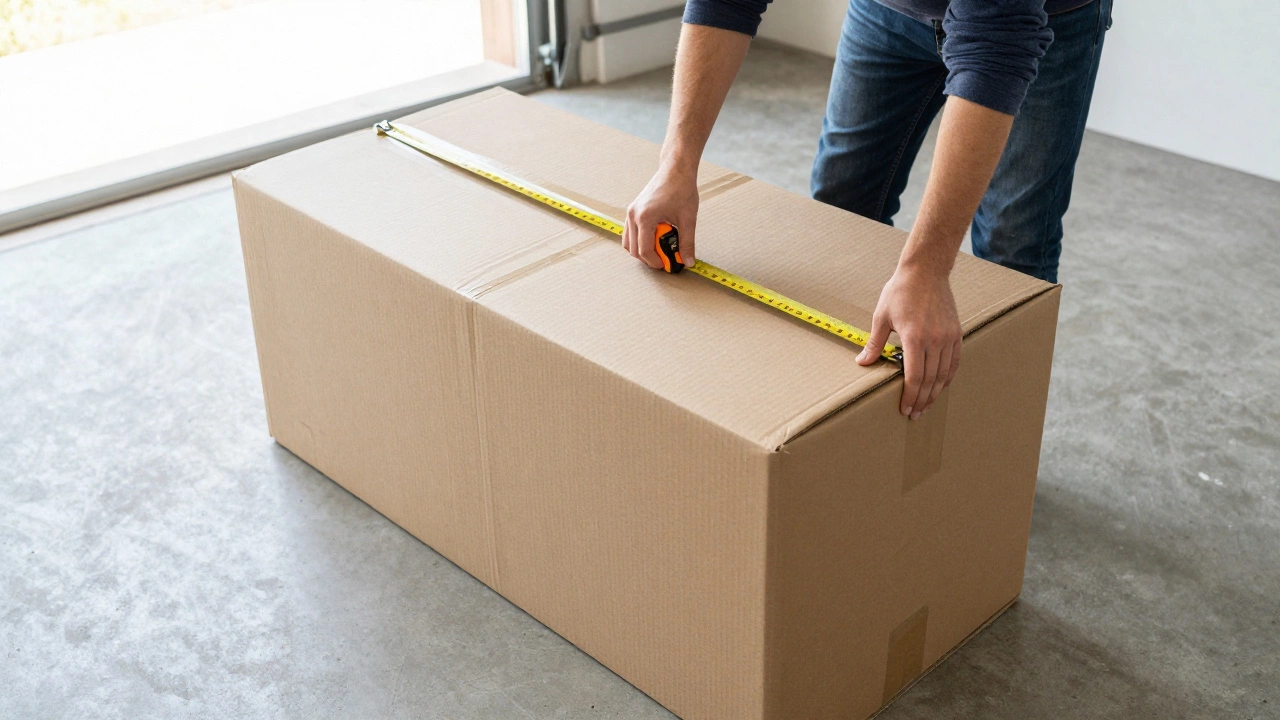
If you're walking into a UPS Store or scheduling a pickup for a regular box, you're dealing with their standard ground network. The absolute ceiling for weight here is 150 pounds. If your package hits 151 pounds, it's technically too heavy for the standard conveyor belts and sorting machines. But weight isn't the only thing they watch. You have to deal with "Girth." This is a fancy way of measuring how wide your package is. To calculate this, you take the smallest side's width and height, add them together, and multiply by two. Then, you add the longest side (the length). If that total number is over 165 inches, UPS will likely reject the shipment or charge you an "Over Maximum Limit" fee, which can easily cost over $100 extra per box. Imagine you're shipping a long roll of industrial carpeting. If the roll is 100 inches long and 20 inches in diameter, your girth is (20+20)*2 = 80. Total size is 100 + 80 = 180 inches. That's over the 165-inch limit, meaning the standard ground service won't take it.When to Switch to UPS Freight
Once you move past 150 pounds or the 165-inch size limit, you enter the world of UPS Freight is a specialized LTL (Less-Than-Truckload) shipping service designed for oversized and heavy goods. Unlike standard packages that travel on belts, freight moves on pallets. This is where the limits practically vanish for the average person. UPS Freight can handle items weighing up to 30,000 pounds. If you're shipping a commercial refrigerator or a pallet of bricks, this is the only way to go. Freight is fundamentally different because it uses LTL Shipping is a transportation method where multiple shippers share space on one truck, paying only for the portion of the trailer they use . This makes it cheaper than hiring a full truck, but it requires your item to be securely strapped to a pallet or crated in heavy-duty wood.| Feature | Standard Ground | UPS Freight (LTL) |
|---|---|---|
| Max Weight | 150 lbs | 30,000 lbs |
| Max Length | 108 inches | Varies (Truck Width) |
| Packaging | Cardboard Box | Pallet/Crate |
| Handling | Conveyor Belts | Forklifts/Pallet Jacks |
The Hidden Costs of Oversized Shipping
Shipping a large item isn't just about whether UPS *can* do it, but whether you can afford it. UPS uses a system called Dimensional Weight is a pricing method that considers the volume of a package as well as its actual weight to ensure fair pricing for light but bulky items . If you ship a giant box filled with pillows, it might only weigh 10 pounds, but it takes up the space of five other packages. UPS will calculate the "dim weight" by multiplying Length x Width x Height and dividing by a divisor (currently around 139 for commercial shipping). If the dim weight is higher than the actual weight, you pay for the dim weight. Then there are the surcharges. "Large Package Surcharge" kicks in when a package exceeds 50 lbs or has a length plus girth over 130 inches. These aren't small fees; they are designed to discourage people from putting oversized items into the standard network. If you're shipping a 140-pound box, you're almost certainly going to pay this penalty.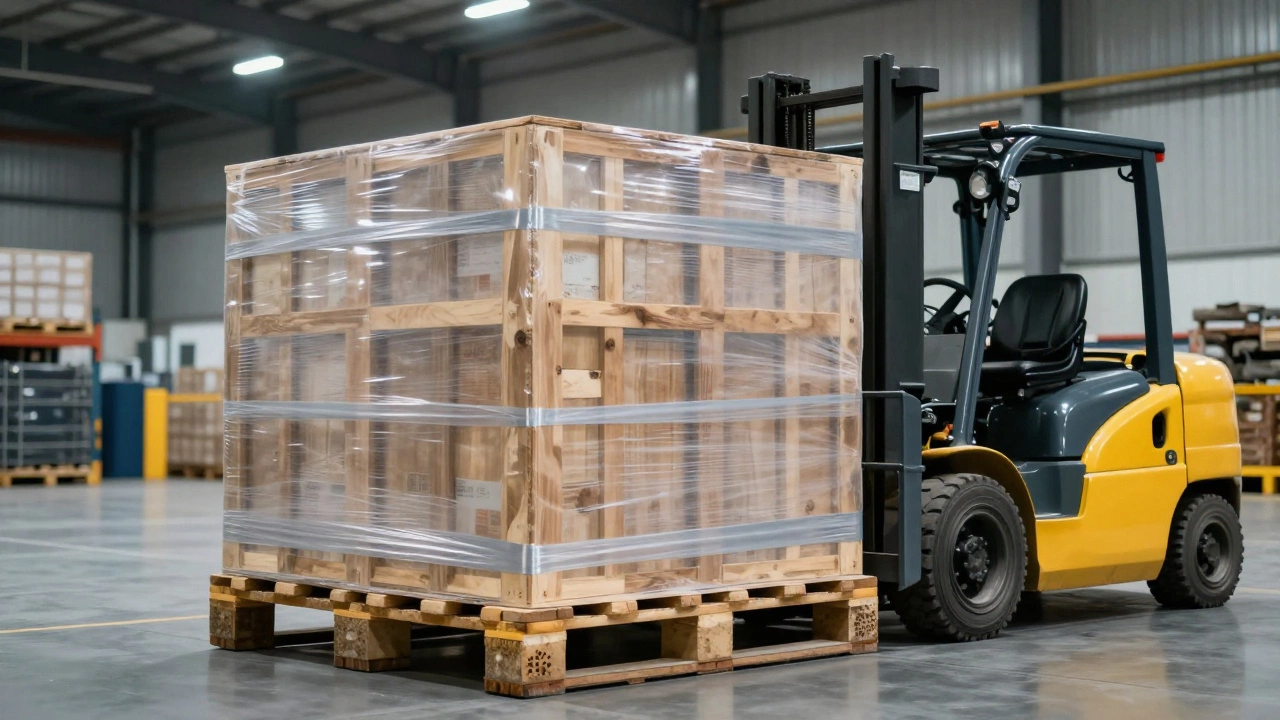
Practical Tips for Shipping Huge Items
How do you avoid these traps? First, stop using generic cardboard. For anything over 70 pounds, a standard single-wall box will likely burst. Use double-walled corrugated cardboard or a wooden crate. If you're moving into freight territory, remember the "Pallet Rule." A standard pallet is 48 x 40 inches. If your item hangs over the edge of the pallet, it's more likely to be damaged and might incur an extra fee. Use heavy-duty stretch wrap-not just a bit of plastic, but several layers-to keep the item from shifting. A shifting load is the number one reason for freight damage claims. Also, consider the delivery point. Does the recipient have a loading dock? If not, you'll need to request a Liftgate is a hydraulic platform on the back of a delivery truck that allows heavy freight to be lowered to the ground . If you forget to request a liftgate for a 500-pound machine, the driver might refuse to unload it, and you'll be charged for the return trip.International Considerations for Large Shipments
When shipping internationally, the rules get even tighter. Customs is the official department that administers and collects the duties levied by a government on imported goods handles the paperwork, but the physical limits are often dictated by the aircraft. If you use UPS Air, your size limits are much stricter than Ground. Many planes simply cannot fit a 108-inch box in the hold. For massive international shipments, most pros switch to ocean freight. It takes weeks instead of days, but it's the only way to move multi-ton shipments across oceans without spending a small fortune.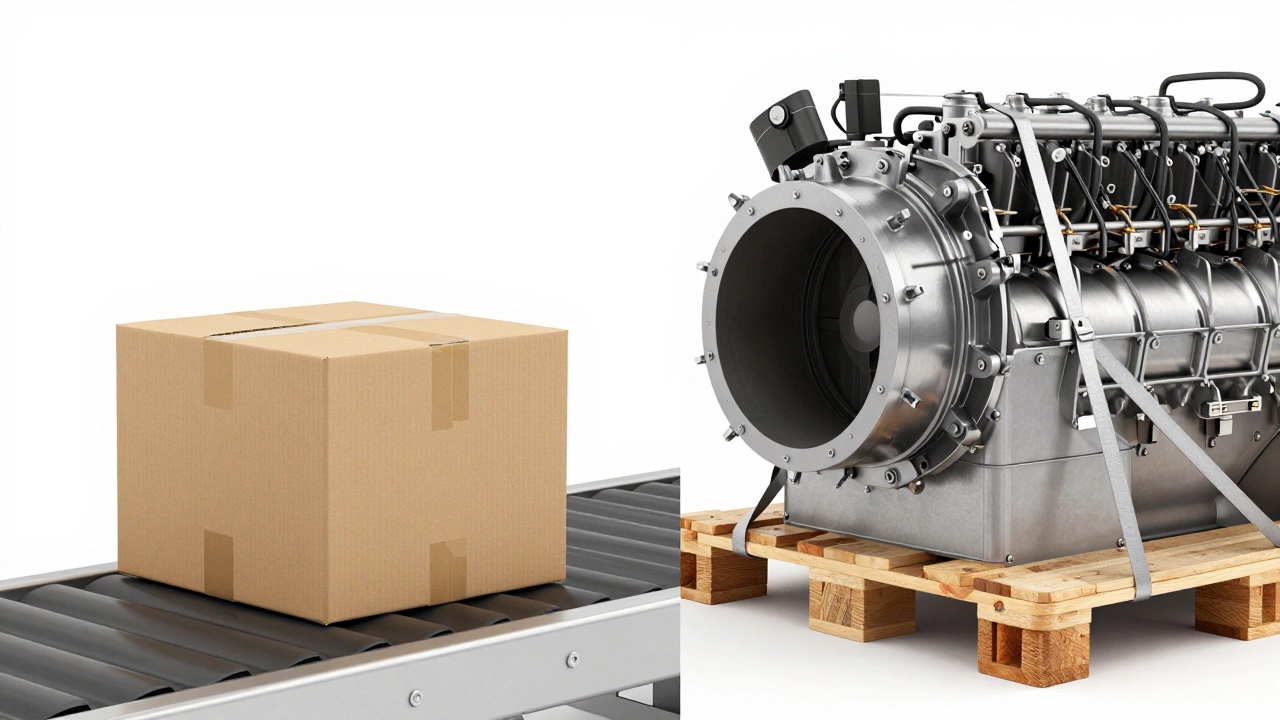
Common Pitfalls to Avoid
One of the biggest mistakes is lying about weight. People often guess a box is 100 pounds when it's actually 160. UPS uses industrial scales at every hub. If they find your package is over the 150-pound limit, they may stop the shipment immediately. You'll be billed for the shipping you've already used, plus a penalty, and the package will either be returned or held until you pay for freight conversion. Another issue is poor labeling. With large packages, labels often get torn or covered by packing tape. Place your shipping label on the top and the side of the box. For freight, make sure the Bill of Lading (BOL) is clearly attached to the side of the pallet in a waterproof sleeve.What happens if my package is slightly over 150 lbs?
If it's just a few pounds over, you might get lucky, but generally, UPS will flag it as an "Over Maximum Limit" shipment. This results in a heavy surcharge. If it's significantly over, the package may be refused for standard ground transport and redirected to a freight service at your expense.
How do I calculate the girth of my package?
Measure the two shortest sides of your box. Add those two measurements together, then multiply that sum by two. For example, if your box is 20" wide and 10" high, the girth is (20 + 10) x 2 = 60 inches.
Is it cheaper to use UPS Ground or UPS Freight?
For items under 150 lbs, Ground is almost always cheaper. However, once you hit the "Large Package Surcharge" thresholds, the price gap closes. For anything over 150 lbs, Freight is the only option and is often more cost-effective per pound than trying to split a large item into multiple smaller, fragile boxes.
Can UPS ship a car or a boat?
Standard UPS stores cannot, but through specialized freight partnerships, very large machinery can be moved. However, for vehicles, most people use specialized auto-transport companies rather than a general courier like UPS.
What is the maximum length for a UPS Ground shipment?
The maximum length allowed for UPS Ground is 108 inches. If your item exceeds this, it must be shipped via UPS Freight.