TMS System Cost Breakdown: Pricing Models, Hidden Fees & ROI in 2026

TMS Cost & ROI Estimator
Financial Projection (Year 1)
Enter your details and click calculate to see the breakdown.
You’ve probably seen the price tags for Transportation Management Systems (often called TMS) and felt a bit of sticker shock. One vendor quotes you $500 a month; another wants $50,000 upfront. It feels like everyone is playing a different game. But here’s the truth: there is no single “price” for a TMS. The cost depends entirely on how you buy it, what features you need, and how complex your supply chain actually is.
In 2026, the market has shifted away from massive, monolithic licenses toward flexible subscription models. However, that flexibility comes with its own set of hidden costs. If you’re trying to build a budget for logistics software, you need to look beyond the monthly fee. You need to understand implementation, integration, and the long-term total cost of ownership (TCO).
The Three Main Pricing Models Explained
Before you talk to a sales rep, you need to know which pricing bucket your company falls into. Most transportation management systems fall into one of three categories. Knowing this helps you avoid being upsold into a tier you don’t need or undersold into a tool that will break under load.
- SaaS Subscription (Per User): This is the most common model for small to mid-sized businesses. You pay a monthly fee per user, usually between $100 and $300. It’s predictable, but costs scale up as you hire more logistics staff.
- Volume-Based Pricing: Ideal for high-volume shippers. Instead of paying per user, you pay based on the number of shipments or lanes processed. If you ship 10,000 orders a month, this might be cheaper than per-user licensing. If you ship 100, it’s not.
- On-Premise License: Rare now, but still exists for highly regulated industries. You pay a large upfront license fee ($50k-$150k+) plus annual maintenance. You own the software, but you also own the servers and IT headaches.
For most companies reading this, the SaaS model is the standard. Let’s dig into what that actually looks like in your wallet.
Base Subscription Costs: What You Pay Monthly
If you choose a cloud-based logistics software, your base cost is straightforward. Here is a realistic breakdown of what you can expect in 2026:
- Basic Tier: $150 - $300 per user/month. Includes basic rate shopping, tendering, and visibility. Good for teams with simple LTL (Less-than-Truckload) needs.
- Mid-Tier: $300 - $600 per user/month. Adds FTL (Full Truckload) optimization, multi-modal support (air/ocean), and better analytics.
- Enterprise Tier: Custom pricing, often starting at $5,000+/month flat. Includes advanced AI routing, global trade management, and dedicated account managers.
A critical detail here is the definition of a “user.” Some vendors charge for every employee who logs in. Others offer “role-based” pricing where drivers and warehouse staff have free or discounted access. Always ask: “Does my driver count as a paid seat?”
| Company Profile | Monthly Cost Range | Key Features Included |
|---|---|---|
| Small Business (<50 shipments/mo) | $500 - $1,500 | Rate shopping, basic tracking, email alerts |
| Mid-Market (50-500 shipments/mo) | $1,500 - $5,000 | Multi-carrrier tendering, dashboards, API integrations |
| Enterprise (>500 shipments/mo) | $5,000 - $20,000+ | AI optimization, global freight, custom workflows |
The Hidden Costs That Blow Up Budgets
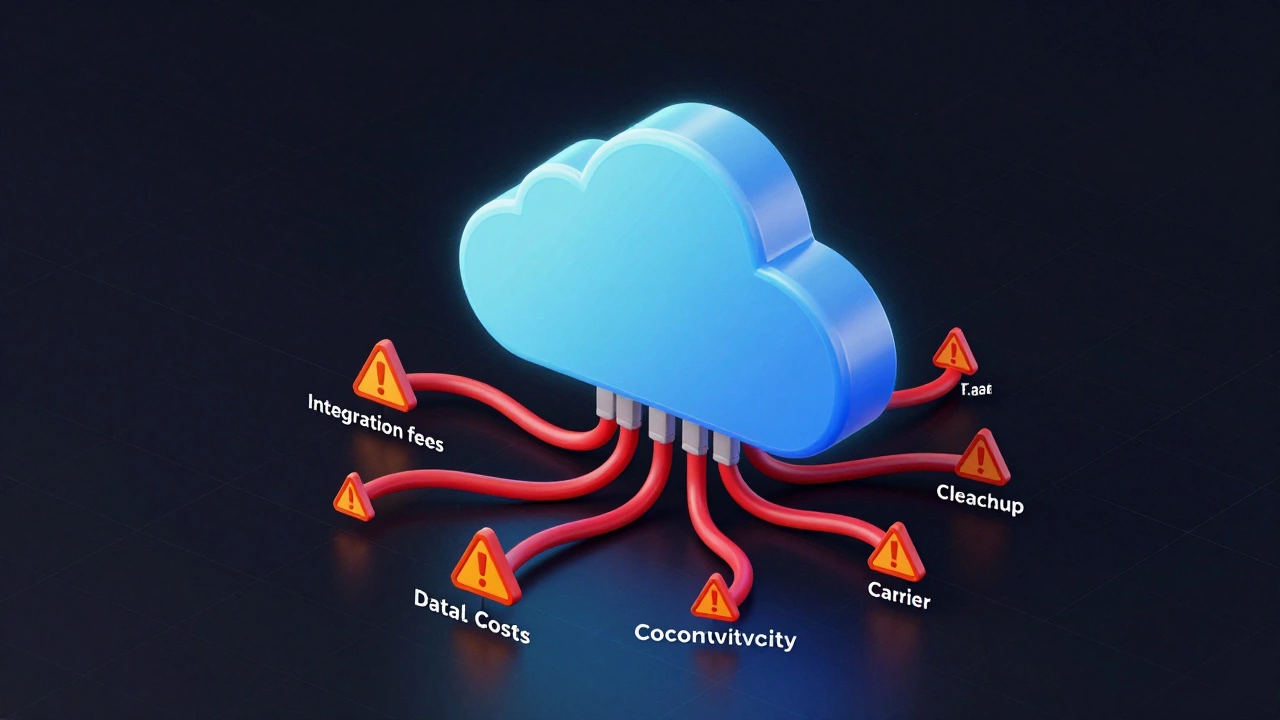
The monthly subscription is just the tip of the iceberg. I’ve seen projects fail because finance approved the software cost but ignored the implementation reality. These are the expenses you must budget for separately.
1. Implementation and Onboarding
Setting up a TMS platform isn’t like plugging in a USB drive. You need to configure carrier contracts, map your SKU data, and set up business rules. For SaaS tools, expect to pay $5,000 to $20,000 for professional services during the first month. Complex setups with legacy ERP integrations can push this to $50,000+.
2. Integration Fees
Your TMS doesn’t live in isolation. It needs to talk to your ERP system (like SAP, Oracle, or NetSuite) and your Warehouse Management System (WMS). Pre-built connectors save money. Custom APIs built by developers? That’s $10,000 to $30,000 in engineering hours alone. Ask vendors if they have native integrations with your current stack before signing.
3. Carrier Data Access
This is the sneaky one. To get real-time rates from carriers like FedEx, UPS, or major trucking lines, some TMS providers charge extra for “carrier connectivity.” Other platforms include this in the base price. In 2026, data access fees can range from $50 to $200 per carrier connection annually. Multiply that by 10 carriers, and you’re looking at an unexpected $1,500 yearly hit.
ROI: How a TMS Pays for Itself
Why spend this money? Because manual freight management is expensive. A typical company spends 15% to 20% of their gross revenue on transportation. A well-implemented TMS can reduce those costs by 5% to 10%. Let’s do the math.
If your annual freight spend is $1 million, a 5% saving equals $50,000. If your TMS costs $24,000 a year (subscription + fees), you net $26,000 in profit. That’s a clear return. Beyond direct savings, you gain:
- Reduced Detention Fees: Better scheduling means fewer trucks waiting at docks.
- Fewer Missed Deliveries: Real-time visibility prevents costly expedited air shipments.
- Labor Efficiency: Automating rate shopping saves planners hours every week.
Most businesses see full ROI within 6 to 12 months. If a vendor promises immediate savings without showing how they’ll optimize your specific lanes, be skeptical.
How to Negotiate Your TMS Contract
Don’t just accept the first quote. Use these tactics to lower your total cost:
- Bundling Discounts: If you use both TMS and WMS from the same provider, negotiate a 10-15% bundle discount.
- Annual Prepayment: Paying for 12 months upfront often unlocks a 10-20% discount compared to monthly billing.
- Ceiling on Usage: If you’re on volume-based pricing, cap your monthly overage fees. You shouldn’t be penalized for having a great sales quarter.
- Free Implementation: Many vendors will waive setup fees if you commit to a two-year contract. Take the deal, but ensure the exit clause is fair.
Also, check for “success fees.” Some newer TMS providers take a percentage of the freight savings they generate. This aligns their incentives with yours, but make sure the base fee isn’t inflated to compensate.

Common Pitfalls to Avoid
I’ve watched too many logistics teams make the same mistakes. Don’t let this happen to you.
Pitfall 1: Buying Too Much Power. Do you really need global ocean freight optimization if you only ship domestically via LTL? Skip the enterprise suite. Start with a mid-tier tool and upgrade later. Vendor lock-in makes downgrading hard.
Pitfall 2: Ignoring Training Costs. Software is useless if your team doesn’t use it. Budget for training materials or external consultants. A $2,000 training course is cheaper than six months of inefficient usage.
Pitfall 3: Underestimating Data Cleanup. Your TMS is only as good as your address data. Garbage in, garbage out. Spend time cleaning your customer and vendor master data before migration. Poor addresses lead to failed deliveries and higher costs.
Final Thoughts on Budgeting for Logistics Software
There is no magic number for TMS cost. For a small business, expect to invest $10,000 to $20,000 in the first year (including setup). Mid-market companies should budget $30,000 to $75,000 annually. Enterprise solutions are custom, but rarely dip below $100,000 per year when all factors are included.
The key is to focus on value, not just price. A cheaper TMS that fails to integrate with your ERP will cost you more in overtime and errors than a premium tool that runs smoothly. Define your must-have features, calculate your expected freight savings, and then shop around. The right partner will help you justify the expense with hard numbers, not vague promises.
What is the average monthly cost of a TMS?
For most mid-sized companies, the average monthly cost ranges from $1,500 to $5,000. This typically includes per-user licensing fees for 3-5 users. Small businesses may pay less ($500-$1,000), while large enterprises often pay custom rates exceeding $10,000 per month.
Are there any free TMS options available?
True enterprise-grade TMS platforms are not free due to the complexity of carrier integrations and data processing. However, some carriers offer basic shipment booking tools for free to their customers. Additionally, some SaaS providers offer limited free trials or freemium tiers for very low-volume shippers (under 10 shipments/month), but these lack advanced optimization features.
What are the hidden costs of implementing a TMS?
Hidden costs often include implementation fees ($5k-$20k), custom API development for ERP integration ($10k-$30k), carrier data access fees ($50-$200 per carrier/year), and internal labor for data cleanup and training. Companies frequently underestimate the time their IT and logistics teams will spend configuring the system.
How quickly does a TMS provide ROI?
Most businesses achieve a positive return on investment within 6 to 12 months. This comes primarily from reduced freight costs (5-10% savings), fewer detention fees, and improved operational efficiency. Companies with complex, multi-modal supply chains often see faster ROI due to greater optimization opportunities.
Should I choose per-user or volume-based pricing?
Choose per-user pricing if you have a large logistics team but relatively low shipment volume. Choose volume-based pricing if you have high shipment counts but a small planning team. Calculate your total cost by multiplying users by price versus shipments by price-per-unit to see which model fits your specific operational profile.