The Hidden Costs of In-House Storage: Why Keeping Inventory On-Site Can Hurt Your Business

In-House vs. 3PL Storage Cost Calculator
Your Current Setup (In-House)
Assumed Inventory Value per Month:
Cost Analysis
Enter your details to see the comparison.
It feels safe to keep your goods in your own building. You can see them, touch them, and control who accesses them. For many small business owners, this sense of security is the primary reason they choose in-house storage over outsourcing. But that comfort comes with a price tag that often stays hidden until it’s too late. The reality is that managing your own warehouse space is rarely just about rent; it’s a complex operation involving labor, technology, insurance, and opportunity costs that can drain resources faster than you realize.
When you decide to store inventory on-site, you are essentially running a secondary business within your primary one. This dual focus creates friction. Every hour spent organizing shelves is an hour not spent on sales, product development, or customer service. As your business grows, the inefficiencies of self-managed storage compound, turning what started as a cost-saving measure into a significant liability. Understanding these disadvantages is crucial for making informed decisions about your supply chain strategy.
The High Cost of Space Utilization
The most obvious disadvantage of in-house storage is the financial burden of the physical space itself. Renting or owning a facility large enough to hold your inventory ties up capital that could be invested elsewhere. If you own the property, you’re dealing with maintenance, taxes, and depreciation. If you lease, you’re locked into fixed monthly payments regardless of whether your inventory levels fluctuate seasonally.
Consider the concept of dead stock. In a dedicated warehouse solution, you only pay for the space you use. With in-house storage, you pay for the entire footprint even if half the racks are empty during slow months. This lack of scalability means you are constantly overpaying for unused square footage. Furthermore, the location of your storage matters. To keep shipping costs low, you might need to store goods closer to customers, but prime real estate near urban centers is expensive. Balancing proximity with affordability is nearly impossible when you’re tied to a single static location.
There is also the issue of vertical space utilization. Most businesses do not have the industrial-grade racking systems found in professional warehouses. Without high-density storage solutions like pallet racking or automated vertical lift modules, you end up wasting valuable cubic meters of air above your floor level. Professional logistics providers invest heavily in these technologies to maximize density, a luxury few small-to-medium enterprises can afford.
Labor Intensity and Operational Drag
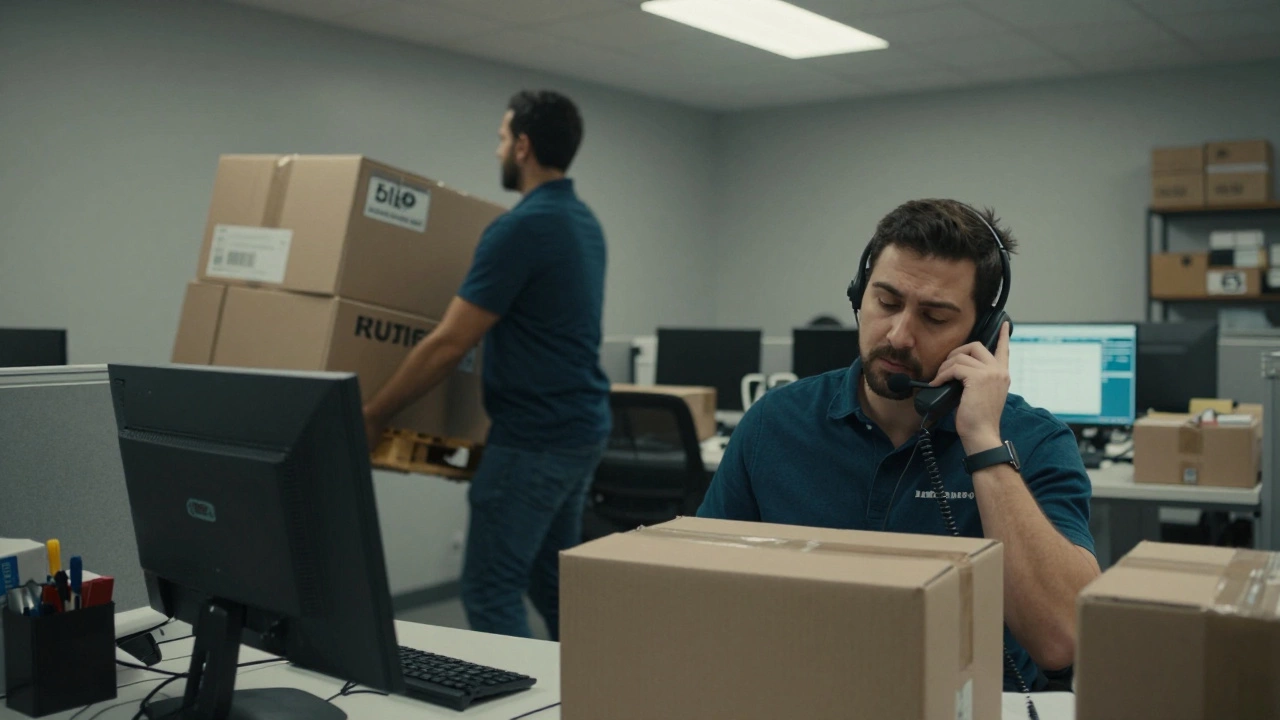
Storage isn’t passive. It requires constant human intervention. Receiving goods, putting them away, picking orders, packing, and conducting regular inventory counts all require staff time. When you manage storage in-house, you either divert existing employees from their core roles or hire new ones specifically for warehouse duties. Both options come with downsides.
Diverting staff leads to burnout and reduced productivity in key areas. A salesperson shouldn’t be spending three hours a week boxing up returns. Hiring new staff introduces recruitment costs, training overhead, and ongoing salary expenses. Moreover, warehouse work is physically demanding and prone to errors. Without specialized training in inventory management software and safety protocols, mistake rates increase. Misplaced items lead to lost sales, while incorrect picks result in costly returns and damaged customer relationships.
Seasonal spikes exacerbate this problem. During peak periods like Black Friday or holiday seasons, your storage needs might triple overnight. An in-house setup lacks the flexibility to scale labor quickly. You either face backlogs and missed delivery deadlines or scramble to hire temporary workers who lack familiarity with your processes. Third-party logistics (3PL) providers, by contrast, have flexible labor pools ready to handle volume surges without disrupting your core team.
Security Risks and Insurance Complexities
Keeping inventory on-site exposes your business to heightened security risks. Unlike commercial warehouses designed with surveillance, access controls, and fire suppression systems, typical office or retail spaces are not built to protect high-value goods. Break-ins, theft, and vandalism are genuine threats. Even with basic alarms, the response time in a non-industrial setting may be slower, increasing potential losses.
Insurance adds another layer of complexity. Standard business policies often exclude or limit coverage for stored inventory, especially if it’s kept in a space not zoned for warehousing. You may need to purchase additional riders or specialized cargo insurance, which can be expensive. In the event of damage-whether from water leaks, fire, or pest infestation-the claims process can be lengthy and contentious, particularly if the insurer argues that the storage conditions were inadequate.
Compliance is another hidden pitfall. Depending on what you store, there may be regulatory requirements for temperature control, humidity levels, or hazardous material handling. Meeting these standards in a general-purpose building is difficult and costly. Failure to comply can result in fines, seized inventory, or legal liability. Professional storage facilities are equipped and certified to handle diverse product types safely, reducing your exposure to regulatory risk.
Technology Gaps and Data Blind Spots
Modern inventory management relies on data. Real-time visibility into stock levels, turnover rates, and expiration dates is essential for efficient operations. In-house storage often lacks the technological infrastructure to provide this insight. Many businesses rely on spreadsheets or basic point-of-sale systems that don’t integrate well with warehouse operations. This disconnect leads to inaccurate data, causing overstocking of slow-moving items and stockouts of popular products.
Without a robust Warehouse Management System (WMS), you miss out on automation benefits like barcode scanning, RFID tracking, and predictive analytics. These tools help optimize picking routes, reduce errors, and forecast demand. Implementing such technology in-house requires significant upfront investment and ongoing IT support. For many companies, the ROI doesn’t justify the expense, leaving them stuck with manual, error-prone processes.
Data blind spots also hinder strategic decision-making. If you don’t know exactly where every item is located or how long it has been sitting on a shelf, you can’t make informed choices about pricing, promotions, or procurement. This lack of transparency can lead to cash flow issues, as money gets trapped in unsold inventory. Outsourcing to a tech-enabled provider gives you access to advanced analytics without the burden of maintaining the system yourself.
Opportunity Cost and Strategic Distraction
Beyond direct costs, the biggest disadvantage of in-house storage is the opportunity cost. Every resource-time, money, attention-spent on managing your own warehouse is a resource taken away from growing your business. Core competencies like marketing, product innovation, and customer engagement suffer when leadership is bogged down by logistical headaches.
Imagine spending a weekend reorganizing your stockroom instead of planning a new product launch. Or dealing with a broken forklift at 2 AM instead of focusing on a major client presentation. These distractions accumulate, slowing down your growth trajectory. By outsourcing storage, you free up mental bandwidth and financial resources to focus on what truly drives revenue: your unique value proposition.
Strategic agility is also compromised. In a fast-changing market, the ability to pivot quickly is vital. If you’re tied to a long-term lease for a warehouse space, adapting to new distribution models-like same-day delivery or multi-channel fulfillment-becomes difficult. Flexible partners allow you to experiment with different strategies without being anchored by rigid infrastructure.
For those looking to explore alternative arrangements beyond traditional warehousing, understanding the full spectrum of service options is key. Some businesses find niche solutions through specialized directories, such as this directory, which illustrates how specific markets organize verified profiles and services-a model that mirrors the precision needed in selecting the right logistics partner for your unique needs.
Comparison: In-House vs. Third-Party Logistics
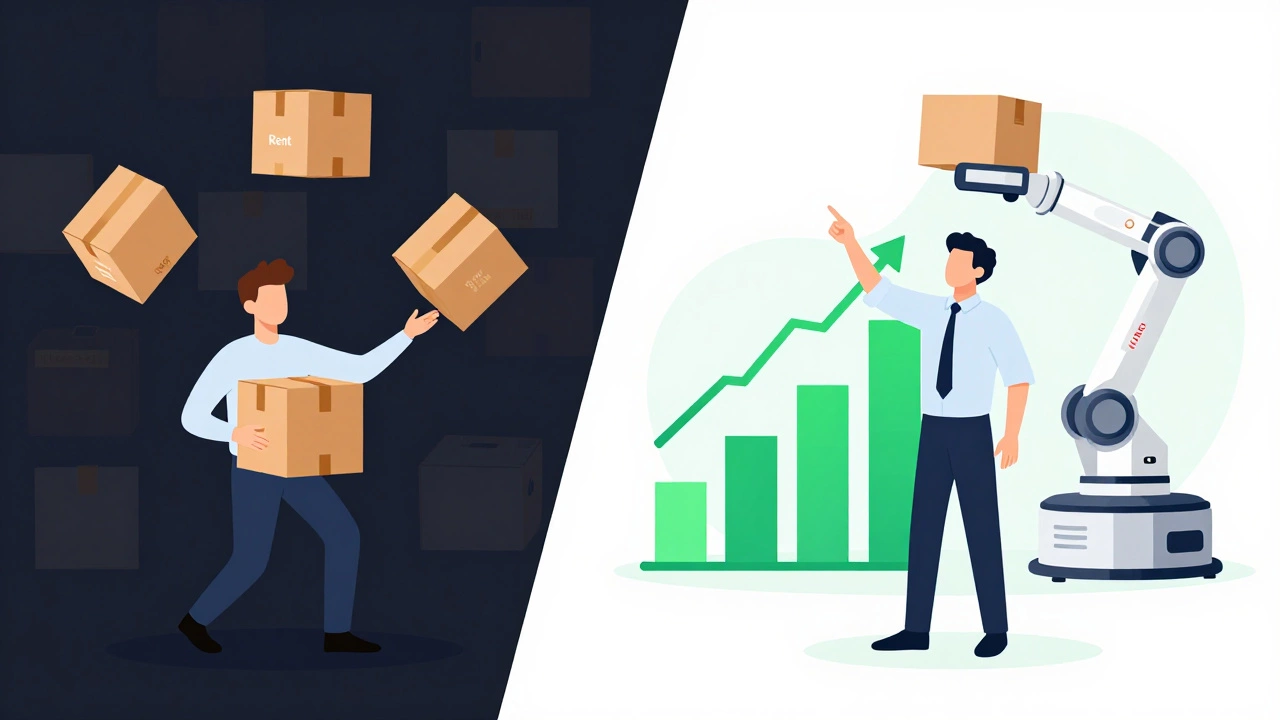
| Factor | In-House Storage | Third-Party Logistics (3PL) |
|---|---|---|
| Cost Structure | Fixed costs (rent, salaries, utilities) | Variable costs (pay per unit/service) |
| Scalability | Low; limited by physical space | High; scales with demand |
| Technology | Often outdated or manual | Advanced WMS and automation |
| Labor | Internal staff diversion or hiring | Dedicated, trained workforce |
| Risk Exposure | High (security, compliance, insurance) | Shared or mitigated by provider |
| Focus | Split between ops and growth | 100% on core business |
When Is In-House Storage Actually Viable?
While the disadvantages are significant, in-house storage isn’t always wrong. It makes sense for very small businesses with minimal SKU counts, predictable demand, and tight control requirements. If you sell custom-made items that are produced and shipped immediately, you may not need much storage at all. Similarly, if your products are highly sensitive or require unique handling that no third party can guarantee, keeping them on-site might be necessary.
However, even in these cases, you should regularly reassess. As soon as your inventory grows, your order volume increases, or your product line diversifies, the limitations of in-house storage will become apparent. The transition to a hybrid model-using in-house for fast-movers and a 3PL for bulk or slow-moving stock-can offer a balanced approach.
Steps to Evaluate Your Current Setup
- Audit Your Costs: Calculate the true cost of your current storage, including rent, labor, insurance, and equipment maintenance.
- Analyze Space Usage: Measure how much of your available space is actually utilized versus wasted.
- Assess Labor Impact: Track how many hours your team spends on storage-related tasks each week.
- Review Error Rates: Look at past mistakes in picking, packing, and inventory counts to quantify operational inefficiency.
- Project Growth: Estimate your inventory needs for the next 1-3 years. Will your current space accommodate this growth?
- Compare Options: Get quotes from local 3PL providers and compare their total cost of ownership against your in-house calculations.
Making the switch doesn’t have to be abrupt. Start by outsourcing overflow inventory or seasonal peaks. This allows you to test the waters and build a relationship with a provider before committing fully. The goal is to create a resilient, scalable supply chain that supports, rather than hinders, your business objectives.
Is in-house storage cheaper than using a 3PL?
Not necessarily. While in-house storage appears cheaper initially due to lower visible fees, the hidden costs of labor, insurance, technology, and inefficient space usage often make it more expensive in the long run. 3PLs offer variable pricing based on actual usage, which can be more cost-effective for fluctuating inventory levels.
What are the biggest security risks of storing inventory on-site?
The main risks include theft, unauthorized access, and damage from environmental factors like water or fire. Non-industrial buildings typically lack advanced security systems, surveillance, and climate control, making them vulnerable to loss and spoilage.
How does in-house storage affect employee productivity?
It diverts staff from core responsibilities like sales and customer service to handle receiving, picking, and packing. This split focus reduces efficiency in key revenue-generating activities and can lead to employee burnout.
Can I use in-house storage for e-commerce fulfillment?
Yes, but it becomes challenging as order volumes grow. Managing high-volume e-commerce fulfillment in-house requires significant technology integration and labor coordination. Most successful e-commerce brands eventually outsource to 3PLs to maintain speed and accuracy.
When should I consider switching from in-house to outsourced storage?
Consider switching when your inventory exceeds your available space, when labor costs for storage rise significantly, or when you struggle with order accuracy and timely shipments. Scaling difficulties are a clear sign that outsourcing would benefit your business.