Should Rugs Go Under a Sofa? The Ultimate Placement Guide
Rug Placement Visualizer & Recommender
Enter your room dimensions and furniture size to find the perfect rug strategy.
You walk into a friend’s house and something feels off. The furniture floats in the middle of the room, disconnected from the floor. Or maybe you’ve just bought a gorgeous new area rug and now you’re staring at your couch, wondering if you should shove it all under there or leave it out. This is one of the most common dilemmas in home styling, and getting it wrong can make even the best furniture look cheap.
The short answer? It depends on the size of your rug and the vibe you want. But "it depends" isn’t very helpful when you’re standing in a store holding a credit card. Let’s break down exactly how to place your rug so your living room looks intentional, not accidental.
Why Rug Placement Matters More Than You Think
A rug does more than cover cold floors. It anchors the space. Without proper placement, your living room can feel disjointed, like a collection of unrelated objects rather than a cohesive zone. When you position an area rug correctly, you define boundaries without walls. You tell the eye where the conversation starts and ends.
Think about visual weight. A sofa is heavy. If it sits entirely off the rug, it looks like it’s hovering. If it sits entirely on a tiny rug, it looks cramped. The goal is balance. You want enough contact between the furniture legs and the textile to ground the piece, but not so much that the rug disappears under the bulk of the upholstery.
The Three Main Placement Rules
There are three standard ways to arrange a rug relative to a sofa. Each serves a different purpose and works best in specific room sizes. Here is how they stack up against each other:
| Placement Style | Description | Best For | Rug Size Rule |
|---|---|---|---|
| All Legs On | The entire sofa and coffee table sit fully on the rug. | Large rooms, formal living areas, open-plan spaces. | Rug must extend at least 6-8 inches beyond the sofa arms. |
| Front Legs Only | Only the front two legs of the sofa rest on the rug. | Medium-sized rooms, casual setups, smaller rugs. | Rug width should match or slightly exceed the sofa width. |
| Center Only | The rug sits under the coffee table only; sofa legs stay off. | Small apartments, bedrooms, narrow layouts. | Rug fits comfortably under the coffee table with breathing room. |
Option 1: All Legs On (The Anchor)
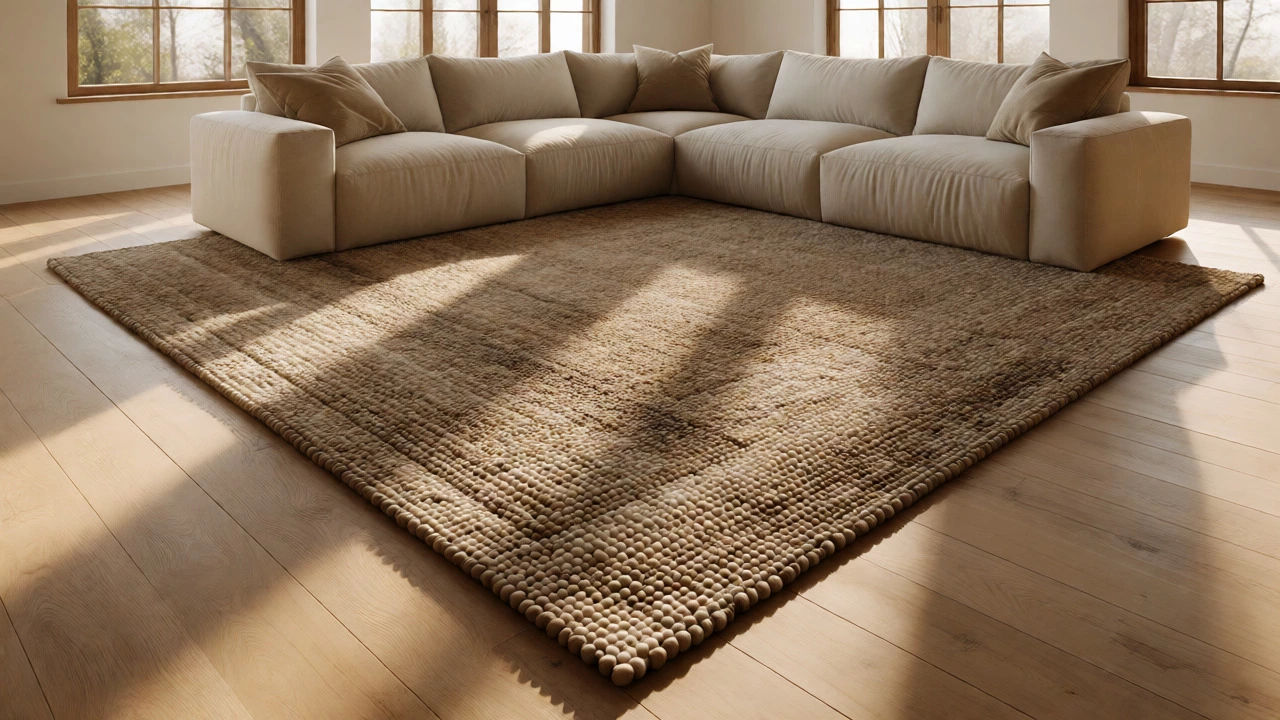
This is the gold standard for large living rooms. By placing every leg of the sofa on the rug, you create a solid island of comfort. It makes the room feel expansive and luxurious. However, this requires a big rug. If your rug is too small, the edges will cut awkwardly across the sofa cushions, which looks messy.
Use this method if your room is over 12x12 feet. Ensure the rug extends past the arms of the sofa by at least six inches. This prevents the "floating" effect and keeps the seating area unified. It also protects your hardwood or tile from scratches caused by moving furniture.
Option 2: Front Legs Only (The Compromise)
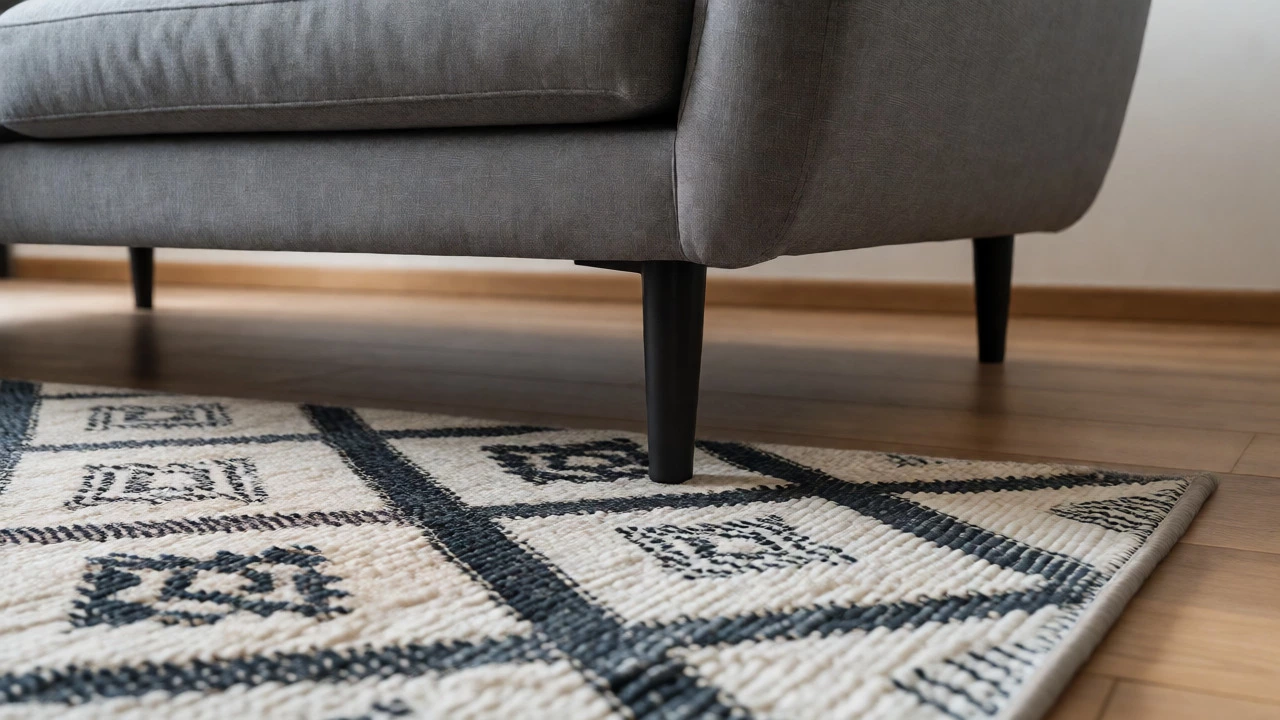
This is the most popular choice for average-sized homes. It saves money because you don’t need a massive rug, but it still provides enough visual connection to anchor the sofa. The back legs remain on the bare floor, which can actually help make a small room feel larger by showing more floor space.
To pull this off, ensure the rug is wide enough. If the rug is narrower than the sofa, the front legs might hang off the sides, which defeats the purpose. Measure your sofa width before buying. A 9-foot sofa usually needs an 8x10 rug to work well with this style.
Option 3: Center Only (The Minimalist)
Some people hate the idea of fabric touching their furniture. Others have tiny rugs they love but can’t replace yet. Placing the rug solely under the coffee table keeps the focus on the center of the room. It’s practical for high-traffic areas where you want easy cleaning access around the sofa.
The risk here is looking unanchored. To fix this, choose a rug with a bold pattern or texture that draws attention. Keep the distance between the sofa front and the rug edge consistent-usually about 4 to 6 inches. If the gap varies wildly, it looks sloppy.
Common Mistakes That Ruin the Look
Even with good intentions, simple errors can undermine your effort. The biggest culprit is scale. People often buy rugs that are too small. A 5x8 rug under a sectional sofa looks like a doormat. It fails to define the space and leaves the furniture feeling scattered.
Another issue is ignoring traffic flow. If your rug slides around because it’s too light, it becomes a tripping hazard. Use a non-slip pad. It adds cushioning and keeps everything in place. Also, consider the pile height. If your sofa has low clearance, a thick shag rug might prevent the doors from opening properly or make it hard to slide the coffee table underneath.
Don’t forget about symmetry. If you have two sofas facing each other, both should follow the same rule. One with front legs on and one with all legs on creates visual tension. Consistency breeds calm.
How to Choose the Right Size
Measure twice, buy once. Start by measuring the length of your sofa. Then add the desired overhang. For "All Legs On," add 12-16 inches total (6-8 per side). For "Front Legs Only," ensure the rug width matches the sofa width closely.
Consider the coffee table too. It should always be centered on the rug. Leave 12-18 inches between the sofa and the coffee table for comfortable legroom. Your rug needs to accommodate this entire cluster. If the coffee table sticks out past the rug edge significantly, the composition falls apart.
Special Cases: Sectionals and Recliners
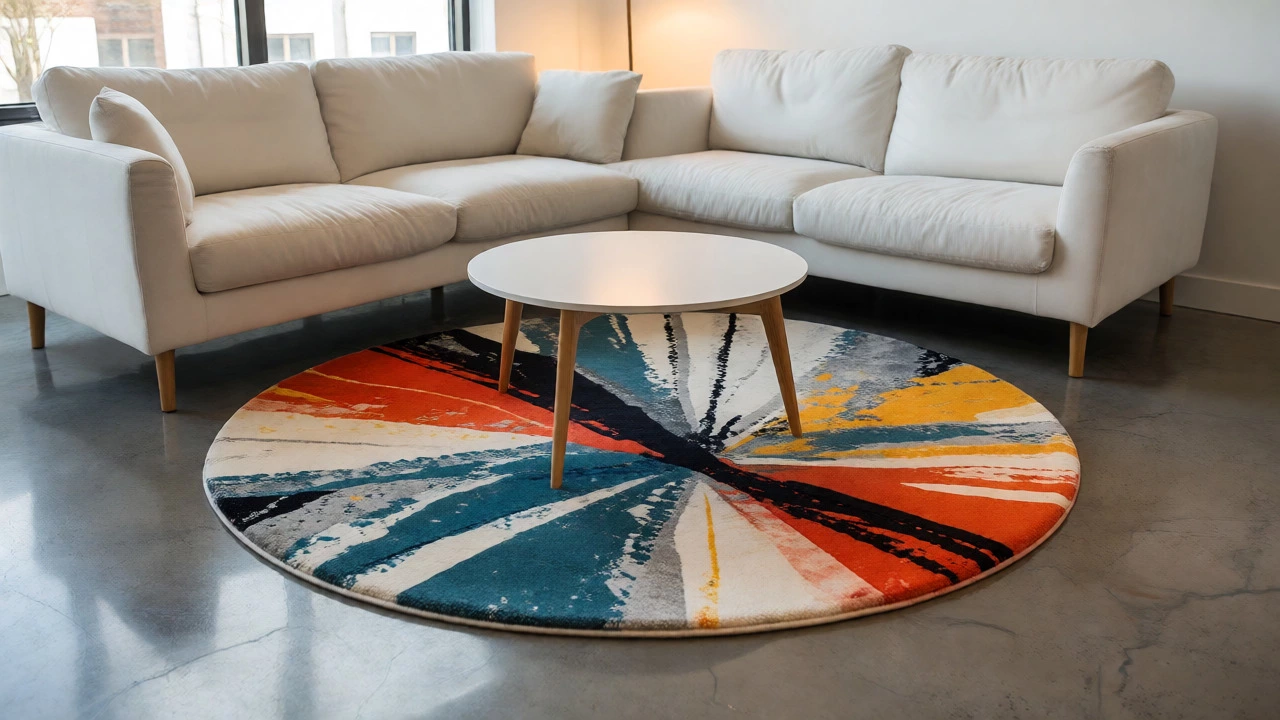
Sectionals complicate things because of their L-shape. Generally, try to get as many legs on the rug as possible. If the sectional is huge, prioritize the main seating section. Place the chaise lounge’s front legs on the rug, even if the back stays off. This maintains the anchor point.
Recliners present a mechanical challenge. Ensure the rug doesn’t bunch up when the footrest extends. Test this before finalizing placement. Sometimes, leaving recliners completely off the rug is safer, especially if they move frequently. Just make sure the rug still visually connects the adjacent sofa.
Frequently Asked Questions
Is it okay if my rug is smaller than my sofa?
It is generally better to err on the side of too big rather than too small. If the rug is significantly narrower than the sofa, it can make the room look cluttered and the furniture feel unstable. Try to find a rug that at least matches the width of the sofa if you plan to put the front legs on it.
What if I have a very small apartment?
In tight spaces, the "Center Only" method often works best. Place a medium-sized rug under the coffee table and keep the sofa legs off the floor covering. This preserves visible floor space, making the room appear larger while still adding warmth and texture to the center of the seating area.
Do I need a rug pad?
Yes, almost always. A rug pad prevents slipping, which is crucial for safety, especially with children or pets. It also adds cushioning, extending the life of the rug fibers and protecting your flooring from abrasion. Choose a pad specifically designed for your floor type (hardwood vs. carpet).
Can I mix patterns with a patterned rug?
Absolutely, but use caution. If your rug has a busy pattern, keep the sofa upholstery solid or subtly textured. If the sofa has a strong print, choose a rug with a simpler geometric or tonal design. Balance is key to avoiding visual chaos.
How far should the rug be from the wall?
There is no strict rule, but leaving 6-12 inches of bare floor between the rug edge and the wall often looks more professional. It frames the rug nicely. However, in very small rooms, pushing the rug closer to the wall can maximize the perceived size of the space.