Is Open Shelving a Fad? The Truth About Open Storage Trends
Open Shelving Compatibility Checker
The Allure of the Open Look
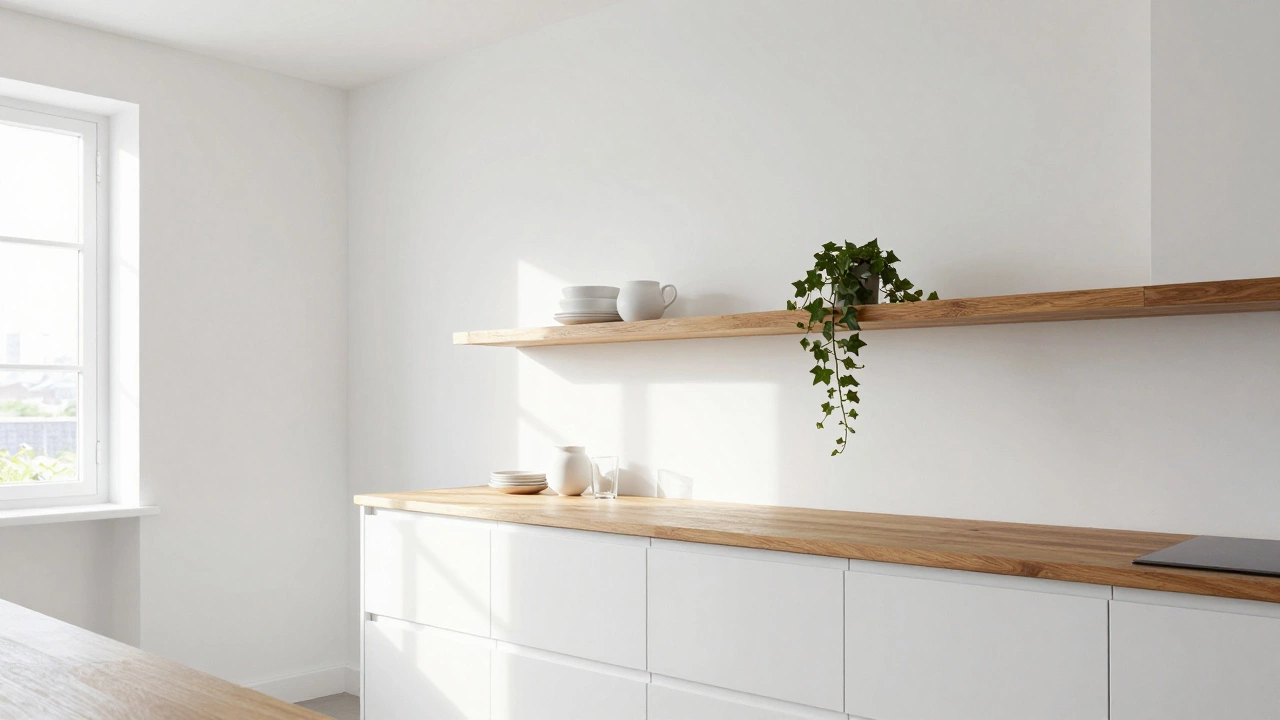
Why did we all suddenly decide that cabinet doors were the enemy? It mostly comes down to a feeling of space. When you remove the heavy blocks of cabinetry from a wall, the room instantly feels larger and airier. This is especially true in small apartments or narrow galley kitchens where bulky cupboards can make you feel like you are standing in a tunnel.
Then there is the aesthetic side. Open Shelving is a storage method where items are placed on brackets or floating supports without doors or drawers. It allows you to treat your functional items as decor. Instead of a beige door, you have a stack of handcrafted ceramics and a few trailing plants. It turns a utility space into a gallery. For people who love the Minimalist style, this is the ultimate way to showcase a curated collection of belongings without the visual noise of traditional hardware.
The Reality Check: Dust, Grease, and Clutter
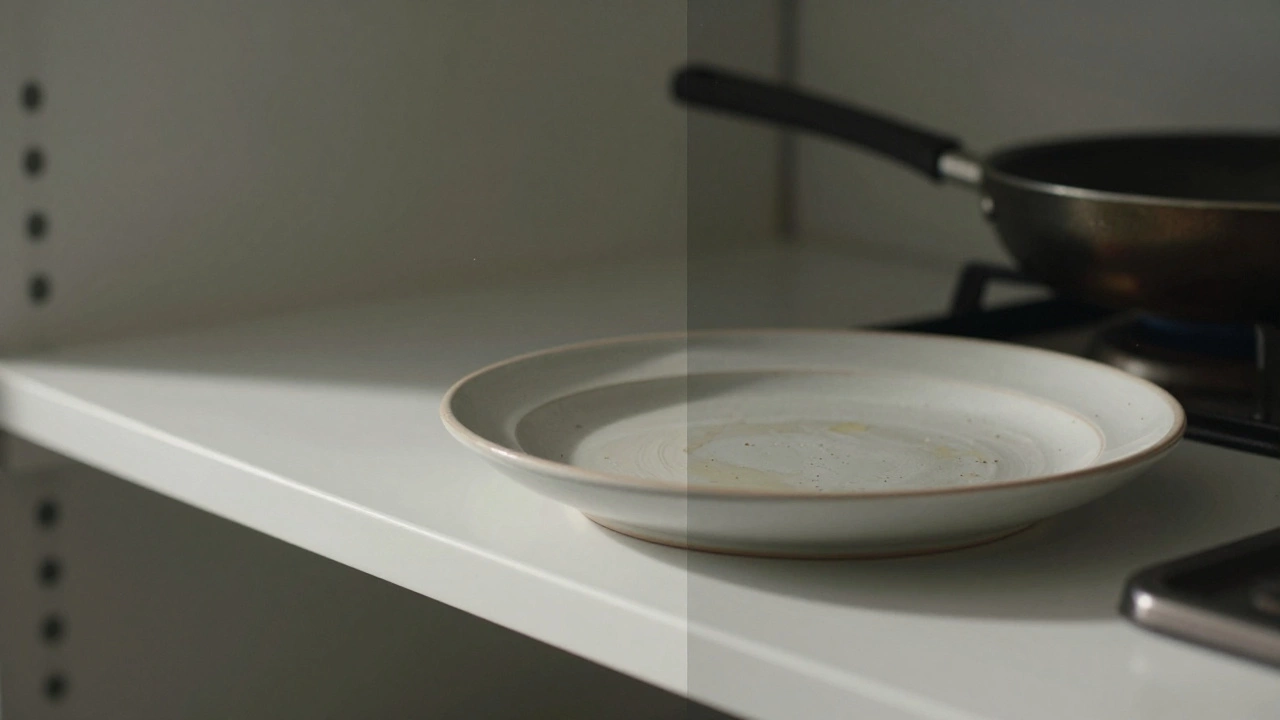
Here is where the fantasy meets the frying pan. In a real kitchen, things get messy. When you cook with oil, a fine mist of grease travels through the air. In a closed cabinet, your plates stay clean. On an open shelf, that grease settles on everything. If you place your plates on a shelf right next to the stove, you will notice a sticky film building up within weeks. You aren't just organizing your kitchen anymore; you are now cleaning your dinnerware every time you take it out.
Then there is the dust. Dust loves a flat, open surface. If you are someone who hates spending Sunday mornings with a microfiber cloth, the maintenance of open storage can feel like a second job. It requires a level of discipline that most of us simply don't have. We have all seen the "Pinterest version" of a kitchen, but in reality, most people have a mismatched collection of chipped mugs and plastic containers that don't exactly scream "high design." Without doors to hide the chaos, your kitchen's visual clutter becomes a permanent part of your home's decor.
| Feature | Open Shelving | Closed Cabinets |
|---|---|---|
| Visual Space | Makes room feel larger/airier | Can feel bulky or enclosing |
| Maintenance | High (dust and grease buildup) | Low (hidden from debris) |
| Accessibility | Instant access; no doors | Requires opening/closing |
| Aesthetics | Requires curation/styling | Hides clutter and mismatch |
| Cost | Generally cheaper to install | More expensive materials/labor |
Is it Actually a Fad?
To determine if something is a fad, we have to look at whether it serves a permanent functional purpose. A fad is something like "shag carpeting"-it looked cool for a bit, but it offered no real benefit over other options. Open shelving, however, is a return to how kitchens were built for centuries. Before the invention of the modern built-in cabinet in the early 20th century, most people used Dressers or simple wall planks to hold their wares.
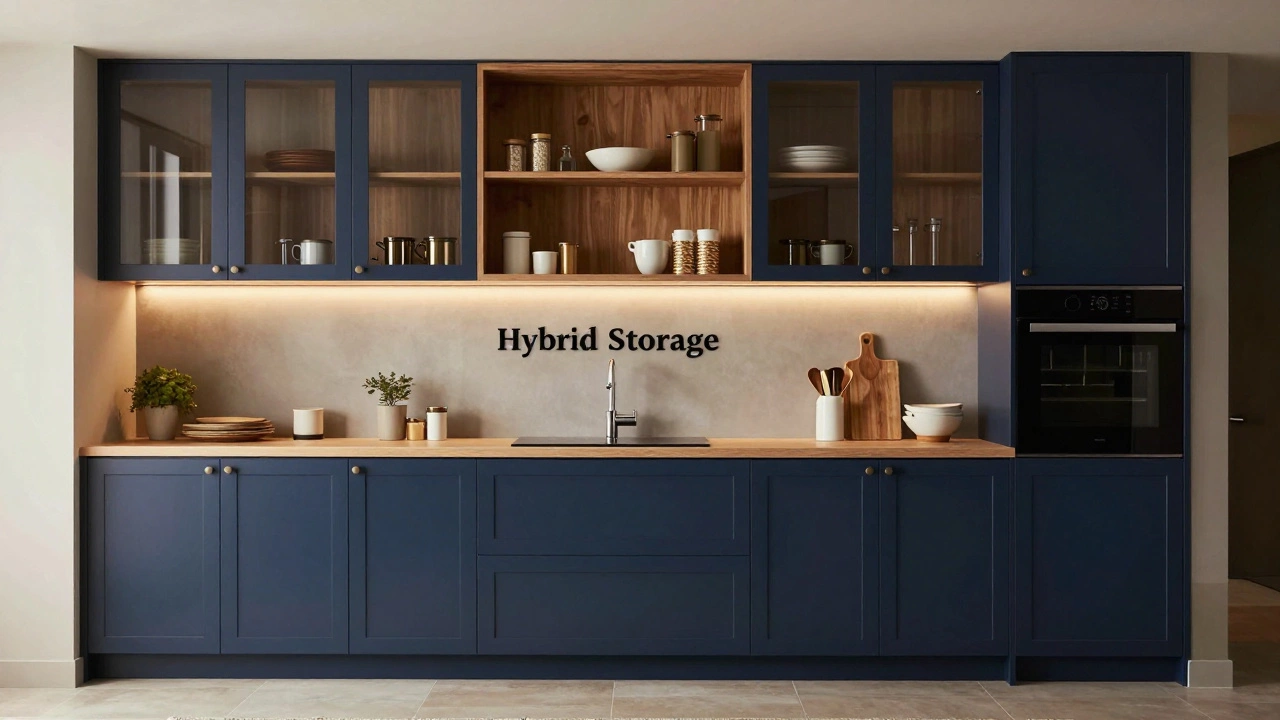
The current trend isn't a new invention; it is a revival. Because it solves a real problem-making small spaces feel bigger-it isn't going to vanish. However, the "total open" look is likely the part that will fade. We are seeing a massive shift toward Hybrid Storage, where designers keep the lower cabinets for the heavy, ugly stuff (like pots and pans) and use a mix of glass-front cabinets and a few open shelves for the pretty things. This gives you the airy feel without the nightmare of cleaning grease off every single bowl you own.
How to Do Open Shelving Without Regretting It
If you are still tempted by the look, don't just rip everything out. Approach it strategically. First, consider the "Zone of Grease." Never put open shelves directly above or adjacent to your stove. Keep them on the opposite wall or further away to minimize the oil buildup.
Second, be honest about your belongings. Do you have a set of matching, beautiful plates? Great. Do you have a collection of plastic Tupperware and neon-colored mugs from three different jobs? Put those in a cupboard. Open shelving only works if you are willing to prune your possessions. If you can't commit to a curated look, the result will be visual noise that makes your kitchen feel more stressful, not more peaceful.
Third, think about the materials. Floating Shelves made of reclaimed wood or thick oak add warmth and texture. Avoid cheap particle board, which can sag over time under the weight of heavy ceramics. Invest in sturdy brackets and ensure your walls can handle the load, especially if you plan to store heavy stoneware.
The Psychology of Display
There is something psychologically satisfying about seeing what you own. It removes the friction of searching through deep cabinets for a specific lid or plate. For many, this is part of a broader move toward Conscious Consumption. When your things are on display, you are more aware of what you have, which often leads to buying less junk. You stop buying the fifth set of dinner plates because you can clearly see the four sets you already own staring back at you.
But there is a flip side: the pressure to perform. When your storage is your decor, your home can start to feel like a showroom rather than a living space. The stress of keeping everything "perfect" can outweigh the aesthetic benefit. The most successful homes are those that balance the desire for a "look" with the reality of how the inhabitants actually live. If you are a messy person, open shelving is a recipe for anxiety. If you are a natural organizer, it is a dream.
Do open shelves make a kitchen look smaller?
Actually, the opposite is usually true. By removing the "visual weight" of heavy upper cabinets, you open up the sightlines of the room. This makes the walls feel further apart and allows more light to bounce around, which generally makes a small kitchen feel significantly larger.
How often do you actually have to clean open shelves?
It depends on how much you cook. If you fry food often, you'll likely notice a sticky residue every 2-4 weeks. For a light cook, a quick dusting once a week is usually enough. A pro tip is to use a damp cloth with a mild degreaser for any shelves located near the cooking area.
What is the best alternative to fully open shelving?
Glass-front cabinets are the perfect middle ground. They provide the visual openness and the ability to showcase your items, but they create a physical barrier against dust and grease. You get the "look" without the constant cleaning.
Can I use open shelving in a bathroom?
Yes, and it often works better than in a kitchen because there is no cooking grease. However, you have to deal with humidity. Ensure your shelves are made of moisture-resistant materials or sealed properly to prevent warping from the steam of a hot shower.
Are floating shelves strong enough for heavy plates?
Only if they are installed correctly. Many "floating" shelves use a hidden internal bracket. If you are storing heavy stoneware or cast iron, you must ensure the brackets are screwed directly into the wall studs, not just into drywall with anchors. Always check the weight rating of the shelf before loading it up.
What to Do Next
If you are terrified of committing to a full renovation, start with a "test zone." Remove one small cabinet door or install a single shelf in a low-risk area of your kitchen. See how you feel about the dust and the visibility of your items for a month. If you find yourself constantly cleaning or feeling stressed by the clutter, you'll know that the open look isn't for your lifestyle.
For those who love the look but hate the mess, look into the hybrid model. Keep your bulk storage-the blenders, the giant stock pots, the plastic containers-behind closed doors and use your open shelves exclusively for items you use daily and that you actually like looking at. That is how you turn a fleeting trend into a timeless design choice.