Is It Cheaper to Use Your Own Box for International Shipping?
International Shipping Cost Estimator
Enter your package details to compare the total estimated cost of using your own reused box versus purchasing a new branded box from the carrier.
Enter dimensions and click Calculate to see if you should reuse your box.
Billing Weight Calculation
- Actual Weight: -
- Volumetric Weight: -
- Billed Weight (Higher): -
Cost Comparison
| Own Box Prep: | $0.00 |
| Courier Box: | $0.00 |
| Total Own Box: | $0.00 |
| Total Courier Box: | $0.00 |
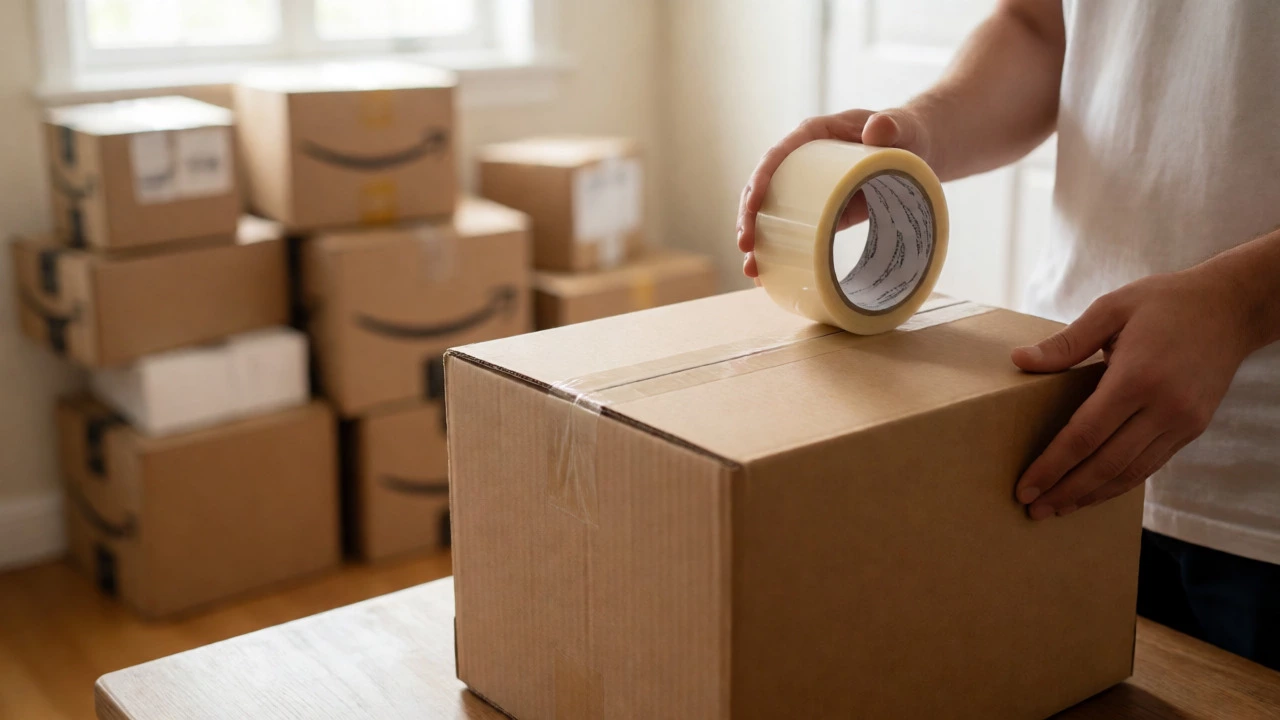
You’re standing in your hallway, surrounded by a pile of Amazon boxes and old moving cartons. You’ve got a package ready to go overseas, and you’re wondering: should I just tape this up and send it, or do I need to buy the specific branded box from the courier? It’s a question that plagues anyone sending parcels abroad, especially when shipping rates seem to climb every year. The short answer is often yes, using your own box can save money, but it’s not always straightforward. There are hidden traps involving dimensional weight, insurance rules, and carrier-specific policies that can turn a "cheap" shipment into an expensive lesson.
The Myth of the Free Box
Let’s clear up the biggest misconception first. Carriers like DHL, FedEx, UPS, and NZ Post don’t charge you extra simply because you didn’t use their branded packaging. They aren’t selling you the cardboard; they’re selling you the logistics network. However, they do have strict requirements about what constitutes "acceptable" packaging. If you hand over a flimsy cereal box taped together with sticky notes, they might reject it at the counter. But if you use a sturdy double-walled cardboard box from your pantry, you’re usually in the clear.
The cost difference comes down to two main factors: volume discounts on materials versus carrier surcharges. When you buy a new box from a courier, you pay retail prices-often $5 to $15 for a medium-sized international parcel box. If you reuse a high-quality box you already have, that cost drops to zero. For small businesses shipping hundreds of items, this adds up fast. For individuals, saving $10 on a single package feels good, but does it actually change the final bill?
Dimensional Weight: The Hidden Cost Killer
Here is where things get tricky. Most international carriers don’t care how heavy your item is as much as they care how much space it takes up in the plane or truck. This is called Dimensional Weight (Volumetric Weight). It is a billing method that charges based on the volume of the package rather than its actual physical weight. The formula is typically Length × Width × Height divided by a divisor (usually 5000 for metric units).
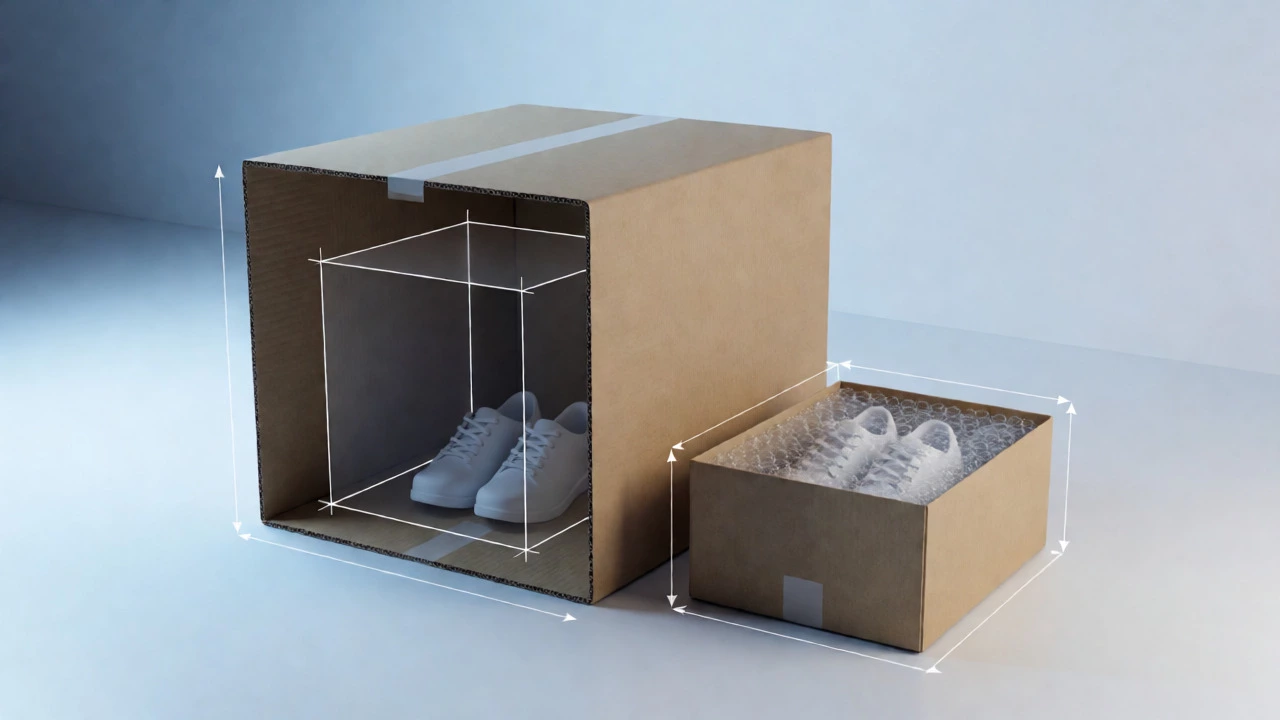
If you use your own box, you have control over the dimensions. Let’s say you’re shipping a pair of shoes. If you ship them in a large, bulky box left over from a TV delivery, you might be paying for three times more air than shoes. If you repack them into a snug, smaller box, your dimensional weight drops, and so does your price. In many cases, the savings from optimizing the box size far outweigh the cost of buying a new one. Conversely, if you try to cram too much into a small box and it bulges, carriers may measure the widest point, penalizing you anyway.
When Couriers Force Their Hand
There are scenarios where using your own box isn’t just risky-it’s prohibited. Express services like DHL Express often require their own waybills and sometimes mandate specific packaging standards for time-definite guarantees. While they rarely force you to use their branded outer shell for standard shipments, they are stricter about documentation and labeling.
More importantly, consider liability. If you use your own box and it fails during transit-say, the seams burst open in a sorting facility-proving negligence can be harder. Some premium insurance policies offered by couriers are tied to their approved packaging standards. If you deviate from those standards without written approval, you might find your claim denied. Always check the terms and conditions of your chosen service level. For low-value items, this risk is minimal. For a $2,000 laptop, buying the certified box is cheap insurance.
Cost Comparison: DIY vs. Carrier Packaging
To make this concrete, let’s look at a typical scenario from Wellington, New Zealand, shipping a 5kg parcel to Australia via a standard economy service.
| Factor | Reused Own Box | New Courier Box |
|---|---|---|
| Packaging Material Cost | $0.00 (assuming existing stock) | $8.50 (medium international box) |
| Tape & Labels | $1.00 (if you need supplies) | Included or $0.50 |
| Preparation Time | 5-10 minutes (finding/cleaning box) | 2 minutes (grab and fill) |
| Risk of Damage Claim | Higher (non-standard packaging) | Lower (approved standard) |
| Total Upfront Cost | $1.00 | $9.00 |
As you can see, the upfront savings are real. But notice the "Risk" column. If you are shipping fragile electronics, that $8 difference is negligible compared to the hassle of a denied claim. For books, clothing, or non-fragile goods, the reused box is almost always the smarter financial move.
How to Prep Your Own Box Like a Pro
If you decide to go the DIY route, don’t just slap tape on it. Carriers inspect packages, and sloppy prep leads to rejections. Here is the checklist I use before heading to the drop-off point:
- Remove Old Labels: All previous barcodes and addresses must be completely covered or removed. A scanner reading an old code can misroute your package to another country.
- Check Structural Integrity: Squeeze the corners. If the cardboard is soft, damp, or crushed, toss it. International journeys involve stacking thousands of other parcels on top of yours.
- H-Tape Method: Don’t just tape the center seam. Tape all six edges of the box. This prevents the flaps from popping open under pressure.
- Void Fill: Shake the box. If you hear movement, add packing peanuts, crumpled paper, or bubble wrap. Empty space causes shifting, which breaks items.
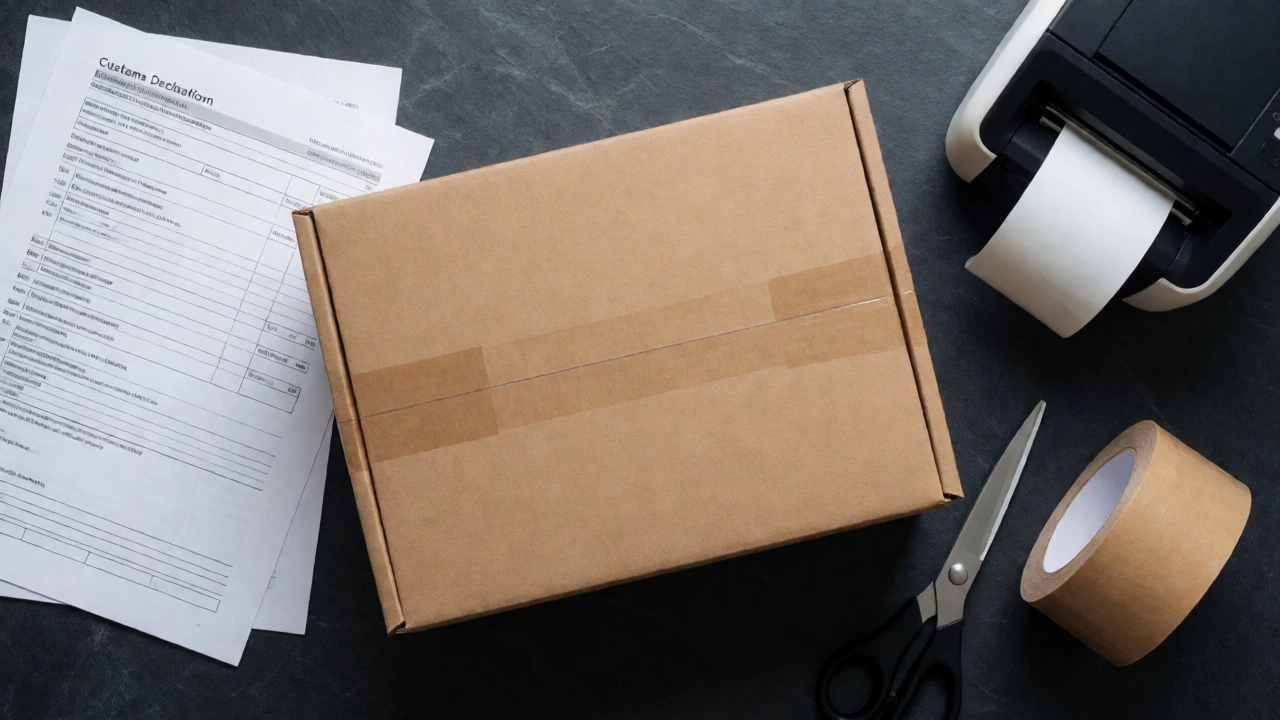
- Correct Dimensions: Measure the outside length, width, and height accurately. Write these on the label if required, or ensure they match what you entered online. Discrepancies lead to re-weighing fees.
Regional Nuances: The NZ Context
Living in New Zealand, we deal with unique logistical challenges. Our distance from major markets means transit times are longer, and handling processes can be rougher due to multiple transfers. NZ Post is generally lenient with personal packaging for standard parcels, provided the address is clear and the box is sealed securely. However, for larger freight or pallets, using their specific pallet wrap and corner protectors is often mandatory.
Also, watch out for biosecurity. If you are reusing a box that previously held soil, plants, or certain food items, clean it thoroughly. Customs officers in countries like Australia and the US are stringent about contaminants. A box with residual dirt can trigger a delay or inspection fee, wiping out any packaging savings instantly.
Verdict: When to Buy, When to Reuse
So, is it cheaper to use your own box? Yes, absolutely, if you follow the rules. The material cost is pure profit saved. But treat the decision like a risk assessment.
Use your own box when: * The item is durable (clothes, books, tools). * You have a sturdy, clean box available. * You are shipping via standard economy services. * You are willing to spend 5 extra minutes prepping.
Buy the courier box when: * The item is fragile or high-value. * You are using express priority services with strict SLAs. * You don’t have suitable packaging on hand (buying supplies might cost more than the box itself). * You want maximum insurance protection without ambiguity.
Do I have to remove old labels from my own box?
Yes, you must remove or completely cover all old barcodes and shipping labels. Automated sorting machines read barcodes, and if they scan an old code instead of your new one, your package could be sent to the wrong destination or delayed significantly.
Will carriers reject a box with dents or scratches?
Minor cosmetic damage is usually fine. However, if the structural integrity is compromised-such as crushed corners, holes, or water damage-the carrier will likely reject it at the counter. They need to ensure the package survives the journey without bursting open.
Does using my own box affect customs clearance?
No, customs authorities care about the contents and the declared value, not the brand of the cardboard. As long as the commercial invoice is attached correctly and the contents are clear, the origin of the box doesn't matter. Just ensure the box is clean of biological residues.
Can I use a shoebox for international shipping?
Generally, no. Standard shoeboxes are too thin and weak to withstand international transport chains. Unless you double-box it inside a stronger container, most carriers will refuse it because it lacks the necessary durability for stacking and handling.
What happens if my own box gets damaged in transit?
If the box was structurally sound when shipped, you are still covered by standard liability limits. However, if the carrier argues that the packaging was inadequate (e.g., insufficient padding or weak tape), they may deny the claim. Using your own box increases the burden of proof slightly compared to using their certified packaging.