Is Grey Carpet Outdated? A 2026 Reality Check
Grey Carpet Reality Check & Styling Tool
Not sure if your grey carpet needs replacing or just restyling? Answer a few questions about your current space to receive a personalized assessment and styling guide.
Fill out the form on the left and click "Analyze My Floor" to see your results.
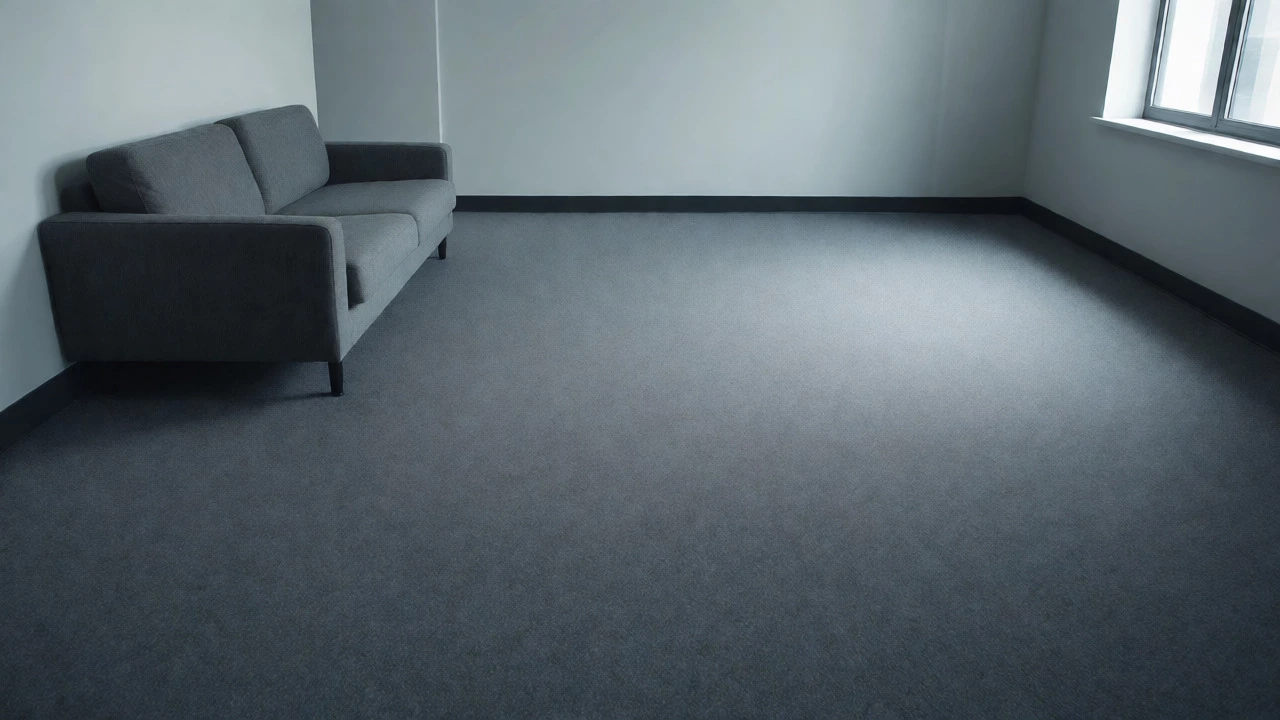
You walked into a model home in 2018, and everything was grey. The walls were grey. The sofas were grey. And yes, the carpet was a flat, lifeless shade of charcoal or dove grey. Fast forward to October 2026, and you’re staring at your living room floor, wondering if that investment now screams "last decade" instead of "modern chic." It’s a common panic. We see beige returning on social media feeds, and suddenly, our cool-toned floors feel like they belong in a dentist’s waiting room from 2015.
But here is the truth: Grey carpet isn't dead. It just got smarter. The problem wasn’t the color itself; it was how we used it. In the mid-2010s, designers slapped uniform grey wall-to-wall carpeting on every surface, creating spaces that felt cold and sterile. Today, the conversation has shifted. It’s not about whether grey is allowed in your home. It’s about texture, undertones, and context. If you’re worried your floors are outdated, put down the paintbrush for a second. Let’s look at why grey might actually be the most versatile neutral you own right now, provided you know how to style it.
The Rise and Fall (and Rise Again) of Neutral Floors
To understand where we are, we have to look at where we’ve been. For years, homeowners fled from the yellow-beige carpets of the 90s. They wanted something cleaner, more modern, and less likely to clash with their new gray-blue paint colors. Enter the grey era. According to flooring industry reports from the late 2010s, grey accounted for nearly 40% of all residential carpet sales in major markets. It was safe. It hid dirt better than white but looked cleaner than brown.
Then came the backlash. By 2022, design blogs declared grey "over." People craved warmth. Earth tones, terracotta, and warm woods took center stage. But by 2026, the pendulum has settled. We aren’t seeing a return to the stark, industrial grey of ten years ago. Instead, we are seeing "Greige"-a hybrid of grey and beige-and deep, moody charcoals. The current trend favors complexity over simplicity. A flat, medium-grey carpet with no variation looks dated because it lacks depth. A textured, multi-tonal grey rug or carpet feels current because it interacts with light.
Why Your Grey Carpet Might Feel Dated
If you feel uneasy about your floors, it’s probably not just because of the internet telling you so. There are specific visual cues that make grey carpet look old. Recognizing these helps you decide if you need to replace the floor or just change the accessories.
- The Undertone Trap: Cool greys with blue or green undertones can make a room feel clinical. Unless you have massive windows flooding the space with natural light, these shades suck the warmth out of a home. Warm greys with brown or taupe bases are currently preferred because they pair well with the popular walnut and oak furniture trends.
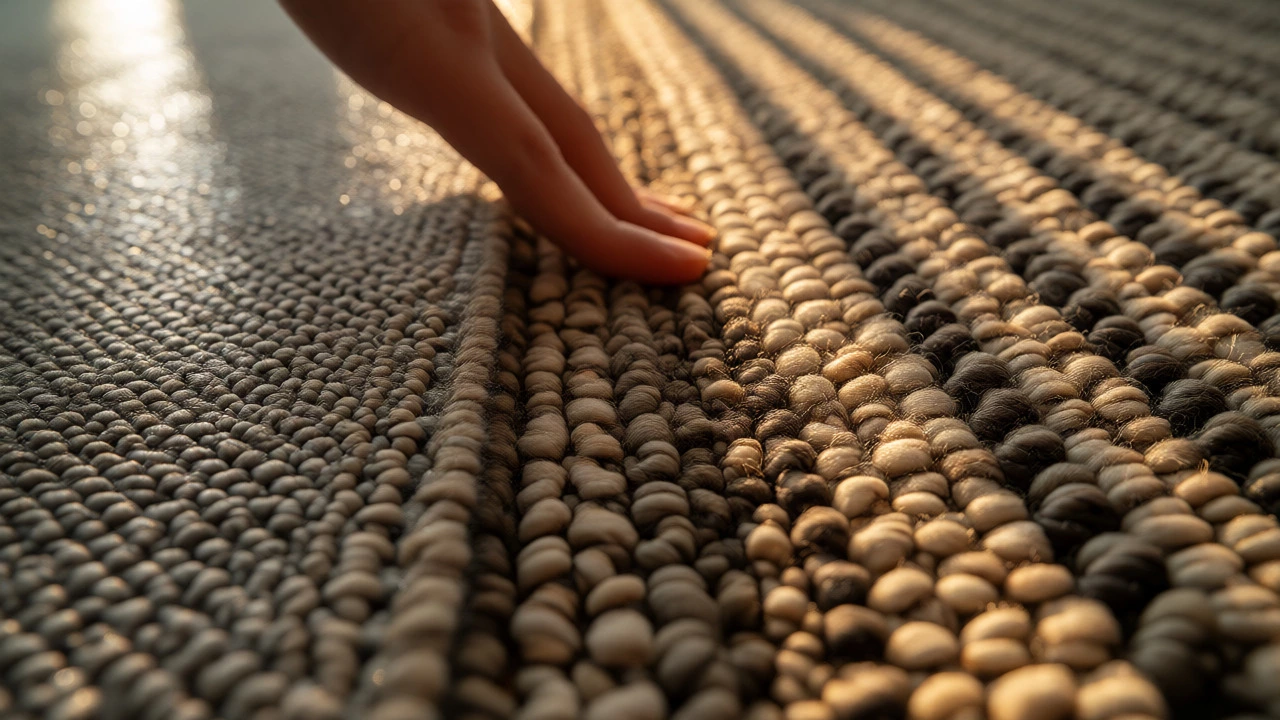
- Lack of Texture: Plush, uniform pile carpets in solid grey are the biggest offenders. They flatten the visual field. Modern interiors rely on layering textures. If your carpet is smooth and shiny, it reflects light harshly and looks cheap. High-low loops, shag, or cut-and-loop patterns add dimension that makes grey look expensive rather than empty.
- Wall Color Clashing: Many homes built between 2015 and 2020 paired grey carpet with cool white or grey walls. This monochromatic scheme often results in a "box" effect. Current design principles suggest contrasting the floor with warmer wall colors, such as creamy whites, soft taupes, or even muted greens, to break up the monotony.
How to Style Grey Carpet in 2026
You don’t need to rip up your floors to fix the vibe. Styling is about balance. Here is how successful designers are working with existing grey carpets today.
Layer with Warmth
Think of your grey carpet as a canvas, not the final painting. You need to introduce warmth through other elements. Wood tones are your best friend. A walnut coffee table or an oak sideboard immediately grounds the space. If your furniture is metal or glass, swap one piece for wood. The organic grain contrasts beautifully with the synthetic or wool fibers of the carpet, adding necessary visual noise.
Use Rugs to Break Up the Expanse
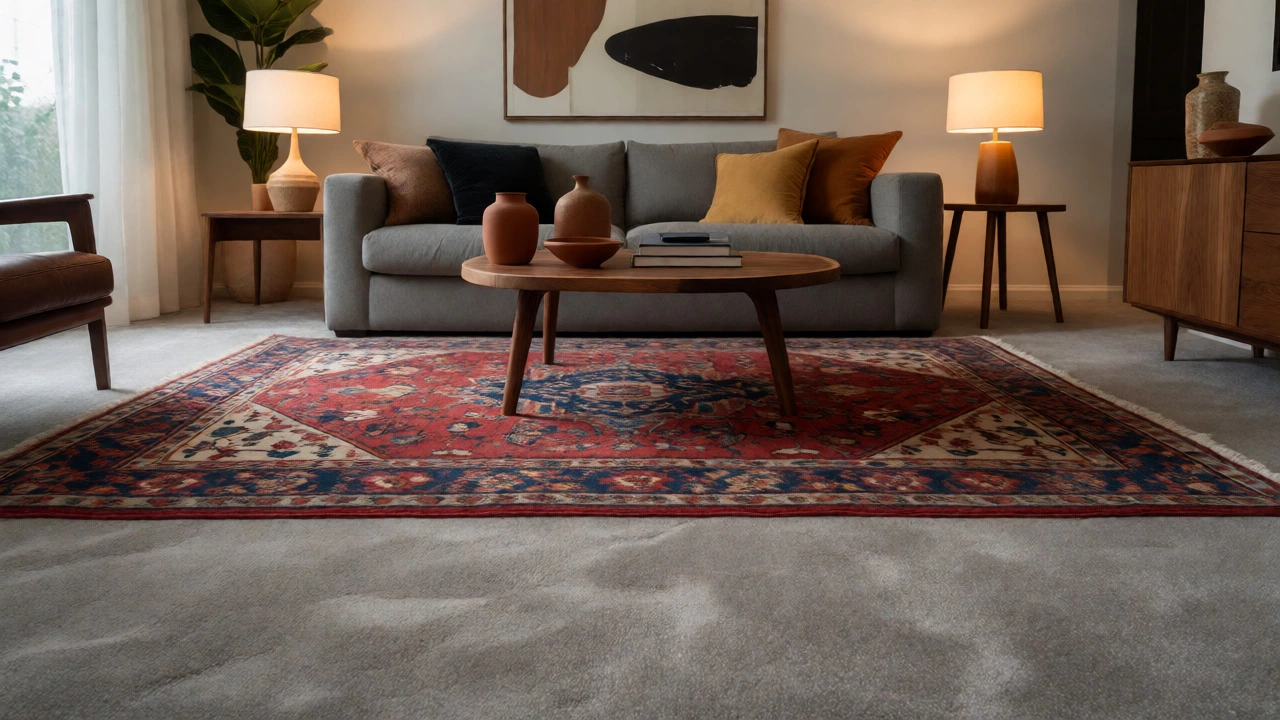
If you have wall-to-wall grey carpet, you are lucky. You have a perfect base for layering rugs. This is the single most effective trick to update a grey floor. Place a large area rug with a pattern or a different texture on top. Persian-style rugs with reds and blues pop against grey. Jute or sisal rugs add roughness that counters the smoothness of the carpet. By covering 60-70% of the visible floor area with a rug, you shift the focus away from the carpet color entirely.
Lighting Changes Everything
Grey is notoriously sensitive to lighting. Under cool LED bulbs (4000K+), grey looks icy and uninviting. Switch to warm white bulbs (2700K-3000K). This simple change adds a golden hue to the room, making the grey carpet appear softer and more inviting. Add lamps with fabric shades to diffuse light further. Never rely solely on overhead ceiling lights when trying to make a neutral floor feel cozy.
Grey vs. Beige vs. Taupe: The 2026 Comparison
Homeowners often ask if they should switch to beige now that it’s trending. Here is a realistic look at how these neutrals perform in current homes.
| Feature | Grey Carpet | Beige Carpet | Taupe/Greige |
|---|---|---|---|
| Dirt Visibility | Low to Medium (depends on tone) | High (shows footprints easily) | Low (best for hiding messes) |
| Style Vibe | Modern, Minimalist, Industrial | Traditional, Cozy, Farmhouse | Transitional, Versatile, Calm |
| Furniture Pairing | Best with black, white, navy, bold colors | Best with wood, cream, pastels | Pairs with almost anything |
| Resale Value | Neutral; depends on buyer preference | Rising; appeals to broad market | Highest; safest bet for resale |
| Maintenance | Easy to clean; stains show less | Requires frequent vacuuming | Forgiving; blends dust and shadows |
Notice that Taupe/Greige is winning on versatility. If you are still undecided, this middle ground offers the modern feel of grey without the coldness. It bridges the gap between the two dominant aesthetics of the last decade.
When Should You Actually Replace It?
Not every grey carpet needs to stay. Sometimes, replacement is the only logical move. Consider ripping it out if:
- The Pile is Worn: If the carpet is matted down in high-traffic areas, no amount of styling will fix the texture. Flattened carpet looks dirty regardless of color.
- It’s a Stark Cool Grey: If your carpet has a distinct blue or purple cast and you live in a region with little sunlight, it may permanently drain energy from the room. Replacing it with a warm-toned alternative can transform the mood instantly.
- You Want Hardwood Alternatives: Luxury Vinyl Plank (LVP) and engineered wood have become cheaper and more durable. If you hate the maintenance of carpet, switching to a wood-look floor allows you to bring in warmth through the material itself, rather than relying on accessories.
However, if your carpet is relatively new, has good texture, and sits in a well-lit room, keep it. Flooring replacement is expensive and disruptive. Updating your decor is cheaper and faster.
The Future of Floor Neutrals
As we look toward 2027, expect to see more biophilic design influences. This means floors that mimic nature. We are already seeing grey carpets with speckled patterns that resemble stone or concrete. These aren’t flat colors; they are complex surfaces. Designers are also moving away from matching everything perfectly. The goal is harmony, not uniformity. Your grey carpet doesn’t need to match your grey sofa. In fact, it shouldn’t. Contrast creates interest.
So, is grey carpet outdated? No. Bad styling is outdated. Uniformity is outdated. If you treat your grey floor as a backdrop for rich textures, warm woods, and layered rugs, it remains a timeless choice. Stop worrying about what influencers say about "the death of grey." Start looking at your own room. Does it feel cold? Add warmth. Does it feel flat? Add texture. The solution is usually within arm's reach, not in a hardware store.
Does grey carpet make a room look smaller?
Not necessarily. Lighter shades of grey, especially those with warm undertones, can make a small room feel larger and airier. Darker charcoal greys can make a large room feel cozier and more intimate. The key factor is contrast; if your walls and carpet are both dark grey, the boundaries disappear, which can shrink the perceived space. Keep walls lighter than the floor to maintain openness.
What colors go best with grey carpet?
Grey is a neutral, so it pairs with almost any color. However, for a modern 2026 look, try pairing it with deep jewel tones like emerald green, navy blue, or burgundy. For a softer, more relaxed vibe, use warm earth tones like terracotta, mustard yellow, or rust. Avoid using too many cool tones together, as this can make the room feel sterile. Always introduce some wood tones to add warmth.
Is beige carpet coming back?
Yes, but it looks different than it did in the 1990s. Modern beige carpets are warmer, richer, and often mixed with other tones (like taupe or sand) to avoid looking yellow or stained. The trend is driven by a desire for comfort and coziness, often referred to as "quiet luxury" or "warm minimalism." While grey remains popular, beige is gaining significant market share for its ability to create inviting, traditional-feeling spaces.
How do I tell if my grey carpet has cool or warm undertones?
Look at the carpet under natural daylight near a window. If it appears bluish, greenish, or purplish, it has cool undertones. If it looks brownish, yellowish, or reddish, it has warm undertones. You can also place a pure white sheet of paper next to the carpet. The contrast will reveal the underlying hue. Warm greys generally feel more welcoming in residential settings, while cool greys suit modern, industrial aesthetics.
Should I replace grey carpet with hardwood?
This depends on your lifestyle and budget. Hardwood is easier to clean and appeals to buyers who prefer hard surfaces. However, carpet provides sound insulation and warmth underfoot, which is valuable in bedrooms and playrooms. If your grey carpet is in good condition, consider refinishing or replacing only the subfloor padding before deciding to switch materials. Often, the issue is worn-out padding, not the carpet fiber itself.