Is Freight Forwarding Easy? What You Really Need to Know
Freight Cost Calculator
Estimate Your Total Shipping Costs
Avoid unexpected charges with this realistic cost calculator based on industry data
Freight forwarding sounds simple: you ship something, they move it. But if you’ve ever tried to send a pallet of goods from Auckland to Lagos, you know it’s rarely that easy. The truth? Freight forwarding isn’t hard if you know what you’re doing - but it’s full of hidden traps that can cost you time, money, and your sanity.
What Exactly Is Freight Forwarding?
A freight forwarder doesn’t own trucks or ships. They’re the middlemen who coordinate everything: booking space on cargo vessels, arranging truck pickups, handling customs forms, tracking shipments, and dealing with port delays. Think of them as your logistics project manager. Their job is to turn a messy, confusing process into something predictable.
For example, if you’re shipping 500 boxes of New Zealand honey to Germany, the forwarder will:
- Find the best combination of sea and road transport
- Fill out the commercial invoice and certificate of origin
- Make sure your honey meets EU food safety rules
- Pay duties and taxes on your behalf
- Track the shipment from your warehouse to the buyer’s door
They don’t move the goods themselves - they make sure everything else gets done right.
Why People Think It’s Easy (And Why They’re Wrong)
Most people assume freight forwarding is easy because:
- Online tools show shipping rates in seconds
- Companies advertise "simple, stress-free shipping"
- You can book a shipment with a few clicks
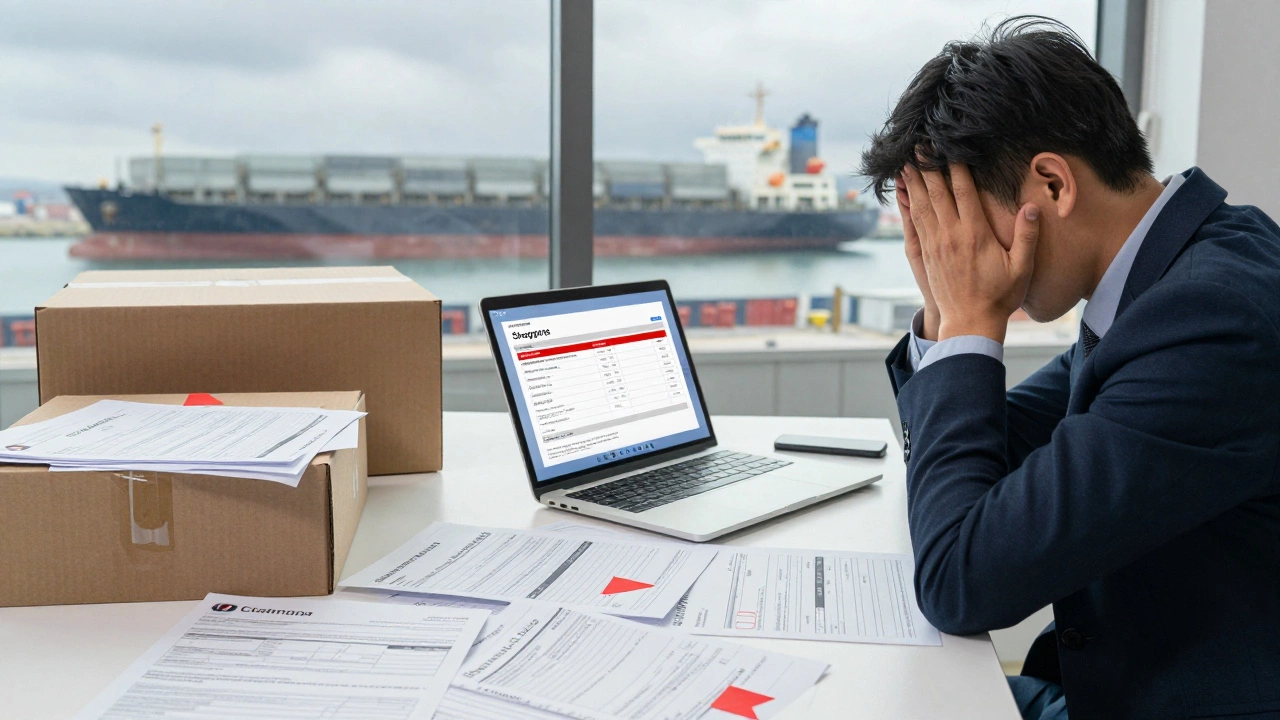
But here’s the catch: those tools show base rates. They don’t show the $200 customs inspection fee in Rotterdam, the $150 storage charge because your paperwork arrived late, or the $400 diesel surcharge because the port is backed up.
I worked with a small business in Christchurch that shipped yoga mats to the UK. They used an online platform, thought they’d saved money, and then got hit with $3,200 in unexpected fees. Why? Their HS code was wrong. The UK customs held the shipment for three weeks while they figured out if the mats were "sports equipment" or "textile goods" - two categories with totally different duties.
That’s not a glitch. That’s standard.
The Real Challenges of Freight Forwarding
Here’s what nobody tells you:
1. Paperwork Isn’t Optional - It’s a Full-Time Job
Every country has its own rules. The EU needs an EORI number. The US requires an ISF filing 24 hours before loading. Australia has strict biosecurity checks. One missing signature, one typo in the description, and your cargo sits at the port while you scramble to fix it.
Customs forms aren’t fill-in-the-blank. They’re legal documents. Get one wrong, and you risk fines, delays, or even seizure.
2. Ports Are Slow - And Nobody Warns You
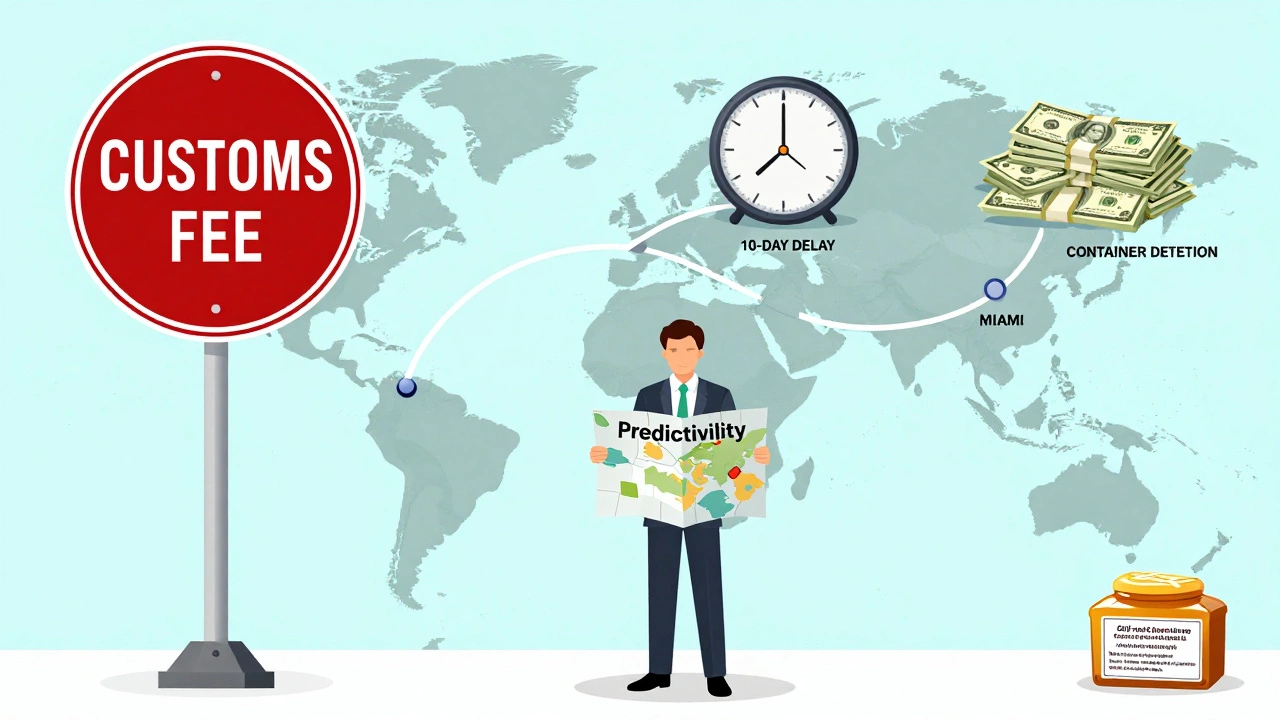
Shipping from Wellington to Miami might look like a 21-day transit on the quote. But if the port of Miami is backed up because of a strike, your shipment sits on a ship for 10 extra days. No one mentions that in the quote.
Same thing happens in Shanghai, Rotterdam, or Santos. Ports don’t run on Amazon Prime schedules. Delays are normal. A good forwarder will warn you about this - but most don’t.
3. Hidden Fees Are Everywhere
There are over 50 possible charges on an international shipment. Here are just a few:
- Terminal handling charge (THC)
- Documentation fee
- Customs brokerage fee
- Container detention fee (if you don’t return it on time)
- Fuel surcharge (changes weekly)
- Security fee
- Port congestion surcharge
One forwarder quoted $4,200 for a shipment. The final bill? $6,800. All because they didn’t disclose the container return deadline. The client left it at the warehouse for two extra days - and got charged $1,200.
4. Your Product Matters More Than You Think
Not all cargo is equal. Shipping electronics? You need FCC certification. Shipping food? You need health certificates. Shipping lithium batteries? You need special packaging and labeling. One client shipped LED lights from Dunedin to Canada - no problem. Then they added a few spare batteries. The whole shipment got held because the batteries weren’t labeled as UN3481. That cost them $800 in detention and a week of delay.
When Freight Forwarding Actually Is Easy
It’s not impossible. It’s just not "easy" unless you:
- Work with a forwarder who explains everything upfront - no jargon, no hidden fees
- Have clear, accurate product descriptions and HS codes
- Plan at least 3 weeks ahead - not 3 days
- Double-check every document before sending
One Wellington-based furniture exporter I spoke with ships 80 containers a year. Their secret? They use a single forwarder who sits down with them every time and walks through every cost, every rule, every risk. They don’t save money - they save headaches.
How to Pick a Freight Forwarder That Won’t Screw You
Not all forwarders are the same. Here’s what to look for:
- Ask for a full cost breakdown - not just "shipping rate." Demand line items for every possible charge.
- Check their experience with your route - a forwarder good at shipping to the US might be clueless about Africa.
- Ask for references - talk to someone who’s shipped with them in the last 6 months.
- Get everything in writing - verbal promises mean nothing when your shipment is stuck.
- Don’t choose based on price alone - the cheapest option is often the most expensive in the end.
There’s a reason the big brands like DHL, Maersk, and Kuehne + Nagel charge more. They’ve got systems, teams, and experience handling the mess. You’re paying for predictability.

Can You Do It Yourself?
Technically, yes. You can file your own customs forms, book ocean freight, and arrange inland transport. But you’ll need:
- A deep understanding of international trade laws
- Access to shipping line contracts (most won’t deal with individuals)
- Time to manage delays, calls, and paperwork
- A buffer of $5,000+ for mistakes
For 95% of small businesses, it’s not worth it. You’re better off paying $300 extra for a forwarder who knows the system than risking $5,000 in lost sales because your shipment got stuck.
Final Verdict: Is Freight Forwarding Easy?
No - it’s not easy. But it’s manageable. And it doesn’t have to be a nightmare.
It’s easy if you:
- Choose the right forwarder
- Plan ahead
- Know your product inside out
- Ask questions before you ship
It’s hard if you:
- Think it’s just "send and forget"
- Go for the lowest quote
- Ignore paperwork
- Wait until the last minute
The best freight forwarders don’t make the process easy. They make it predictable. And in global shipping, predictability is worth more than cheap rates.
Is freight forwarding cheaper than shipping directly?
Not always. Freight forwarders add a service fee, but they often get better rates from carriers because they ship in bulk. More importantly, they avoid costly mistakes. A direct shipment might seem cheaper at first, but if customs delays it or you pay a $2,000 penalty for wrong paperwork, you’ve lost money. Forwarders save you from those surprises.
How long does international freight forwarding take?
It varies. Sea freight from New Zealand to Europe usually takes 4-6 weeks door-to-door. Air freight is 5-10 days. But those are ideal times. Add 1-3 weeks for customs delays, port congestion, or paperwork issues. Always plan for at least 20% longer than the quoted transit time.
What documents do I need for freight forwarding?
You’ll need: a commercial invoice, packing list, bill of lading, and certificate of origin. Depending on the product, you might also need health certificates, phytosanitary permits, or safety compliance documents. The forwarder will tell you what’s required - but you must provide accurate info. Wrong product descriptions are the #1 cause of delays.
Can I track my shipment myself?
Yes, most forwarders give you a tracking number and portal access. But don’t rely on it. Tracking systems update inconsistently. A shipment might show as "in transit" for days, then suddenly jump to "customs cleared." Call the forwarder directly if something seems off. Don’t wait for an update.
What happens if my cargo gets damaged?
It depends on your insurance. Most forwarders offer basic coverage - often only $5-$10 per kilo. That’s not enough for high-value goods. If you’re shipping electronics, machinery, or artwork, buy separate cargo insurance. Always document damage with photos and notify the forwarder immediately. Claims take weeks, and you need proof.