Is FedEx 3PL or 4PL? Here’s the Real Difference
FedEx 3PL vs 4PL Calculator
Is This Right For You?
Answer these 5 questions to determine if you need a 3PL or 4PL service. This tool uses criteria from the article to assess your logistics complexity.
Your Recommendation
Recommended Service Type
3PLThis recommendation is based on your answers to the questions above. Review the details to understand why this matches your business needs.
When you hear "FedEx" you think fast packages, tracking numbers, and overnight deliveries. But if you’re running a business that ships more than a few boxes a week, you might be asking: Is FedEx a 3PL? Or is it a 4PL? The answer isn’t simple-and getting it wrong could cost you money, time, or control over your supply chain.
What Exactly Is a 3PL?
A third-party logistics provider, or 3PL, handles the physical side of shipping. That means warehousing, picking, packing, labeling, and delivering your products. Think of them as your outsourced warehouse and delivery team. They don’t make decisions-they follow instructions.
Companies like XPO Logistics, DHL Supply Chain, and even FedEx Freight operate as 3PLs when they manage inventory for brands. If you send your products to a FedEx fulfillment center and they ship them out when you tell them to, you’re using a 3PL service. You control the routing, the carriers, the packaging rules. FedEx is just the muscle.
What Makes a 4PL Different?
A fourth-party logistics provider doesn’t just move boxes. They manage the entire supply chain. A 4PL acts like a chief operating officer for your logistics. They design the network, choose the carriers, optimize routes, negotiate rates, and even integrate your systems with technology platforms.
Unlike a 3PL, a 4PL doesn’t own trucks or warehouses. Instead, they coordinate multiple 3PLs, carriers, and tech tools to make your supply chain run smoother. Companies like Accenture Logistics and Kuehne + Nagel specialize in this. They’re consultants with control over execution.
So, Is FedEx a 3PL or a 4PL?
FedEx is both-and neither, depending on how you use them.
If you’re using FedEx Ground to ship orders from your own warehouse, you’re just a customer. No logistics partnership there.
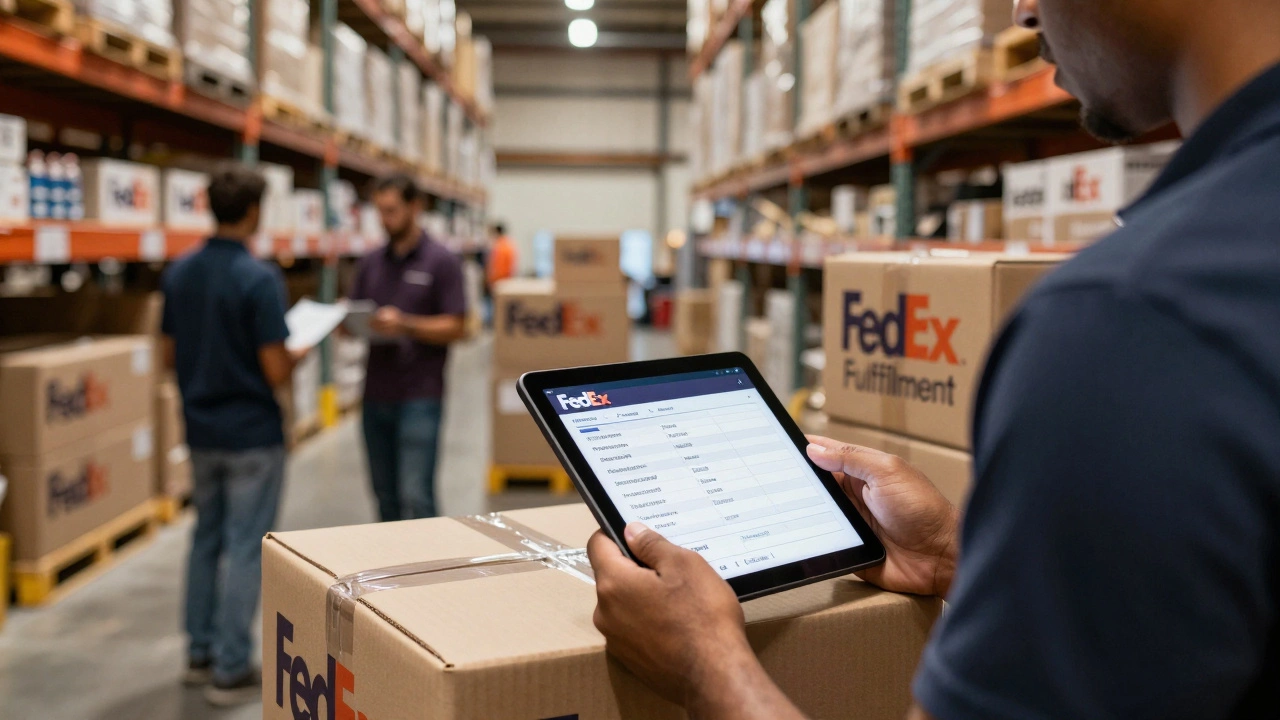
If you’re sending inventory to a FedEx Fulfillment Center and letting them handle packing and shipping on your behalf, you’re using a 3PL service. FedEx is executing your instructions.
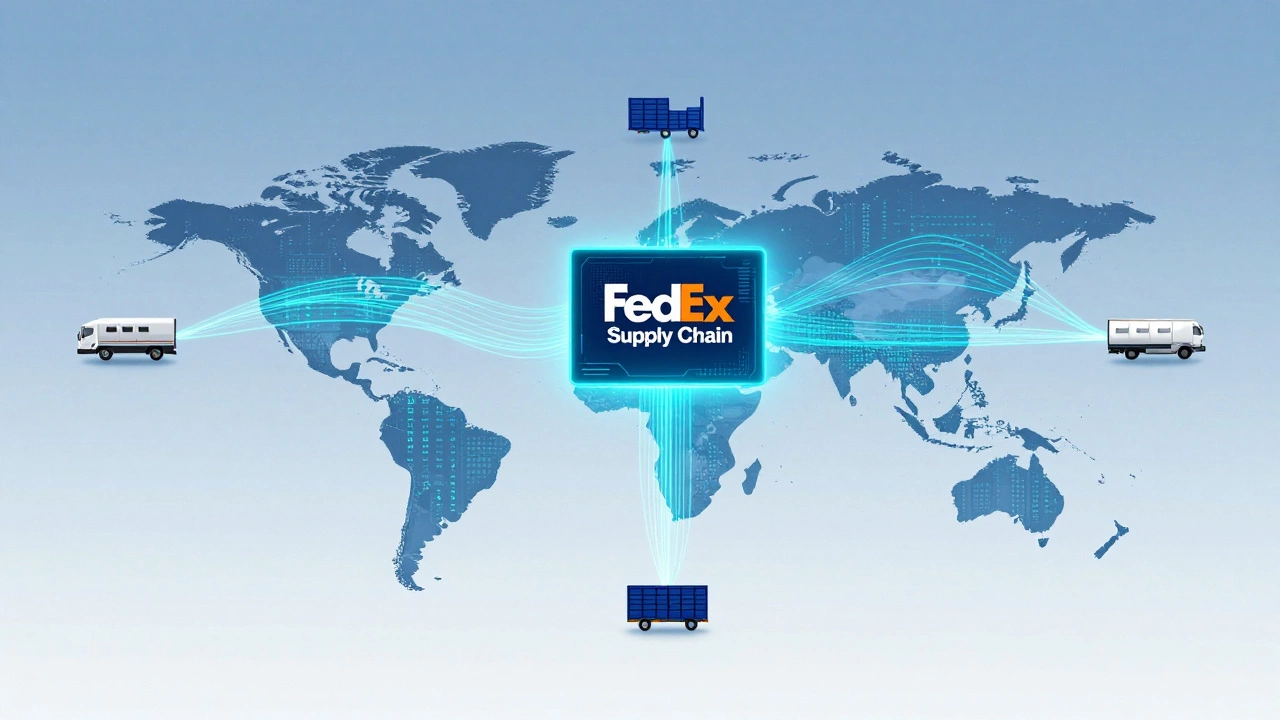
But if you’re working with FedEx Supply Chain-a division of FedEx that offers end-to-end supply chain design, technology integration, and multi-carrier management-you’re working with a 4PL. This is where FedEx steps beyond delivery. They analyze your sales data, suggest warehouse locations, connect your ERP to their system, and even manage returns across multiple carriers.
For example, a mid-sized e-commerce brand in Australia might use FedEx Supply Chain to consolidate shipments from three different 3PLs into one streamlined network. FedEx doesn’t own those warehouses, but they design the flow, pick the best carrier for each route, and give the brand a single dashboard to track everything. That’s 4PL.
How to Tell If You’re Working with a 3PL or 4PL
Here’s a quick way to know:
- You give the instructions → you’re working with a 3PL
- You let them design the system → you’re working with a 4PL
Ask yourself these questions:
- Do I decide which carrier to use for each shipment? → 3PL
- Does FedEx recommend carriers based on cost, speed, and reliability across my region? → 4PL
- Do I manage my own inventory software? → 3PL
- Does FedEx integrate their system with my Shopify, SAP, or NetSuite? → 4PL
- Do I get one report that shows all my shipping costs, delivery times, and return rates? → 4PL
Why This Matters for Your Business
Choosing the wrong type of partner can lead to wasted money or missed opportunities.
If you’re a small online store with 50 orders a day, you don’t need a 4PL. You need a reliable 3PL that ships fast and charges fair rates. FedEx Fulfillment might be perfect.
But if you’re scaling to 5,000 orders a day across five countries, managing returns, seasonal spikes, and multiple warehouse locations-you need a 4PL. That’s when FedEx Supply Chain’s technology and network optimization become valuable. You’re not just shipping packages. You’re managing a global system.
One client in New Zealand switched from a basic 3PL to FedEx Supply Chain and reduced their shipping costs by 22% in six months. How? FedEx analyzed their data, consolidated shipments, and moved inventory closer to high-demand areas. They didn’t just deliver-they redesigned the system.

FedEx Supply Chain vs FedEx Ground: Know the Difference
FedEx has multiple arms, and they don’t all do the same thing.
- FedEx Ground: Last-mile delivery service. You ship a box, they deliver it. That’s a carrier.
- FedEx Freight: LTL and truckload shipping. Still a carrier.
- FedEx Fulfillment: Warehousing and order shipping. This is a 3PL.
- FedEx Supply Chain: End-to-end logistics design, tech integration, multi-carrier management. This is a 4PL.
Many businesses think they’re working with FedEx as a 4PL because they use FedEx Fulfillment. But unless you’re getting strategic advice, system integration, and network optimization-you’re not.
What to Look for in a 4PL Partner
If you’re considering a 4PL, ask for:
- A clear dashboard showing real-time KPIs: on-time delivery, cost per shipment, return rate
- Integration with your existing software (ERP, WMS, e-commerce platforms)
- Proof of multi-carrier management (not just their own trucks)
- Access to data analytics-not just reports, but insights
- Flexibility to scale up or down without long-term contracts
FedEx Supply Chain offers all of this. But so do other players. Don’t assume FedEx is the only option. Compare their tech stack, pricing model, and regional coverage.
Bottom Line
FedEx isn’t just one thing. It’s a whole ecosystem. As a 3PL, they’re solid. As a 4PL, they’re powerful-if you use the right division. Most small and medium businesses only need a 3PL. But if you’re growing fast, managing complexity, or losing money on inefficient shipping, a 4PL isn’t a luxury. It’s a necessity.
Don’t let the name "FedEx" fool you. Ask: Are they moving my boxes-or designing my future?
Is FedEx a 3PL or a 4PL?
FedEx operates as both, depending on the service. FedEx Fulfillment is a 3PL-it handles warehousing and shipping based on your instructions. FedEx Supply Chain is a 4PL-it designs your entire logistics network, integrates systems, and manages multiple carriers. You’re using a 3PL if you control the process. You’re using a 4PL if FedEx designs it for you.
Can a company be both a 3PL and a 4PL?
Yes. Many large logistics providers, including FedEx, DHL, and UPS, offer both 3PL and 4PL services under different divisions. They act as a 3PL when they execute tasks and as a 4PL when they provide strategic oversight. The difference isn’t in the company-it’s in the scope of work you’re paying for.
Do I need a 4PL if I use FedEx for shipping?
No, not unless you’re managing complexity. If you’re shipping 100 packages a week from your own warehouse, a basic 3PL or even direct carrier services are enough. A 4PL is for businesses with multiple warehouses, international shipping, returns management, or multi-channel sales. If your supply chain feels chaotic, that’s when a 4PL adds value.
What’s the biggest mistake businesses make with FedEx logistics?
Confusing FedEx Ground or FedEx Fulfillment with a full 4PL service. Many assume that because FedEx delivers their packages, they’re getting strategic logistics support. They’re not. Unless you’re working with FedEx Supply Chain and getting system integration, data analytics, and network design-you’re only using a carrier or a 3PL.
How do I know if FedEx Supply Chain is right for me?
Ask yourself: Do I have more than three warehouse locations? Do I ship to more than three countries? Do I struggle with inconsistent delivery times or high return costs? If yes, FedEx Supply Chain could help. Request a supply chain audit-they’ll analyze your current setup and show you where you’re losing money. If the savings outweigh the cost of the service, it’s worth it.