Is Bedding Called Linens? The Simple Truth About Bed Sheets and Bed Linens
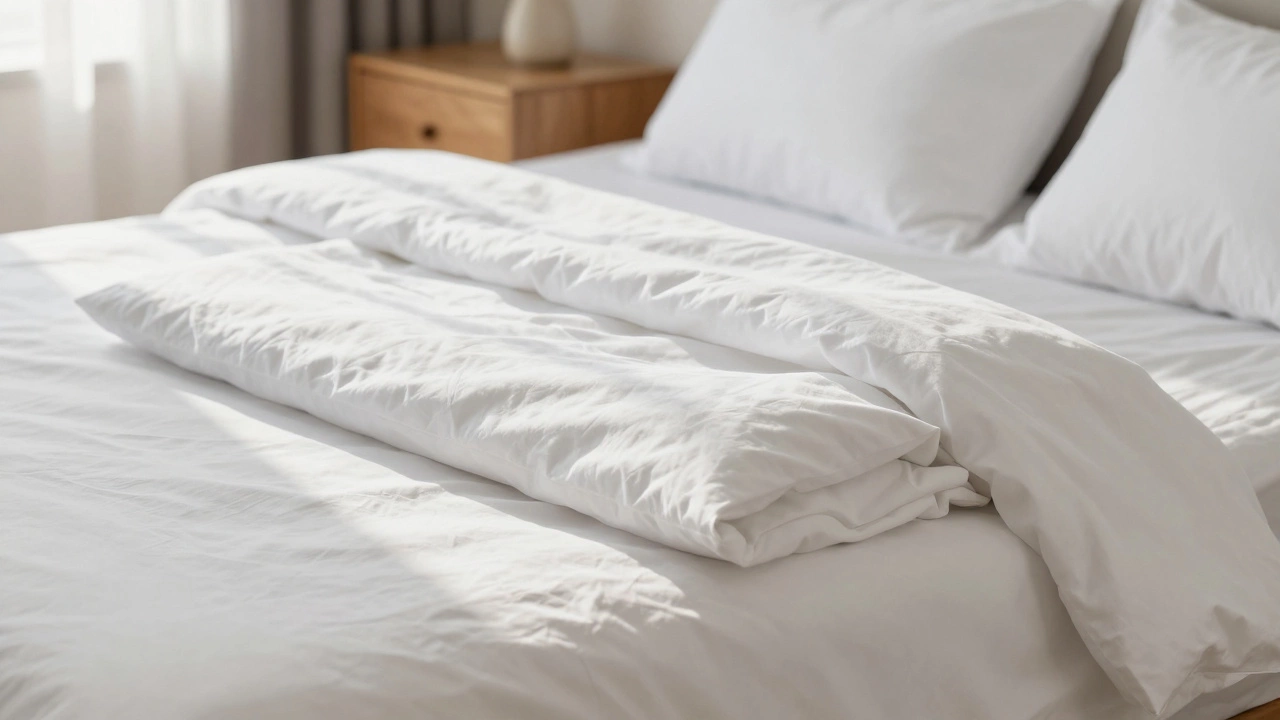
When you walk into a store and see a sign that says "Bed Linens," do you wonder if that’s just another word for bedding? Or maybe you’ve heard someone say "change the linens" and thought they meant the whole bed - mattress, duvet, pillows? The truth is simpler than it sounds, and it matters if you’re shopping, doing laundry, or just trying to talk about your bed without sounding confused.
What exactly is bedding?
Bedding is everything you put on or around your bed to make it comfortable and look neat. That includes your mattress, pillows, pillowcases, sheets, duvet, comforter, bedspread, and even decorative throws. If it touches your bed or is meant to be slept under or on, it’s bedding. Think of it as the whole system - the foundation and the layers.
What counts as linens?
Linens, in the context of a bedroom, are a subset of bedding. Specifically, they’re the washable fabric items that come in direct contact with your skin while you sleep. That means:
- Flat sheets
- Fitted sheets
- Pillowcases
- Bed skirts (sometimes, though not always)
These are the things you change weekly, toss in the washing machine, and fold neatly. Linens are made from cotton, linen, bamboo, or blends - materials chosen for softness, breathability, and durability. You don’t wash your mattress or your down comforter every week. But you wash your sheets. That’s the line.
Why do people say "linens" instead of "sheets"?
It’s history. The word "linen" originally referred to fabric made from flax fibers. Back when most household textiles were made from this natural material, "linens" became the catch-all term for clean, white, washable fabrics in the home - not just for beds, but for tables (tablecloths, napkins) and bathrooms (towels). Over time, even as cotton replaced flax, the word stuck. So when someone says "I need new linens," they’re not talking about the mattress. They’re talking about the sheets and pillowcases.
Hotel staff say "change the linens" because they’re replacing the sheets and pillowcases. You’ll see this on cleaning checklists, in Airbnb instructions, and on laundry labels. It’s industry language. And it’s precise.
Is it wrong to call bedding "linens"?
Not always - but it’s imprecise. If you say "I bought new linens for my bed," most people will assume you mean sheets and pillowcases. That’s fine in casual conversation. But if you’re shopping online, reading a product description, or filling out a laundry list, mixing the terms can cause confusion.
For example: If you search for "bed linens" on Amazon, you’ll get sheets, pillowcases, and maybe a fitted sheet set. You won’t find duvets, mattress toppers, or bed frames listed under that term. But if you search for "bedding," you’ll see everything - including comforters, quilts, and even decorative pillows.
So if you’re trying to buy new sheets, use "bed linens." If you’re replacing your entire bed setup, use "bedding."
What about pillowcases? Are they linens?
Yes. Pillowcases are part of the linen set. They’re not optional extras. In fact, most bed linen sets include two pillowcases along with a fitted sheet and a flat sheet. That’s the standard. If you buy a "queen-size linen set," you’re getting three pieces: one fitted sheet, one flat sheet, and two pillowcases.
Some brands sell pillowcases separately, especially if you want to match a specific pattern or fabric. But they’re still considered linens - not decorative pillows or bed pillows themselves.
Do mattress protectors count as linens?
Technically, no. A mattress protector is a barrier - usually waterproof or allergen-proof - placed directly on the mattress under the fitted sheet. It’s not meant to be touched by your skin. It’s a shield, not a layer you sleep on. So while it’s part of your bedding system, it’s not classified as linens. You don’t wash it as often as your sheets, either. Most people wash mattress protectors every few months, not weekly.
Why does this distinction matter?
Because language affects how you shop, clean, and even how you’re understood.
If you’re staying at a hotel and the housekeeper says, "I’ll change your linens," you know they’re replacing your sheets and pillowcases. You don’t need to worry about your blanket or pillow being swapped out. If you’re buying laundry detergent, you’re buying it for linens - not for your featherbed or memory foam topper.
It also helps when you’re replacing things. If your fitted sheet is torn, you don’t need to buy a whole new bedding set. Just the linen - the sheet and maybe a pillowcase. That saves money. You’re not replacing the duvet, the bed frame, or the mattress. Just the washable fabric that touches you.
Real-life example: Laundry day
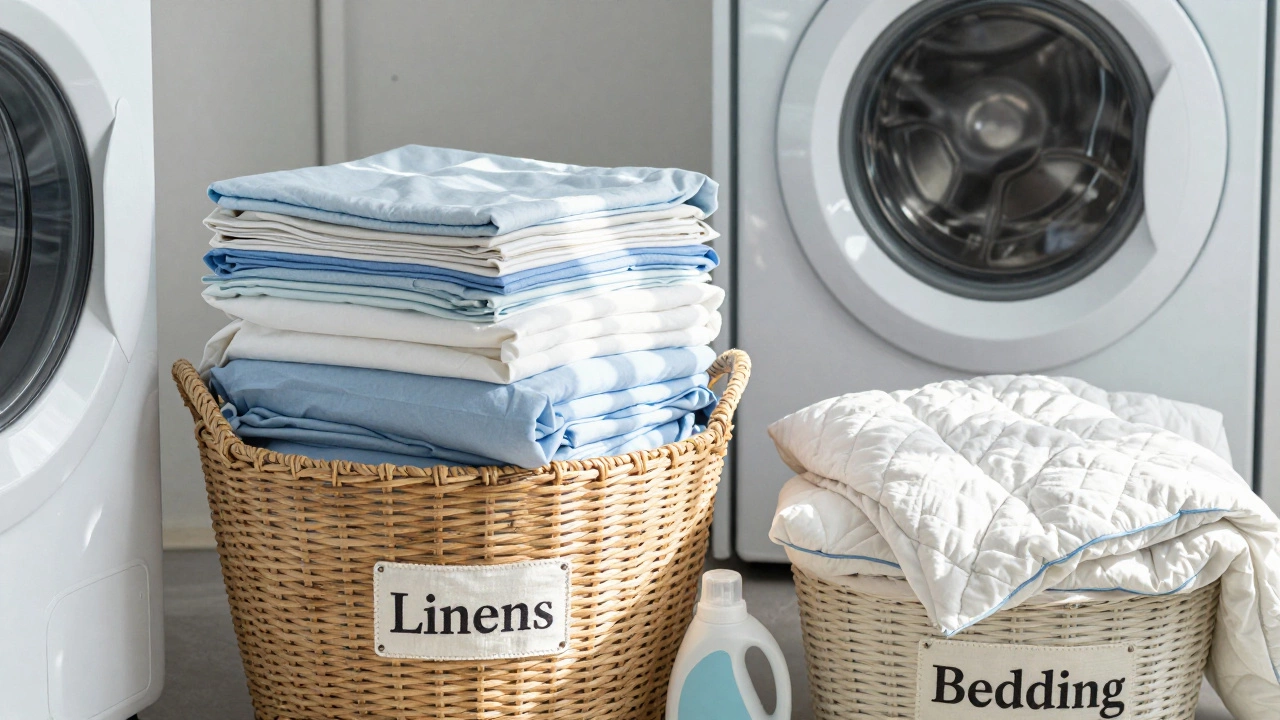
Let’s say you’re doing laundry on a Saturday morning. You pull out a basket labeled "bed linens." Inside, you find:
- One fitted sheet
- One flat sheet
- Two pillowcases
You don’t find your duvet cover in there. Or your quilt. Or your throw blanket. Those go in a different basket - maybe "bedding" or "decorative items." The linens are the only things you wash every week. Everything else? Washed every few months or as needed.
That’s the practical difference. Linens = weekly. Bedding = occasional or seasonal.
What’s the bottom line?
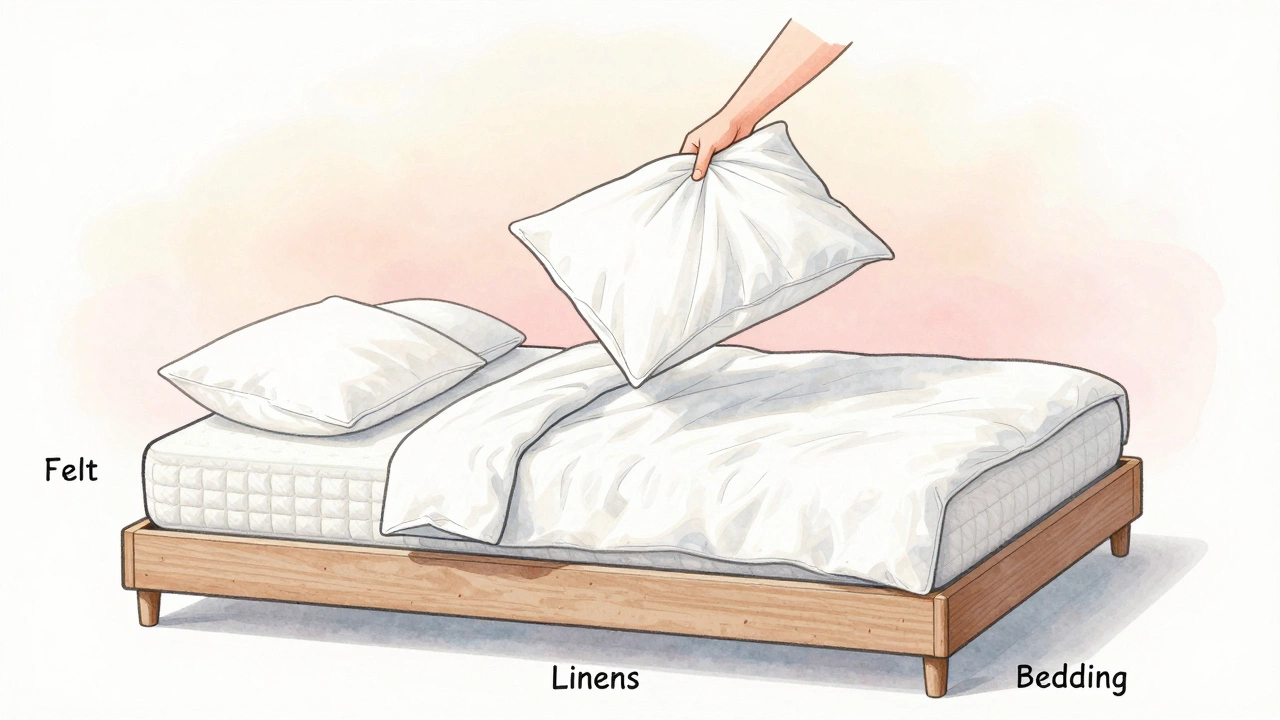
Bedding is the whole setup. Linens are the washable sheets and pillowcases that go directly on the bed. So yes - bedding includes linens, but linens are not the whole thing. Calling your duvet "linens" isn’t wrong in casual talk, but it’s not accurate. And if you want to get the right thing when shopping, cleaning, or asking for help, precision matters.
Think of it this way: Your car is your vehicle. The tires are part of it. But if you say "I need new tires," you’re not asking for a whole new car. Same with bedding and linens. Linens are the parts you replace regularly. Bedding is everything else that makes your bed work.
So next time you hear "change the linens," you’ll know exactly what to do. And if someone asks you what you bought for your bed, you can say it clearly: "New linens - sheets and pillowcases. And a new duvet for the winter."
Are bed sheets the same as linens?
Yes, bed sheets are part of linens. Linens include flat sheets, fitted sheets, and pillowcases - all the washable fabric that touches your skin while you sleep. So sheets are linens, but linens also include pillowcases.
Do linens include duvet covers?
Not usually. Duvet covers are part of bedding, but they’re not classified as linens. Linens are the items you wash weekly - sheets and pillowcases. Duvet covers are washed less often, usually every few weeks or months, depending on use. They’re functional, but not part of the core linen set.
What’s included in a standard bed linen set?
A standard bed linen set includes one fitted sheet, one flat sheet, and two pillowcases. This is the most common configuration sold in stores. Some sets may include only a fitted sheet and pillowcases if you already have a flat sheet. Always check the product description before buying.
Can I call my comforter "linens"?
You can say it in casual conversation, but it’s not technically correct. Linens are the thin, washable fabrics you sleep directly on - sheets and pillowcases. A comforter is a thick, insulated layer meant for warmth. It’s part of your bedding, but not your linens.
Why do hotels say "change the linens" instead of "change the sheets"?
Hotels use "linens" because it’s the industry term that covers all washable bed fabrics - sheets and pillowcases. It’s concise and professional. Saying "change the sheets" might leave out pillowcases. "Linens" includes both, so it’s more complete. It’s not about being fancy - it’s about clarity in housekeeping protocols.