Is Amazon a courier service? Here’s what it really does with deliveries
Amazon Delivery Cost Calculator
Shipping Calculator
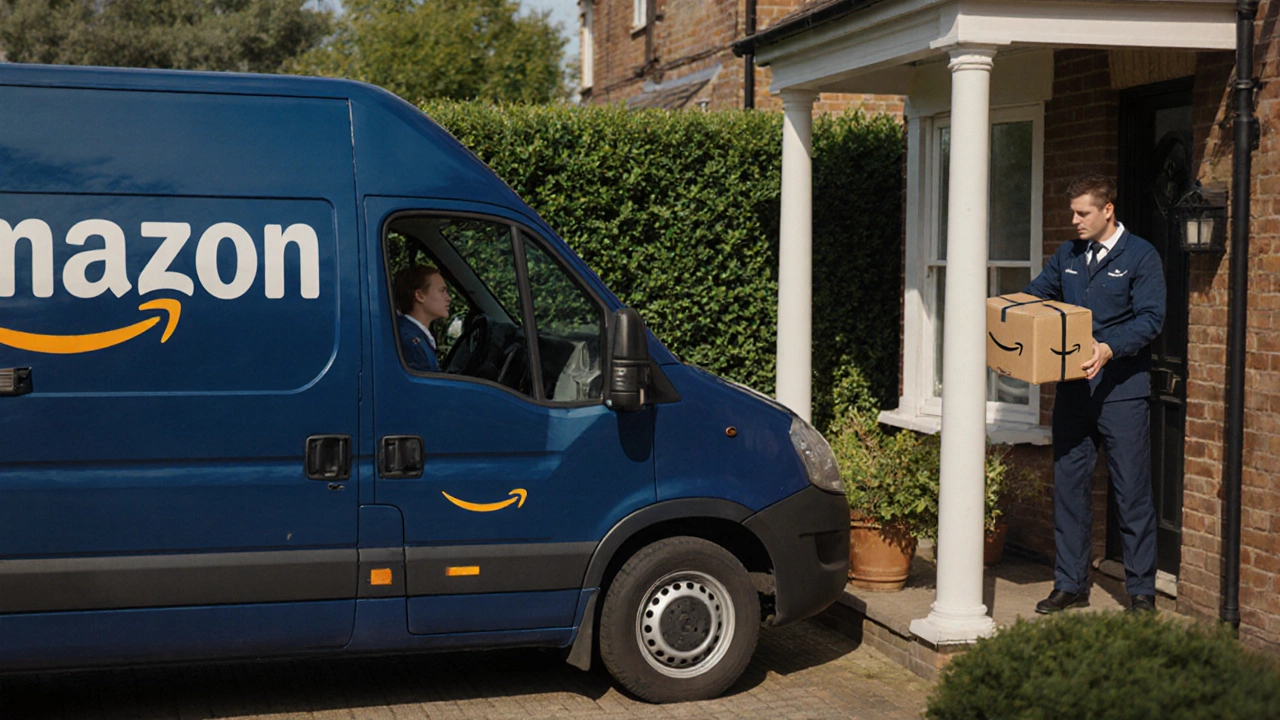
Amazon doesn’t call itself a courier service. But if you’ve ever waited by your door for a package, tracked a box moving across the country, or seen a driver in a blue van show up with your order, you’ve interacted with Amazon’s delivery machine - and it behaves like one. So is Amazon a courier? The short answer: not exactly. But it does more than most couriers ever could.
What makes a courier service?
A traditional courier service picks up a package from one point and delivers it to another. Think DHL, FedEx, or your local postal service. They handle packages for other businesses and individuals. Their core job is transportation - moving things from A to B, often with tracking, signatures, and guaranteed time windows.
Amazon doesn’t operate like that. It doesn’t take your old shoes from your garage and ship them to your cousin in Toronto. You can’t walk into an Amazon office and ask them to deliver your laptop to a friend. Their delivery system exists only to serve their own customers - the people buying stuff on Amazon.com.
Amazon’s delivery network is its own beast
Amazon built its delivery system because it had to. As it grew, third-party couriers couldn’t keep up with the speed, volume, or control it needed. So in 2008, Amazon started its own delivery program. Today, it runs one of the largest logistics networks on Earth.
Amazon owns delivery vans, warehouses, sorting centers, and even planes. It has over 1,000 fulfillment centers worldwide. In the U.S. alone, it handles more than 2 billion packages a year. That’s more than FedEx and UPS combined. And it delivers most of them in one or two days - often the same day.
But here’s the twist: Amazon doesn’t just use its own drivers. It also hires third-party carriers - small local delivery companies - to move packages in rural areas or during peak seasons. It also lets sellers use Amazon’s shipping labels and network through programs like Amazon Shipping. So while Amazon controls the system, it doesn’t always do the driving itself.
Amazon Prime and the speed game
Prime members expect fast delivery. That’s not a perk - it’s the whole reason people pay $139 a year. Amazon’s entire business model is built on making shopping frictionless. Speed is the currency. So it poured billions into infrastructure to cut delivery times.
Amazon’s same-day delivery now works in over 20 major U.S. cities. In London, Paris, and Sydney, you can get groceries delivered in under two hours. That’s not courier service - that’s retail logistics on steroids. Amazon isn’t just moving packages. It’s predicting what you’ll want before you search for it, stocking it in a warehouse near you, and getting it to your door before lunch.

Amazon Logistics vs. traditional couriers
Here’s how Amazon’s system stacks up against FedEx or UPS:
| Feature | Amazon Logistics | Traditional Courier (e.g., FedEx) |
|---|---|---|
| Who uses it? | Primarily Amazon customers and sellers | Any business or individual |
| Delivery speed | Same-day to 2-day for Prime | 1-5 days, depending on service |
| Ownership of fleet | Owns tens of thousands of vans and planes | Owns fleet but less control over last-mile |
| Tracking precision | Real-time, minute-by-minute updates | Standard scan points |
| Cost to customer | Often free with Prime | Pay per shipment |
Amazon’s tracking isn’t just better - it’s obsessive. You can see your package’s location on a map, know when the driver left the last stop, and even get a 30-minute delivery window. That level of detail comes from Amazon’s software, not its vans. It’s a tech company disguised as a delivery service.
Amazon Shipping: letting others use its network
Since 2019, Amazon has opened up its delivery network to third-party sellers through Amazon Shipping. If you’re a small business selling on Amazon, you can print a label and drop your package at an Amazon drop-off point. Amazon then handles the rest - sorting, transporting, and delivering it.
This isn’t a courier service either. It’s more like a toll road. Amazon lets you use its infrastructure for a fee. You don’t get to choose delivery speed or tracking depth. You get what Amazon gives you - usually 2-day delivery at a lower cost than FedEx Ground.
But here’s the catch: Amazon Shipping only works for packages going to Amazon customers. If you want to send something to a non-Amazon buyer? You’re back to using UPS or USPS.
Why the confusion? Because Amazon acts like a courier
People call Amazon a courier because it looks like one. The vans, the uniforms, the tracking, the doorsteps - it’s all familiar. But the purpose is different. A courier is a neutral transporter. Amazon is a retailer with a delivery arm.
Think of it like this: Starbucks doesn’t make coffee machines. But if you buy a coffee maker from them, they’ll ship it to you. Does that make Starbucks a courier? No. It just means they’ve built a delivery system to support their main business.
Amazon’s delivery system exists to sell more stuff. Faster delivery means more orders. More orders mean more data. More data means better predictions. Better predictions mean less waste and higher profits. Delivery isn’t Amazon’s product - it’s the engine that drives its product.

What happens if Amazon stops being a courier?
It won’t. But it might change.
Amazon is already testing drone deliveries in parts of the U.S. and the U.K. It’s building automated warehouses with robots that move packages in seconds. It’s even experimenting with lockers in apartment buildings and grocery stores.
As AI gets smarter, Amazon will predict your needs before you do. Your toothpaste might arrive before you run out. Your dog food might show up because your pet’s weight dropped last week. Delivery won’t be a service you request - it’ll be a feature of how Amazon keeps you buying.
So, is Amazon a courier service?
No. But it does what couriers do - better, faster, and at a scale no one else can match. It’s not a courier. It’s something new: a retail giant that built a logistics empire to control every step of the customer journey. If you need to send a package tomorrow, go to FedEx. If you want something delivered before dinner? Amazon’s your best bet.
Can I use Amazon to ship my personal packages?
No, Amazon doesn’t offer a public shipping service for personal items. You can’t drop off a box at an Amazon warehouse to send it to your friend. The only way to use Amazon’s delivery network is by buying something from Amazon or using Amazon Shipping as a seller on their marketplace.
Does Amazon deliver on weekends?
Yes. Amazon delivers seven days a week in most major cities, including weekends. This is rare among traditional couriers, who usually only deliver Monday through Saturday. Amazon’s ability to deliver on Sundays is one reason it’s become the default choice for fast shopping.
Are Amazon delivery drivers employees?
Some are, but most are contractors. Amazon hires delivery service partners (DSPs) - small businesses that own and operate delivery fleets. Drivers working for these partners are employees of the DSP, not Amazon. Amazon sets the routes and delivery expectations, but the drivers are managed by third-party companies.
Can I track my Amazon package like a courier?
Yes, and better than most couriers. Amazon gives real-time location updates, estimated arrival windows, and even live camera views of the delivery vehicle in some areas. You’ll know exactly when your driver is five minutes away - something most postal services still can’t do.
Why does Amazon use so many different delivery vans?
Amazon doesn’t have one uniform van. It uses custom electric vans from Rivian, leased vans from other companies, and third-party delivery partner vehicles. This mix lets Amazon scale quickly without being tied to one manufacturer. It also helps reduce emissions - Amazon’s goal is to have 100,000 electric delivery vans on the road by 2030.
What’s next for Amazon’s delivery system?
Amazon is testing autonomous delivery robots in Austin and suburban Seattle. It’s building drone delivery hubs in California and the U.K. It’s partnering with Walmart and Target to share warehouse space. It’s even negotiating with cities to install package lockers in public transit stations.
The goal isn’t to replace FedEx. It’s to make the idea of waiting for a delivery feel outdated. In five years, you might not even notice the van pulling up. Your package will just appear in your garage, unlocked by your phone, because Amazon knew you’d need it before you did.
Amazon isn’t a courier. But if you need something delivered fast - and you’re not shipping a pallet of machinery - it’s the only service that truly works like one.