How to Tell a Quality Sofa: The Ultimate Buying Guide
Sofa Quality Inspector
Inspect Your Sofa
Select the features that match the sofa you are considering to calculate its quality score.
1. The Frame (The Backbone)
2. Suspension System
3. Cushion Fillings
4. Upholstery & Durability
Quality Report
Waiting for inspection...
Select options and click calculate to see how this sofa stacks up.
Analysis
Buying a sofa is one of those purchases where you either get it right for ten years or regret it in six months. You sit on it every day. It anchors your living room. And yet, walking into a showroom can feel like guessing game. Two sofas might look identical from the front, but one feels solid while the other wobbles like a cheap chair. So, how do you actually tell if a sofa is built to last?
It’s not just about the fabric color or the cushion shape. Real quality hides inside the frame, under the springs, and within the density of the foam. If you know what to look for-and what to ask for-you can spot a high-quality piece before you even sit down. Here is exactly how to inspect a sofa like a pro.
The Frame: The Backbone of Durability
Why does the frame material matter so much?
The frame supports the entire weight of the sofa and its occupants. A weak frame leads to sagging, squeaking, and eventual collapse, regardless of how nice the cushions are.
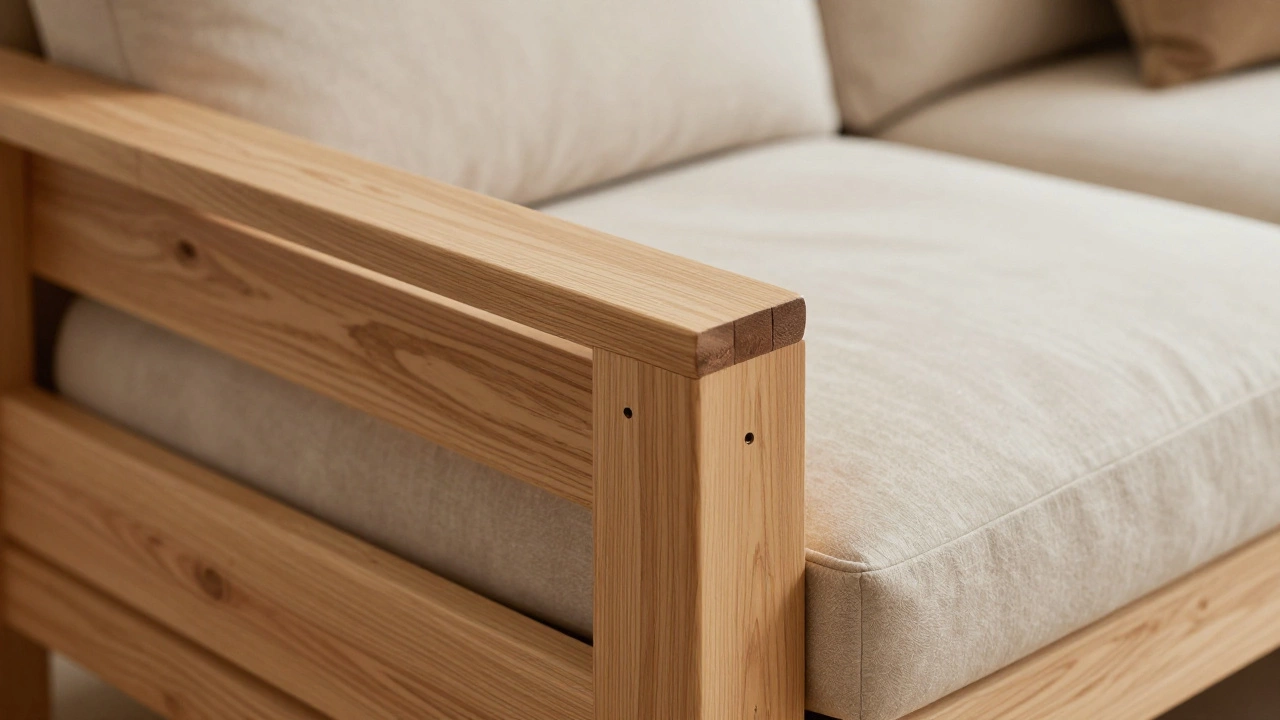
Start with the bones. A hardwood frame is the gold standard for sofa construction because it resists warping and splitting over time. Look for kiln-dried hardwoods like oak, ash, or maple. These woods have been dried in a controlled environment to remove moisture, which prevents them from shrinking or expanding as seasons change.
Avoid particle board, MDF (medium-density fiberboard), or softwoods like pine. Particle board is essentially sawdust glued together. It swells when exposed to humidity and cracks under stress. In Wellington, where damp air is common, a particle board frame is a ticking time bomb.
How can you check this? Lift the corner of the sofa. Yes, really. If it’s light enough to lift easily, it’s likely made of lightweight materials or hollow cores. A quality sofa should feel heavy and substantial. Also, look at the joints. Dovetail joints-where pieces of wood slide into each other like puzzle pieces-are far stronger than staples or nails alone. Corner blocks screwed into these joints add extra stability. If you see screws going directly into thin plywood without reinforcement, keep walking.
Springs and Suspension: The Support System
Once the frame is solid, look at what holds up the seat. This is the suspension system. There are three main types, and they make a huge difference in comfort and longevity.
- Eight-Way Hand-Tied Springs: This is the premium option. Each spring is individually tied by hand to the frame using twine. It allows for flexibility and gives that classic, bouncy feel found in high-end furniture. It’s labor-intensive, which is why it costs more, but it lasts decades.
- Sinuous Springs: These are continuous S-shaped wires connected to the frame. They’re common in mid-range sofas. They provide decent support but can lose tension over time. Check if they’re spaced closely together; wide gaps mean less support.
- No-Sag Webbing: Often found in budget sofas, this uses elastic straps stretched across the frame. It’s comfortable initially but sags quickly. Avoid this if you want a long-term investment.
If you can’t see the springs, ask the salesperson. Or better yet, press down firmly on the seat. Does it feel supportive, or does it bottom out against the floor? A good suspension should have some give but never let you touch the frame underneath.
Cushion Fillings: Comfort vs. Longevity
| Material | Durability | Comfort Level | Maintenance |
|---|---|---|---|
| High-Density Foam | High (5+ years) | Firm to Medium | Low |
| Down Feathers | Medium (Needs fluffing) | Very Soft | High |
| Foam-Down Blend | High | Soft Sink, Firm Support | Medium |
| Polyester Fiber | Low (Flattens quickly) | Soft initially | Low |
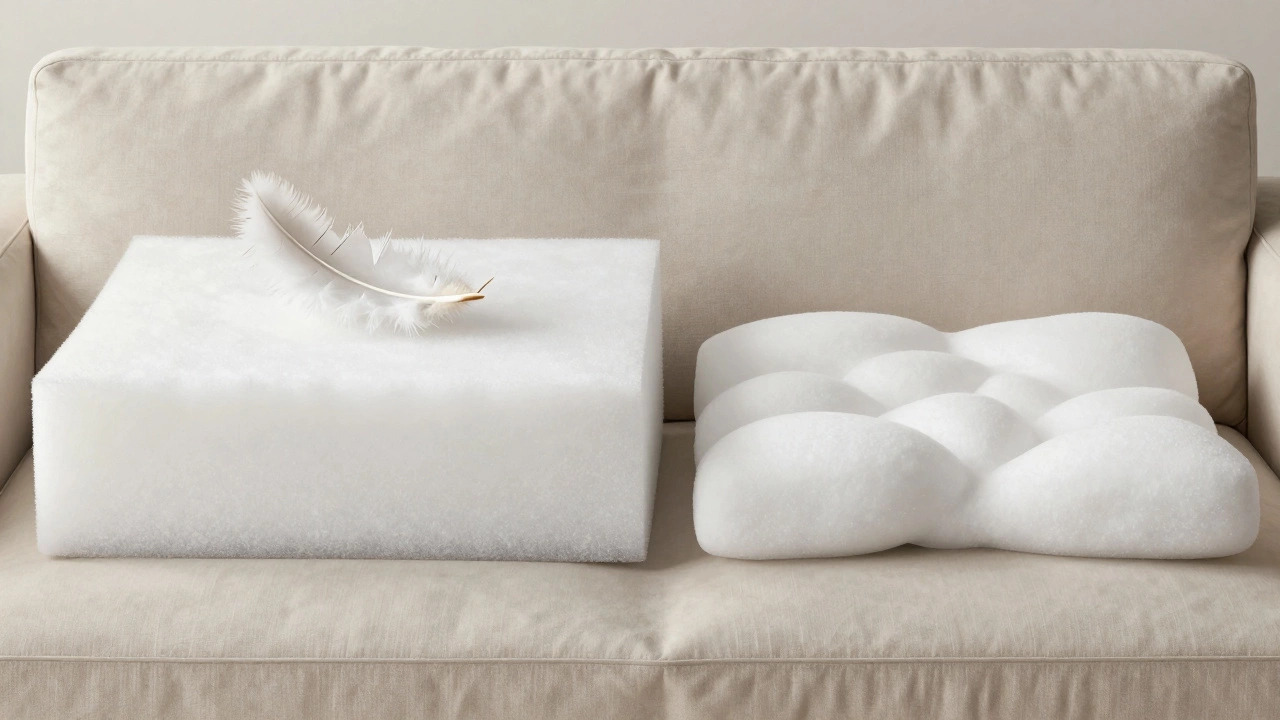
The filling determines how the sofa feels and how long that feeling lasts. High-density foam is foam with a density of 1.8 lbs per cubic foot or higher, offering superior resilience and shape retention compared to low-density alternatives. Low-density foam (below 1.5 lbs) flattens out within a year or two, leaving you with lumpy, uncomfortable seats.
Many people love the cloud-like feel of down feathers, which are natural plumage from ducks or geese that provides exceptional softness and moldable comfort. But pure down requires constant fluffing. If you hate waking up to rearrange pillows, skip it.
The best of both worlds? A blend. High-density foam core wrapped in a layer of down or polyester fiber. You get the immediate sink-in comfort of down with the structural support of foam. Ask retailers about the "density" rating. If they don’t know, that’s a red flag.
Upholstery: Fabric That Survives Real Life
Fabric isn’t just about looks; it’s about survival. Will it hold up to kids, pets, and daily wear? Look at the rub count, also known as the Wyzenbeek test. This measures how many times the fabric can be rubbed back and forth before showing signs of wear.
- Under 9,000 double rubs: Light use only. Maybe for a guest room.
- 9,000-15,000 double rubs: Average household use. Good for occasional seating.
- Over 15,000 double rubs: Heavy duty. Ideal for families, pet owners, or high-traffic areas.
Natural fibers like linen and cotton look beautiful but stain easily and wear faster. Synthetic blends like microfiber, polyester, or olefin are tougher. Olefin, for example, is resistant to stains, fading, and moisture-perfect for coastal homes or households with young children. Leather is another great option, especially top-grain leather, which develops a patina over time rather than cracking. Just avoid bonded leather, which is essentially shredded leather glued onto a backing. It peels after a few years.
Check the seams. Are they double-stitched? Single stitches unravel easily. Tight, even stitching indicates careful craftsmanship. Pull gently on the fabric near the arms and legs. If it pulls away from the frame, the tension is wrong, and it will loosen soon.
Legs and Base: Stability Matters
Don’t ignore the feet. A sofa with flimsy legs will wobble, creating noise and instability. Wooden legs attached with screws and brackets are sturdier than plastic caps glued on. Metal legs should be thick-gauge steel, not thin wire. Check if the legs are level. Place the sofa on a flat surface and rock it slightly. If it rocks side-to-side, the base isn’t square, which puts stress on the frame.
Also, consider height. Higher legs make cleaning easier, especially if you use a robot vacuum. But ensure the height doesn’t compromise stability. A wide stance is better than narrow, spindly legs.
Red Flags to Watch Out For
Even if a sofa looks great, certain details scream "cheap." Here’s what to avoid:
- Vague warranties: A quality manufacturer stands behind their product. Look for warranties covering the frame (lifetime or 10+ years) and mechanism (5+ years). If the warranty is only one year, they expect it to break.
- No brand transparency: Can’t find information about who makes it? Avoid white-label goods with no accountability.
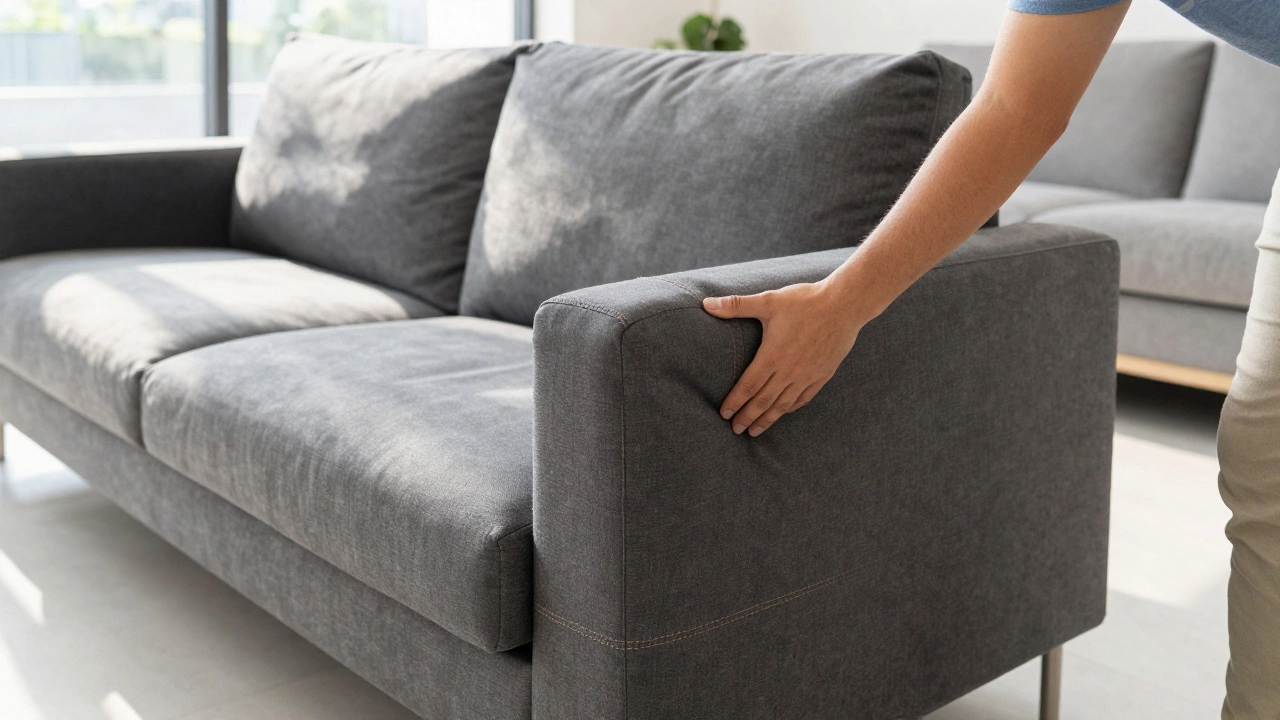
- Uncomfortable armrests: Armrests should be sturdy. Press down on them. If they flex significantly, the internal structure is weak.
- Loose zippers or buttons: Small details reflect overall quality. If the decorative buttons are crooked or the zipper on the cushion cover sticks, the rest of the construction is likely sloppy too.
Testing the Sofa: What to Do in the Store
Don’t just glance at it. Spend at least five minutes sitting on it. Sit in different positions-cross-legged, leaning back, standing up. Does it creak? Does it feel balanced? Bring a friend or family member who usually sits with you. Their comfort matters too.
Check the depth. If your thighs hang off the edge, it’s too shallow. If you can’t reach the floor comfortably, it’s too deep. Standard seat depths range from 20 to 22 inches, but deeper sections (24+ inches) are popular for lounging.
Finally, smell it. A strong chemical odor often means off-gassing from adhesives or low-quality foams. This can linger for months and affect indoor air quality. A fresh-cut wood scent or neutral smell is preferable.
Is an expensive sofa always better quality?
Not necessarily. Price often reflects brand name, design trends, or marketing. However, very cheap sofas rarely use quality materials. Focus on construction details like hardwood frames and high-density foam rather than just the price tag.
How long should a quality sofa last?
A well-made sofa with a hardwood frame and high-density foam should last 7 to 15 years with normal use. Premium models with hand-tied springs can last 20 years or more.
What is the best fabric for a sofa with pets?
Microfiber and tight-weave synthetics like olefin are excellent choices. They resist scratches, hide hair, and are easy to clean. Avoid loose weaves like linen or velvet, which trap pet hair and snag easily.
Can I repair a sagging sofa?
Sometimes. If the springs are broken, they can be replaced. If the foam has compressed, you can add new foam inserts or replace the cushions entirely. However, if the frame is damaged, repair may not be cost-effective.
Why do some sofas feel stiff at first?
New high-density foam and tight upholstery need time to break in. This stiffness is actually a sign of quality, as it means the materials are dense and supportive. Budget sofas often feel soft immediately because they use low-density foam that compresses too easily.