How to Store Clothes When You Have No Space: Smart Solutions for Small Rooms
Small Space Storage Calculator
Optimization Results
Effective Item Count: 0 items
New Effective Closet Width: 0 inches
Status:
Hanging Efficiency
Under-Bed Potential
Overall Fit
You open your closet door and a wave of hangers crashes down. You look at the floor, covered in piles of laundry that never made it into drawers. If you live in a compact apartment or share a bedroom with a partner, this feeling is familiar. The problem isn't just about having too many clothes; it's about having nowhere to put them. But here is the good news: you do not need a walk-in closet to stay organized. You just need to rethink how you use the space you already have.
When square footage is tight, every inch counts. The goal is to move items out of sight without losing access to them when you need them. This means looking up, looking down, and looking behind doors. By using vertical space, hidden corners, and multi-functional furniture, you can create a system that keeps your wardrobe accessible and your room clutter-free. Let’s break down exactly where your clothes can go.
Maximize Vertical Space
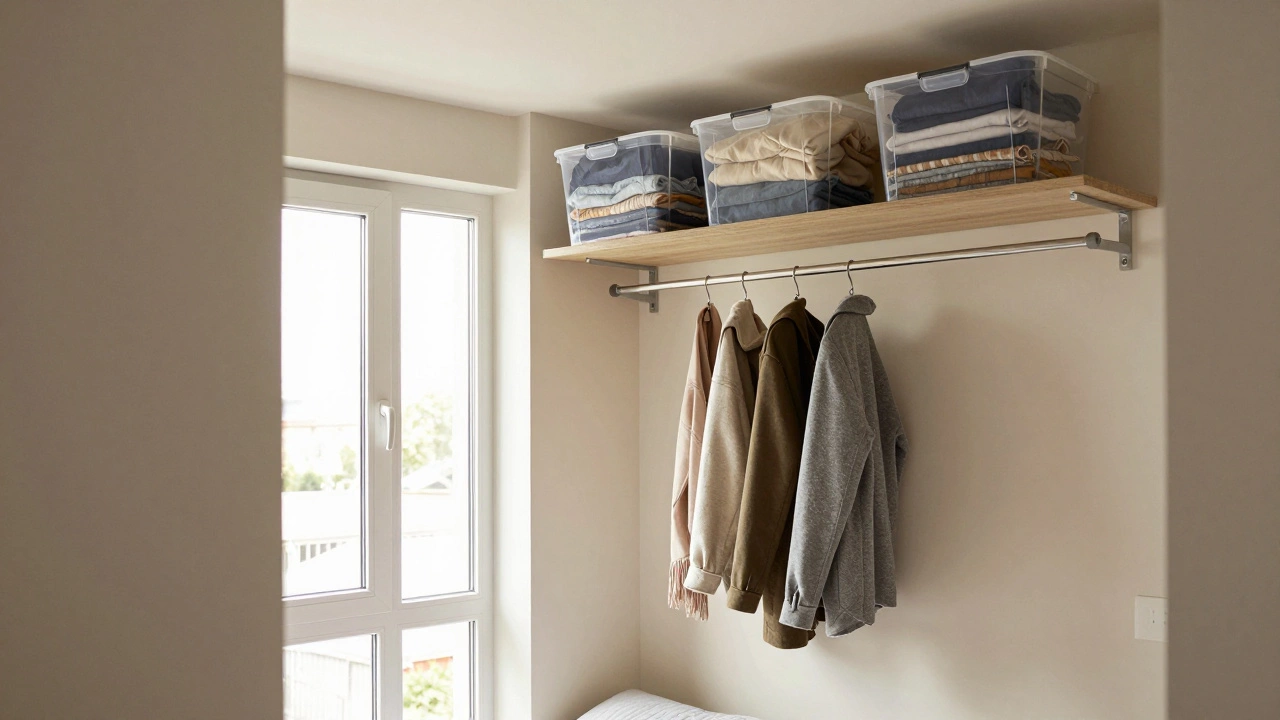
We often ignore the air above our heads because we are used to thinking in two dimensions. In a small room, however, height is your best friend. Vertical storage is the practice of using wall height to store items, freeing up floor space. Start by installing shelves all the way to the ceiling. Use the top shelf for items you rarely touch, like off-season coats or bulky sweaters. Keep these items in clear plastic bins so you can see what is inside without pulling everything down.
If you cannot drill holes in the walls, use tension rods. These are inexpensive metal poles that fit tightly between two surfaces. You can install a tension rod inside an existing closet to create a second hanging level. Hang shorter items like shirts on the top rod and longer items like dresses on the bottom rod. You can also place a tension rod over a doorway to hang scarves, belts, or even lightweight jackets. Another option is an over-the-door organizer. While these are famous for shoes, they work great for socks, underwear, and accessories too.
- Install floating shelves above closets or beds.
- Use double-tiered hangers to stack shirts vertically.
- Add a tension rod to split closet height into two zones.
- Hang hooks on the back of the bedroom door for daily wear.
Utilize Under-Bed Storage
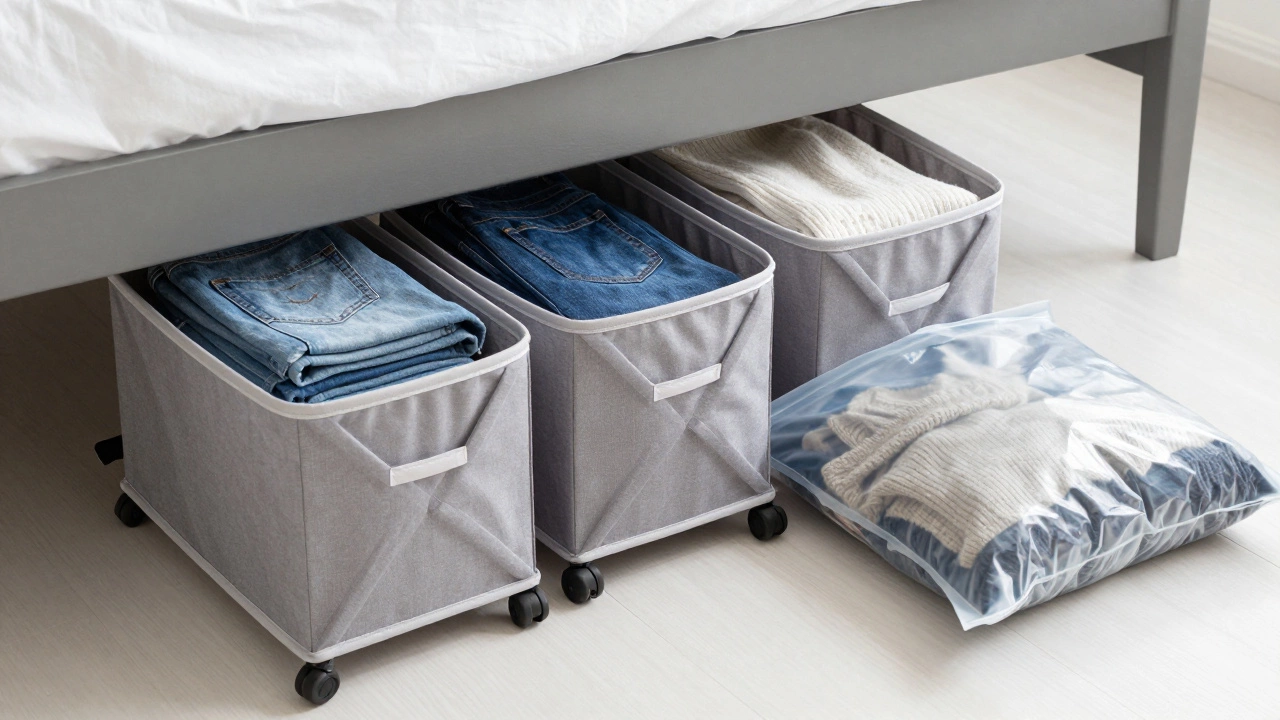
The space under your bed is usually wasted. Unless you have a low-profile frame, there is likely several inches of empty room right there. This is prime real estate for seasonal clothing. Under-bed storage is a method of storing infrequently used items in the gap beneath the bed frame. You do not need expensive custom drawers. Simple rolling bins or vacuum-sealed bags work perfectly.
Vacuum bags are a game-changer for bulky items. When you zip up a winter duvet or a pile of heavy wool sweaters and suck the air out, the volume shrinks by up to 75%. This allows you to fit three times as much into the same space. For items you access more often, like extra sheets or current-season jeans, use fabric bins with wheels. They slide out easily and keep dust away from your clothes. Just make sure the bins are low enough to fit under your bed frame before you buy them.
| Option | Best For | Pros | Cons |
|---|---|---|---|
| Vacuum Sealed Bags | Bulky items (duvets, coats) | Saves maximum space, protects from moisture | Hard to access frequently, needs pump |
| Fabric Bins with Wheels | Seasonal clothes, linens | Easy access, breathable, hides clutter | Takes up more height than flat bags |
| Hard Plastic Drawers | Delicate items, shoes | Durable, stackable, pest-proof | Expensive, heavy, less flexible |
Reorganize Your Closet Interior
Your closet might be full, but is it efficient? Most standard closets have one rail and maybe one shelf. This layout wastes half the available space. To fix this, you need to customize the interior. If you rent and cannot change the fixtures, use modular shelving units that sit on the floor.
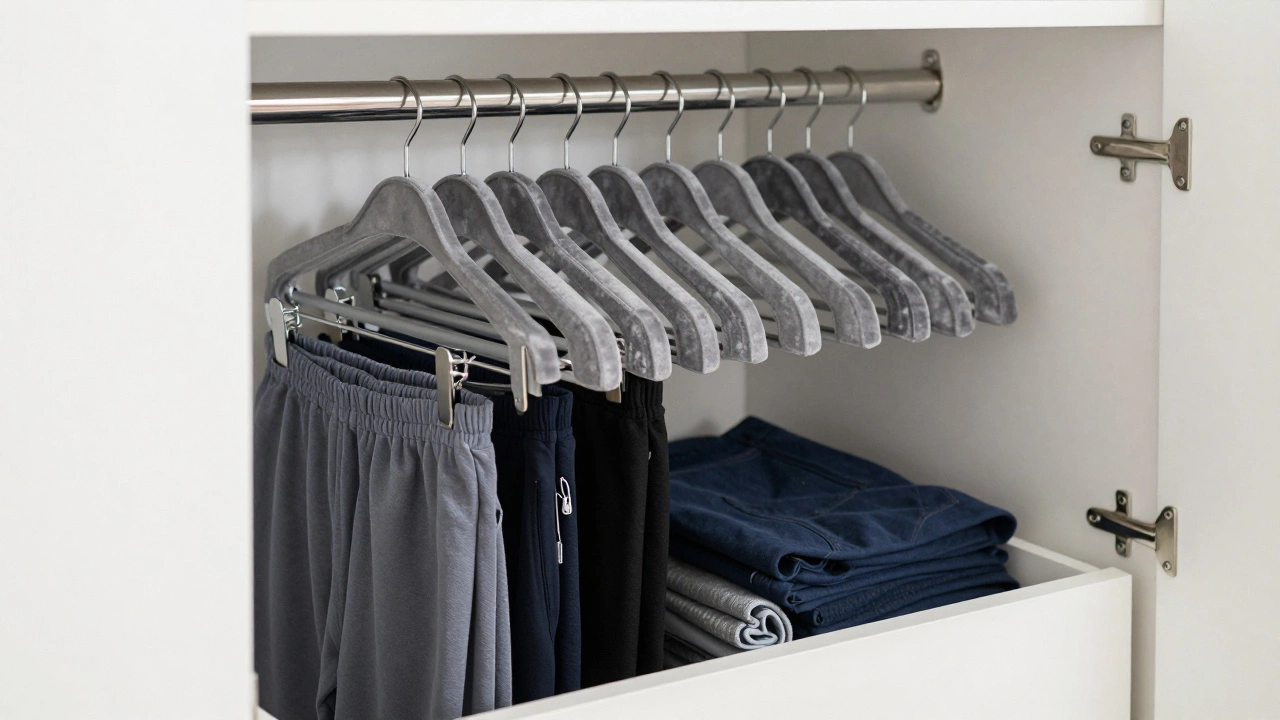
One of the biggest space-wasters is hanging pants by their loops. A single pair of jeans takes up the same width as a long coat. Instead, fold pants and stack them vertically in drawers or on shelves. This "file folding" method lets you see every pair at a glance and fits five pairs in the space of one hanger. For shirts, consider using velvet hangers. They are thinner than wooden or plastic ones and take up significantly less horizontal space. This simple swap can free up 20-30% of your hanging area.
If your closet has deep shelves, divide them with shoe organizers or drawer dividers. Deep shelves cause items at the back to get lost. By breaking the depth into smaller sections, you ensure every item is visible and accessible. You can also add a hanging shoe rack to the side of the closet door. This keeps footwear off the floor and frees up drawer space for other items.
Multi-Functional Furniture
In a small home, every piece of furniture should earn its keep. Look for items that serve two purposes. A bed with built-in storage drawers is a classic choice. It provides sleeping space and significant storage for bulkier items. Similarly, an ottoman with a hollow center can store blankets, pillows, or even extra clothes while serving as a footrest or coffee table.
Consider replacing a traditional dresser with a chest of drawers that has deeper compartments. Or, if you lack counter space, use a narrow console table against a wall with baskets underneath. These baskets can hold folded sweaters or accessories. The key is to avoid dedicated storage units that only store things. Choose furniture that integrates storage into its design, reducing the need for separate boxes and bins.
Decluttering as a Strategy
No amount of clever storage will solve the problem if you own more clothes than you can wear. Before buying any organizers, try a decluttering session. The goal is not to throw everything away, but to remove items that no longer serve you. Ask yourself: Did I wear this in the last year? Does it fit me now? Do I love it?
If the answer is no, let it go. You can donate gently used items, sell them online, or recycle textiles. Reducing your total volume makes storage easier and faster. With fewer items, you can use simpler systems like open shelves instead of complex drawer setups. This also saves money on storage products. Focus on keeping only what you love and wear regularly.
Maintain Your System
A storage system only works if you maintain it. When you bring new clothes home, remove an old one. This "one in, one out" rule prevents accumulation. Spend ten minutes each week putting things back in their designated spots. If you find yourself struggling to close a drawer or bin, it is time to reassess. Maybe you need to rotate seasonal items or donate more. Consistency is key to keeping your space tidy and functional.
What is the best way to store clothes in a small apartment?
The best approach combines vertical storage, under-bed solutions, and multi-functional furniture. Use high shelves for off-season items, vacuum bags for bulky pieces under the bed, and thin hangers to maximize closet hanging space. Decluttering is also essential to reduce overall volume.
Can I use vacuum bags for all my clothes?
No, vacuum bags are best for bulky, non-delicate items like winter coats, duvets, and sweaters. Avoid using them for silk, leather, or structured garments like blazers, as the pressure can damage the fabric and shape. Use them only for items you do not need to access frequently.
How do I organize a closet without drilling holes?
Use tension rods to create additional hanging levels or store shoes. Over-the-door organizers are great for accessories and small items. Modular shelving units that stand on the floor can add storage without permanent installation. Adhesive hooks can also hold lightweight items like belts or hats.
Are velvet hangers really worth it?
Yes, velvet hangers are slim and non-slip, allowing you to fit more clothes in the same space. They prevent garments from sliding off and save significant horizontal room compared to wide wooden or plastic hangers. They are an affordable upgrade that immediately improves closet capacity.
What should I do with clothes I don't wear often?
Store off-season items in hard-to-reach places like high shelves or under the bed. Use clear bins or vacuum bags to keep them protected and visible. If you haven't worn an item in over a year, consider donating or selling it to free up space for clothes you actually use.