How to Spot an Expensive Rug: A Buyer's Guide to Quality and Value
Rug Quality & Value Estimator
Select the characteristics of the rug you are evaluating to determine its likely quality tier and estimated value.
Waiting for Input
Estimated Value Range
$0 - $0
Based on standard 5x8 size dimensions.
Investment Verdict
Analysis pending.
You walk into a showroom or scroll through an online listing. The price tag says $2,500 for a rug that looks, at first glance, like the one next to it priced at $400. What gives? Is it just brand markup, or are you looking at something genuinely valuable?
Spotting an expensive rug isn't about recognizing a logo. It’s about understanding construction, materials, and craftsmanship. High-value rugs are investments in durability, artistry, and comfort. Cheap rugs wear out in years; expensive ones last generations. If you want to stop guessing and start knowing, you need to look past the pattern and examine the structure.
The Knot Count Myth and Reality
If you ask anyone how to spot an expensive rug, they will likely mention "knot count." This is true, but with a major caveat. Knot count refers to the number of knots per square inch (KPSI). Generally, more knots mean a finer, more detailed image and a higher price point.
However, knot count alone doesn't guarantee quality. A machine-made rug can have a high density of synthetic fibers that feel stiff and look blurry up close. An hand-knotted rug is a textile created by tying individual knots around warp threads on a loom, where each knot is placed by human hands. This process takes time-sometimes months for a single piece.
- Low End: Under 100 KPSI. These rugs often lack detail and may unravel if not well-bound.
- Mid-Range: 100-300 KPSI. Good balance of durability and detail. Common in Turkish and Persian styles.
- High-End: 300-800+ KPSI. These allow for intricate, photograph-like designs. Think fine Persian Silk or high-grade Tibetan wool.
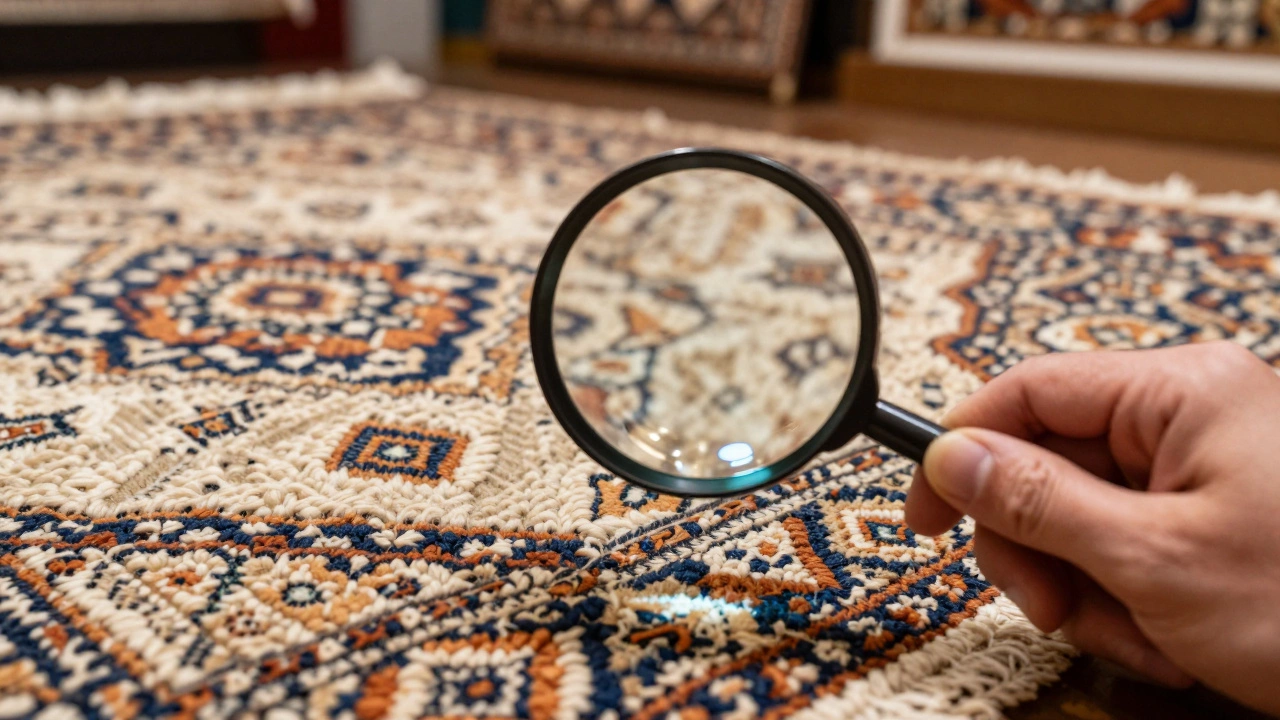
To check this yourself, flip the rug over. Use a magnifying glass if you have one. Can you see the individual knots clearly? Are they tight and uniform? If the back looks like a solid sheet of fabric, it’s likely woven or tufted, not knotted. If you see distinct, tiny loops or cuts, you’re looking at a hand-knotted piece.
Fiber Content: Wool vs. Synthetic vs. Silk
The material dictates the feel, the smell, and the longevity. When you spot an expensive rug, you are usually paying for natural fibers that have been processed with care.
| Material | Durability | Feel | Price Point |
|---|---|---|---|
| New Zealand Wool | Very High | Soft, resilient | High |
| Silk | Medium (delicate) | Lustrous, smooth | Very High |
| Polypropylene | Low | Plastic-like, stiff | Low |
| Cotton | Medium | Flat, crisp | Medium |
Wool is the gold standard for most households. It’s naturally stain-resistant, fire-retardant, and bounces back from foot traffic. Look for New Zealand wool or Tibetan wool. These fibers are thicker and stronger than generic sheep’s wool. Run your hand against the pile. Real wool feels slightly oily or waxy and warms up quickly. Synthetic fibers feel cool and slippery.
Silk adds sheen and luxury. Many expensive rugs are blends, such as 80% wool and 20% silk. The silk catches the light, creating depth in the design. However, pure silk rugs are fragile and best for low-traffic areas like bedrooms or formal dining rooms. If a rug sparkles under the light and feels incredibly smooth, it likely contains silk.
Avoid polypropylene or polyester if you are hunting for value. These plastics shed microfibers, attract static, and flatten permanently. They are cheap to produce and easy to mass-market, but they don’t hold value.
The Smell Test and Dye Quality
This might sound odd, but your nose knows. Pick up the rug and take a sniff. An expensive, high-quality rug should smell like nothing, or perhaps faintly of earth, lanolin (wool), or dried plants. This indicates natural dyes and proper washing.
If it smells like chemicals, vinegar, or strong plastic, put it down. That odor comes from synthetic dyes, adhesives used in tufting, or poor ventilation during manufacturing. Chemical smells don’t fade easily and can be harmful to your indoor air quality.
Next, look at the colors. Hand-dyed rugs use vegetable or acid dyes that penetrate the fiber. Over time, these develop a beautiful patina. Machine-dyed rugs often have flat, neon-bright colors that look artificial. Check the edges of the pattern. In high-end rugs, the colors bleed slightly into adjacent areas because the dye was applied before knotting. In cheaper rugs, the lines are razor-sharp because the dye is printed on top of the pile after weaving.
Weave Density and Pile Height
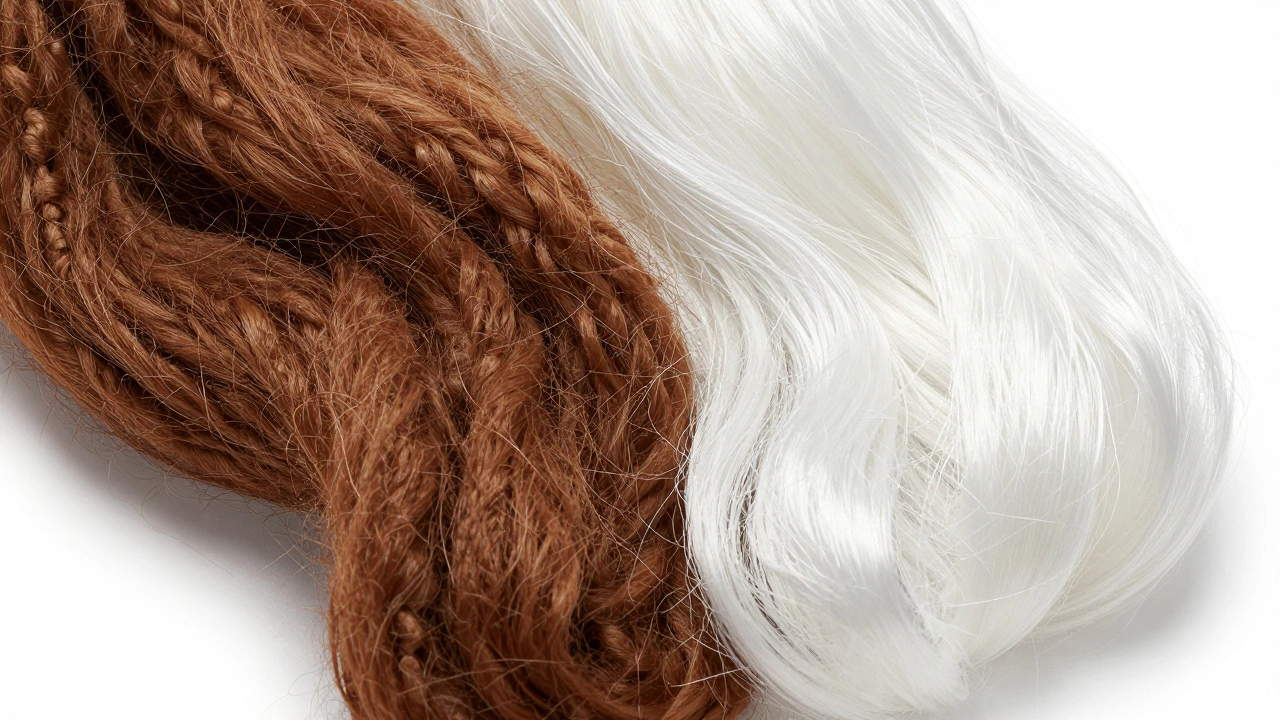
Grab a handful of the pile and press it down. Does it spring back immediately? That’s resilience. Now, look at the density. You can do a simple test called the "fold test." Fold the rug in half lengthwise. If you can see the foundation (the horizontal weft threads) through the pile, the rug is loosely woven. It will wear out fast.
In an expensive rug, the pile is so dense that the foundation is completely hidden when folded. The rug should feel heavy. Weight matters. A 5x8 hand-knotted wool rug should weigh between 15 to 25 pounds. If it feels light as a feather, it’s either very thin or made of lightweight synthetics.
Pile height also varies. Shag rugs are trendy but rarely "expensive" in the traditional sense unless they are hand-tufted with premium materials. Flat-weave rugs (like Kilims) have no pile and are durable, but their value comes from the complexity of the weave and the age of the design, not the thickness.
Construction Methods: Knotted vs. Tufted vs. Woven
Understanding how the rug is made is the fastest way to determine its class.
- Hand-Knotted: The highest tier. Each knot is tied individually. This allows for complex patterns and extreme durability. These rugs can be repaired if damaged. They are the only type that truly appreciates in value over time.
- Hand-Tufted: A gun pushes yarn through a canvas backing, then glue is applied to hold it in place. These look good initially but the glue can crack, and the backing can fail. They are mid-range in price and value.
- Power-Loomed: Made by machines. They mimic hand-knotted looks but lack the structural integrity. The patterns repeat perfectly, which is actually a giveaway-no two hand-knotted rugs are identical.
- Flat-Weave: No pile. Warp and weft interlock. Great for modern homes, but less plush. Value depends on artisan skill and material.
If you are buying an antique or vintage rug, check the fringe. The fringe should be part of the rug’s foundation, extending seamlessly from the body. If the fringe is sewn on separately, it’s a sign of lower-quality construction, often seen in machine-made pieces trying to look authentic.
Origin and Provenance
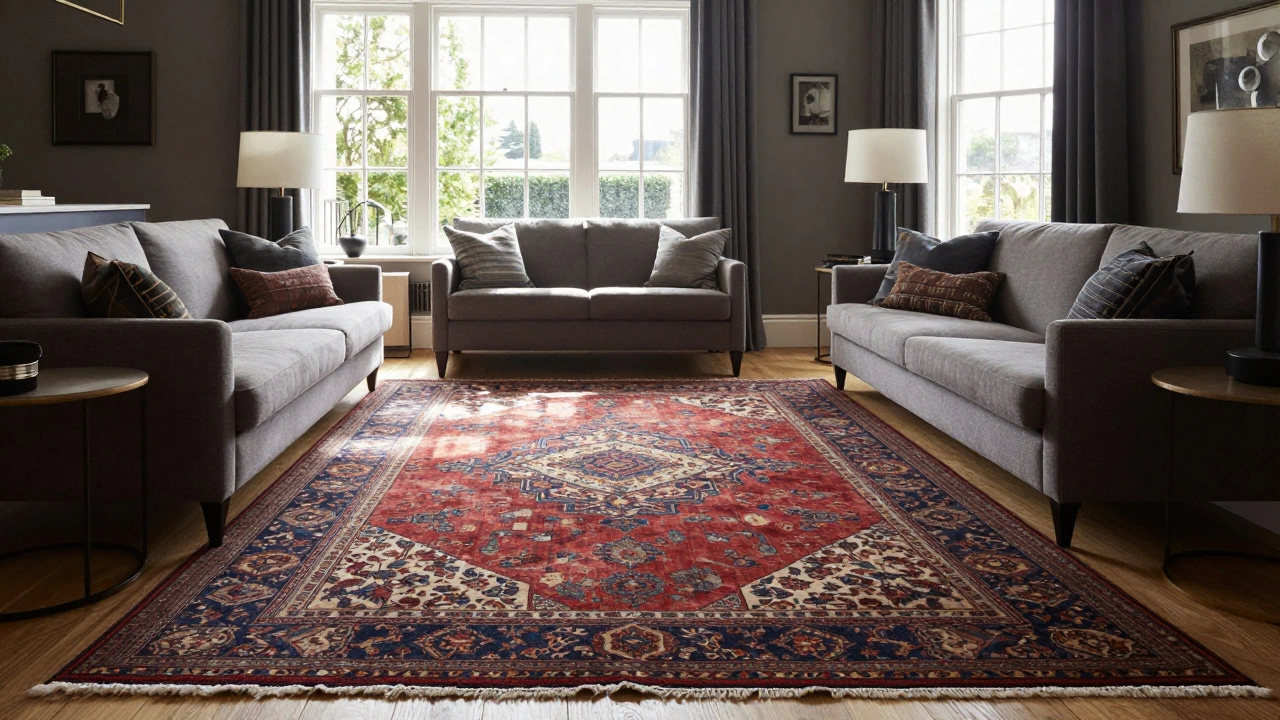
Where the rug comes from tells you a lot about its style and potential cost. Certain regions are famous for specific techniques.
- Persian (Iran): Known for intricate floral motifs and high knot counts. Cities like Tabriz and Isfahan produce some of the world’s finest rugs.
- Turkish: Often feature geometric patterns and use cotton foundations. They are sturdy and vibrant.
- Chinese/Tibetan: Usually larger, with bold colors and simpler patterns. Tibetan rugs are known for their thick, durable wool.
- Indian: India produces a huge volume of rugs, ranging from low-end imitations to museum-quality pieces replicating Persian designs.
Provenance means documentation. If a seller claims a rug is "vintage" or "antique," they should provide details about its age, origin, and any repairs. A genuine antique rug (over 50 years old) has a different market value than a new reproduction. Wear and tear on an antique is expected and even desired, as long as the structure is sound. On a new rug, any damage is a defect.
Red Flags to Avoid
Even experienced buyers get tricked. Here are the biggest traps:
- "Hand-Made" Label: This is vague. It could mean hand-tufted, hand-woven, or hand-finished machine rugs. Always ask for "hand-knotted."
- Perfect Symmetry: If every medallion and border element is mathematically perfect, it’s machine-made. Human hands introduce slight variations that add character.
- Backing Material: Flip it over. If you see a rubbery, latex-like backing, it’s tufted. Hand-knotted rugs have a visible warp and weft structure on the back, mirroring the front pattern.
- Too Good to Be True Prices: A hand-knotted wool rug cannot be made for $200. The labor alone costs more than that. If the price seems low, the material or construction is compromised.
Investing in Longevity
Buying an expensive rug is not just about aesthetics; it’s about lifecycle cost. A $500 rug that lasts five years costs $100 a year. A $3,000 rug that lasts thirty years costs $100 a year. The math favors quality.
When you find a rug that passes the touch, smell, and visual tests, you aren’t just buying floor covering. You’re buying a piece of textile art that anchors your room and improves with age. Take your time. Inspect closely. And remember, the best rug is the one that fits your life, not just your budget.
How can I tell if a rug is hand-knotted without seeing the back?
Look for slight irregularities in the pattern. Hand-knotted rugs have minor variations in color and shape because they are made by humans. Also, check the fringe. In hand-knotted rugs, the fringe is an extension of the foundation threads, not sewn on. If the pattern is perfectly symmetrical and the fringe looks attached, it is likely machine-made.
Is a higher knot count always better?
Generally, yes, but context matters. A higher knot count allows for more detailed designs and a smoother surface. However, a rug with 500 KPSI made of cheap synthetic fiber is less valuable than a 200 KPSI rug made of high-grade New Zealand wool. Always prioritize material quality and construction method over knot count alone.
What is the difference between a vintage and an antique rug?
In the rug industry, an "antique" rug is typically defined as being over 50 years old. A "vintage" rug is usually between 10 and 50 years old. Antique rugs often have more historical significance and unique dye lots, while vintage rugs offer retro styles and proven durability. Both can be expensive depending on condition and origin.
Why do silk rugs cost so much?
Silk is a delicate, lustrous fiber that requires skilled artisans to work with. It reflects light beautifully, adding depth to the design. Because silk is less durable than wool, it must be handled with care, and the production process is slower and more precise. Pure silk rugs are rare and highly prized for their aesthetic appeal.
Can I clean an expensive rug myself?
For routine maintenance, vacuuming without a beater bar is safe. However, deep cleaning should be done by professionals who specialize in area rugs. Home steam cleaners can damage natural dyes and shrink wool fibers. Improper cleaning can void warranties and significantly reduce the rug's lifespan and value.