How to Declutter Your House in One Day: A Fast-Track Guide

One-Day Declutter Decision Tool
Stop the "maybe" pile! Use this tool to apply the Ruthless Sorting Rules from the guide. Enter an item and answer the critical questions.
Most people treat cleaning like a marathon, spending weeks chiping away at a junk drawer or a guest room. But let's be honest: the longer you spend 'organizing,' the more likely you are to get overwhelmed and quit. The truth is, you don't need a month; you just need a focused, high-energy burst of decision-making. If you can commit to one grueling day of ruthless sorting, you can transform your living space from a chaotic hoard into a breathable home.
Quick Wins for a Single-Day Reset
- The Trash First Rule: Start with obvious garbage to build momentum.
- The 3-Second Decision: If you haven't used it in a year, it goes. No debating.
- The 'Zone' Method: Move through the house in one direction; never backtrack.
- Immediate Exit: Don't let 'donate' bags sit in the hallway; put them in the car immediately.
The Mindset for a Rapid Reset
Before you touch a single box, you have to accept one thing: you are not "organizing" your stuff; you are removing it. Minimalism is a lifestyle approach that focuses on owning only the things that provide genuine value or utility, stripping away the excess to reduce stress. When you try to declutter your house in one day, you aren't looking for a better place to hide your old magazines. You're deciding what actually earns a spot in your life.
The biggest trap is the "maybe" pile. In a one-day sprint, "maybe" is the enemy. If you're unsure about an item, ask yourself: "If I were shopping right now, would I buy this again?" If the answer is no, it's gone. This shift from sentimental value to current utility is what makes a 24-hour transformation possible.
Phase 1: The Setup and Gear
You can't win a race if you're stopping to find your shoes. Spend the first 30 minutes gathering your tools. You'll need heavy-duty trash bags, a few sturdy cardboard boxes for donations, and a marker to label everything. I recommend using Vacuum Storage Bags, which are air-tight plastic containers that compress bulky items like winter blankets or pillows using a vacuum cleaner. These are lifesavers for clearing out closets quickly without needing a massive permanent installation.
Set a timer. Use a high-tempo playlist to keep your heart rate up. The goal is to keep your body moving. If you sit down to look through a photo album, you've lost the battle. Keep the momentum high, and treat the process like a professional cleaning crew would-efficient and unsentimental.
Phase 2: Tackling the High-Impact Zones
Don't start with the attic or the basement; those are "black holes" that can swallow an entire day. Start with the rooms you see every hour. The kitchen and the living room provide the fastest visual payoff, which gives you the dopamine hit needed to keep going.
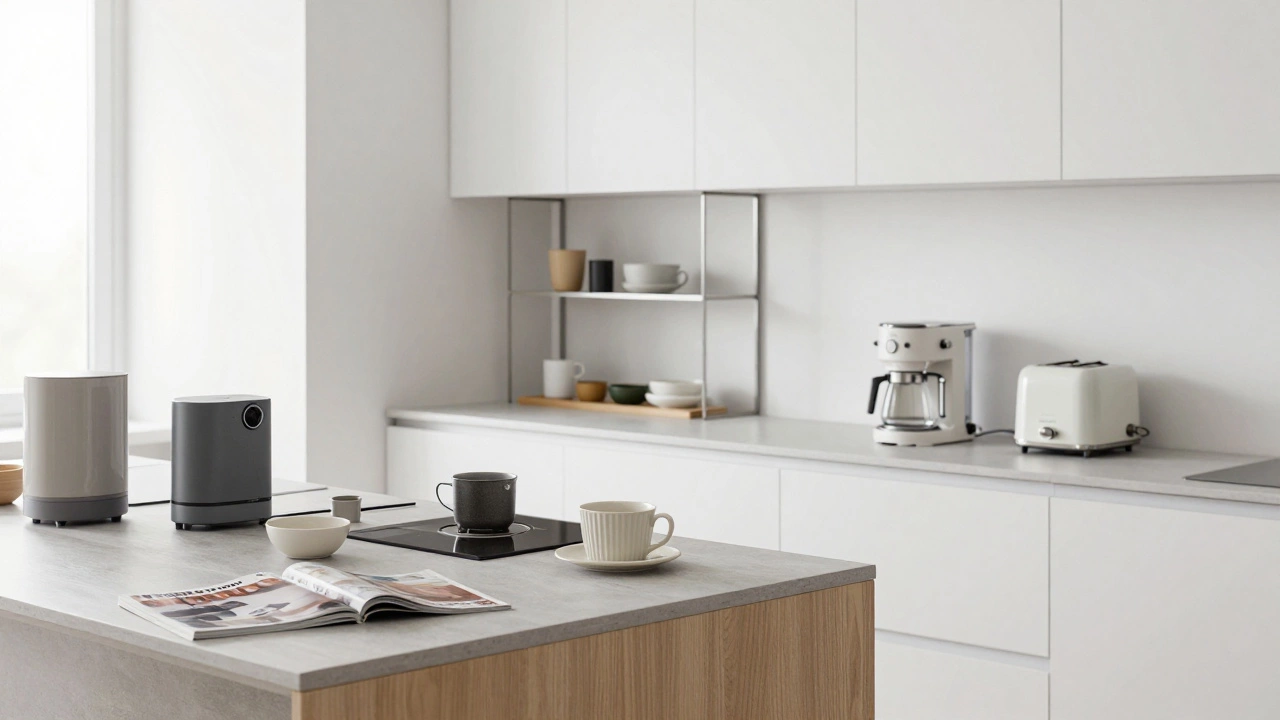
In the kitchen, look for the "duplicate trap." Do you really need three spatulas or a specialized avocado slicer? Most people have 20% of their kitchen tools doing 80% of the work. Clear the counters entirely. Only put back the items you use daily, like the coffee maker or the toaster. For the rest, look into Modular Shelving, which are adjustable storage systems that allow users to customize the height and width of shelves to fit specific items. This prevents the "stacking" effect where items get buried at the back of the cupboard.
Moving to the bedroom and closets, use the "reverse hanger" trick if you have a few minutes to spare, but since we're on a clock, go for the "pile and pick" method. Dump everything from one category (like t-shirts) onto the bed. Only put back what fits and feels good. Everything else goes straight into the donation box. If it's been hanging in your closet for two years without being touched, it's not a "special occasion" outfit-it's a ghost of a person you no longer are.
| Room | Primary Target | Best Storage Solution | Decision Trigger |
|---|---|---|---|
| Kitchen | Duplicate Gadgets | Drawer Dividers | Used in last 6 months? |
| Bedroom | Outgrown Clothing | Vacuum Bags | Does it fit currently? |
| Living Room | Old Magazines/Paper | Closed Bins | Is the info outdated? |
| Bathroom | Expired Toiletries | Acrylic Organizers | Check expiration date |
Phase 3: Managing the "Danger Zones"
Now we hit the areas where most people fail: the garage, the basement, or that one "junk drawer." These areas are usually filled with items that require a complex decision (e.g., "I might need this specific bolt for a project in 2028"). To survive this, you need a strict system. Use Plastic Totes, which are durable, stackable containers made of polypropylene used for long-term organization and protection from pests.
Group items by category-tools, holiday decor, sports gear-and label the totes clearly. If you find a box of old electronics, don't let them sit for another year. Take them to a dedicated e-waste recycling center immediately. The psychological weight of "I need to deal with this eventually" is often heavier than the physical clutter itself.
Phase 4: The Final Purge and Exit Strategy
By 4:00 PM, your house might actually look worse than when you started because everything is in piles. This is the "messy middle." The only way out is a total exit strategy. Do not leave the bags of trash and donations by the front door. If they stay in the house, they will slowly migrate back into your cupboards.
Load your car. Drive to the nearest charity shop or donation center. If you're dealing with a massive amount of furniture, consider a Junk Removal Service, which is a professional business that specializes in hauling away large amounts of unwanted debris and furniture for a fee. Paying a small amount for a professional haul-away is a fair trade for the mental clarity of a clean home.

Maintaining the Space After the Storm
The biggest mistake people make after a one-day declutter is returning to their old habits. To prevent the clutter from creeping back, implement the "One-In, One-Out" rule. If you buy a new pair of shoes, one old pair must leave the house. This maintains the equilibrium you worked so hard to achieve.
Invest in a few high-quality Storage Bins. Using clear, labeled bins helps you see exactly what you own, which prevents you from buying duplicates of things you already have buried in a closet. When every item has a designated "home," the act of cleaning becomes a simple matter of returning things to their spot rather than an exhaustive search for a place to put them.
What do I do with items I'm emotionally attached to but don't use?
Create a "Memory Box." Give yourself one single plastic tote for sentimental items. If it doesn't fit in that one box, you have to pick your favorites and let the rest go. Taking a photo of the item is also a great way to keep the memory without keeping the physical clutter.
How can I handle the feeling of guilt when throwing things away?
Remember that items are often more useful to others than they are to you sitting in a box. By donating your clothes or gadgets, you're giving them a second life. The guilt of wasting an item is usually smaller than the stress of living in a cluttered environment.
Can I really declutter a whole house in 24 hours?
Yes, provided you focus on removing items rather than organizing them. You won't reach a level of professional interior design in one day, but you can absolutely remove 50-70% of the excess and create a functional living space.
What is the best way to deal with paperwork?
Use the "Pile and Shred" method. Make three piles: Keep, Shred, and Recycle. Only keep essential legal documents, taxes (usually 7 years), and medical records. For everything else, scan it into a digital folder and shred the physical copy.
Should I buy storage bins before I start decluttering?
No. Never buy storage solutions before you purge. If you buy bins first, you'll be tempted to find things to fill them with. Declutter first, see what actually remains, and then buy the specific storage you need for the remaining items.
Next Steps for a Fresh Start
Once the big purge is over, don't stop entirely. Set a "15-minute reset" timer every evening to put things back in their designated homes. If you've cleared out a lot of space, now is the time to look at your furniture layout. Sometimes, removing the clutter reveals that your couch is in the wrong place or that you have room for a dedicated reading nook.
If you found that certain areas-like the pantry or the laundry room-are still problematic, you can dive deeper into specific organization systems. Now that the bulk of the waste is gone, you can move from "emergency decluttering" to "intentional curation," ensuring your home remains a sanctuary rather than a storage unit.