How Much to Ship a 50 Pound Box: Costs, Carriers & Tips for 2026

Shipping Cost & Dimensional Weight Calculator
Package Details
Enter the dimensions of your 50 lb box to see how size impacts your shipping bill.
Results
Enter details to calculate
| Est. Cost | Range |
|---|---|
| Low End | -- |
| High End | -- |
| Avg. Delivery | -- |
You’ve packed the box. You’ve taped it shut. It weighs exactly 50 pounds. Now you’re staring at the carrier websites, trying to figure out why one quote says $15 and another says $85 for what looks like the same service. Shipping a 50 pound box is that tricky middle ground in logistics. It’s too heavy for standard letter services, but light enough that you don’t need a freight truck. However, it’s heavy enough that carriers start charging premium rates for handling.
If you are sending this package domestically within the United States, your costs will generally range from $18 to $90 depending on speed and distance. If you are looking at international shipping, prepare to pay between $60 and $200+. The price isn't just about the weight; it's about how big the box is, where it’s going, and how fast you need it to arrive.
The Hidden Cost Factor: Dimensional Weight
Before you even look at a rate chart, you need to understand the biggest trap for shippers of medium-heavy packages: dimensional weight (DIM weight). Carriers like FedEx, FedEx Ground, and a global courier company owned by FedEx Corporation, UPS, United Parcel Service, and one of the largest package delivery companies in the world, and USPS, United States Postal Service, and the primary postal operator in the United States charge based on whichever is greater: the actual weight or the dimensional weight.
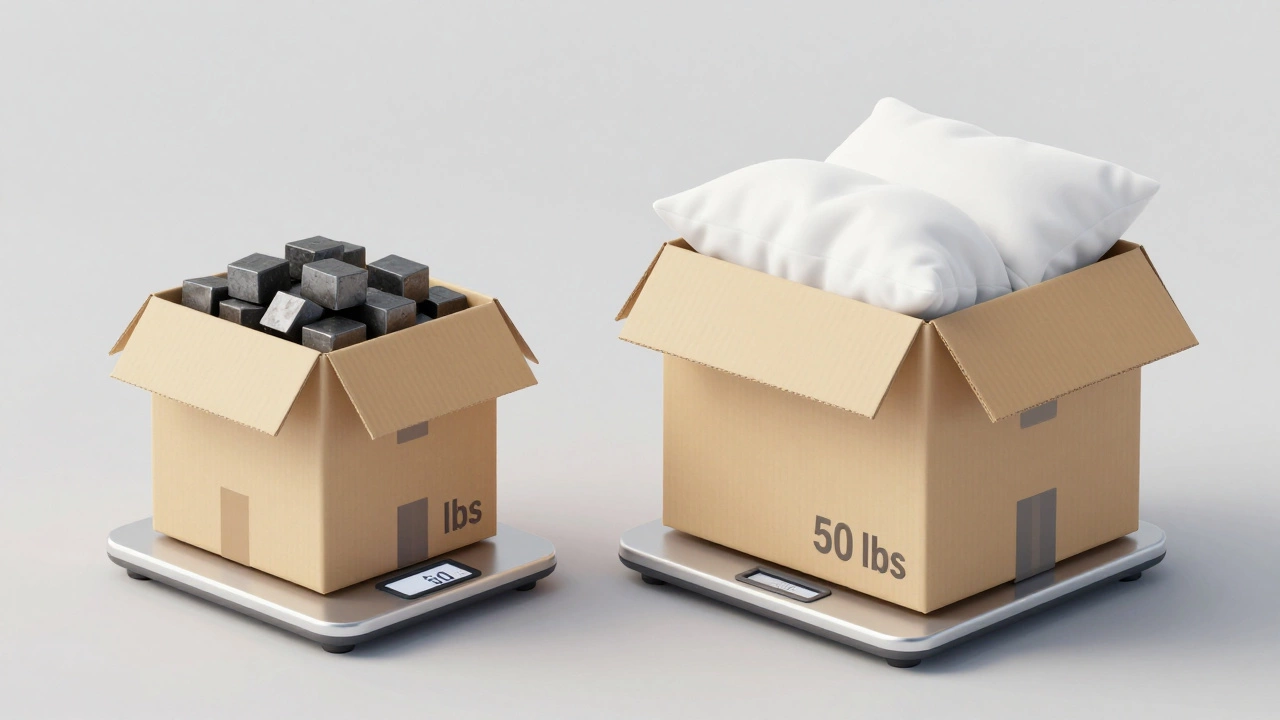
Dimensional weight calculates the density of your package. If you have a 50-pound box of lead bricks, you pay for 50 pounds. But if you have a 50-pound box full of pillows that measures 30x30x30 inches, the carrier charges you as if it weighed much more because it takes up valuable space on their trucks and planes.
To calculate DIM weight, multiply Length x Width x Height (in inches) and divide by the divisor. For most domestic US carriers, that divisor is 139.
| Box Dimension | Value |
|---|---|
| Length x Width x Height | 24" x 24" x 24" = 13,824 cubic inches |
| Divisor (Domestic) | 139 |
| Calculated DIM Weight | 99.4 lbs (Carrier charges for ~100 lbs) |
In this example, even though your scale says 50 lbs, you might get billed for nearly 100 lbs. To keep costs down, use the smallest box possible that still protects your items. Do not ship a small item in a huge box just because you had it lying around.
Domestic Shipping Options and Estimated Costs
For domestic shipments within the US, here is how the major players stack up for a 50-pound package in 2026. These estimates assume a standard zone (Zone 1-4) and reasonable dimensions (under 60 inches in girth + length).
USPS: The Budget-Friendly Option
USPS Retail Ground is an economical shipping service for large or heavy packages that typically delivers in 2-8 business days. This is often the cheapest way to send a 50-lb box if you aren't in a rush. Expect to pay between $18 and $25. If you need it faster, Priority Mail Express offers guaranteed overnight or 2-day delivery depending on destination. However, for 50 lbs, this can jump to $70-$90. Note that USPS has a strict 70-pound limit for most services, so you are close to the ceiling.
FedEx and UPS: Speed and Reliability
FedEx Ground provides cost-effective ground transportation for packages weighing up to 150 lbs with delivery in 1-5 business days. For a 50-lb box, rates usually sit between $25 and $45 depending on the zone. If you need next-day air, FedEx 2Day or FedEx Express Saver costs premium express shipping with guaranteed delivery in two business days, which can run $80-$120. UPS pricing mirrors FedEx closely. Their "UPS Ground" service is competitive, while "UPS 3 Day Select" or "2nd Day Air" adds significant cost.
| Carrier & Service | Est. Cost Range | Delivery Time | Best For |
|---|---|---|---|
| USPS Retail Ground | $18 - $25 | 2-8 Days | Budget-conscious, non-urgent |
| FedEx Ground / UPS Ground | $25 - $45 | 1-5 Days | Reliable tracking, mid-speed |
| USPS Priority Mail Express | $70 - $90 | 1-2 Days | Urgent domestic delivery |
| FedEx 2Day / UPS 2nd Day Air | $80 - $120+ | 2 Days | Business-critical timeframes |
International Shipping: A Different Beast
Shipping a 50-pound box internationally changes the math entirely. You are no longer just paying for transport; you are paying for customs clearance, international handling, and potentially higher fuel surcharges. Most international economy services cap out at 66-70 lbs, so 50 lbs is a sweet spot for eligibility, but prices are steep.
USPS International Priority is a reliable international shipping option offering 6-10 day delivery to many countries. For a 50-lb box to Canada or Mexico, expect to pay $60-$90. To Europe or Asia, that jumps to $100-$150. Private couriers like DHL, FedEx International Economy, and UPS Worldwide Saver are often more expensive for individual consumers but offer better tracking and faster customs processing. DHL, in particular, dominates cross-border e-commerce logistics outside of North America.
Crucially, remember that these quotes rarely include duties and taxes. The recipient may be hit with import fees upon delivery. Always declare the value accurately. Under-declaring to save money can lead to seized packages or fines.
How to Save Money on Heavy Packages
Shipping 50 pounds doesn't have to break the bank if you play your cards right. Here are practical strategies to lower those costs:
- Shop Third-Party Rates: Carriers give massive discounts to high-volume shippers. Services like Pirate Ship, Shippo, or EasyPost allow individuals to access these commercial rates. You can often save 30-50% off retail counter prices without any monthly fee.
- Right-Size Your Box: As mentioned with dimensional weight, smaller is cheaper. If you can fit your items into a 18x18x18 box instead of 24x24x24, you might drop a pricing tier.
- Choose Ground Over Air: Unless it’s an emergency, avoid "Express" or "Air" services. Ground networks are optimized for heavy packages and are significantly cheaper.
- Print Labels at Home: Dropping off a package at a post office or store counter incurs a "retail" markup. Printing a label at home and dropping it at a designated locker or carrier hub avoids this fee.
- Check for Zone Discounts: Shipping across town is cheaper than shipping across the country. If you have flexibility, see if the recipient can pick up closer to you, or if there’s a nearby distribution center.
Packaging Best Practices for 50 lb Boxes
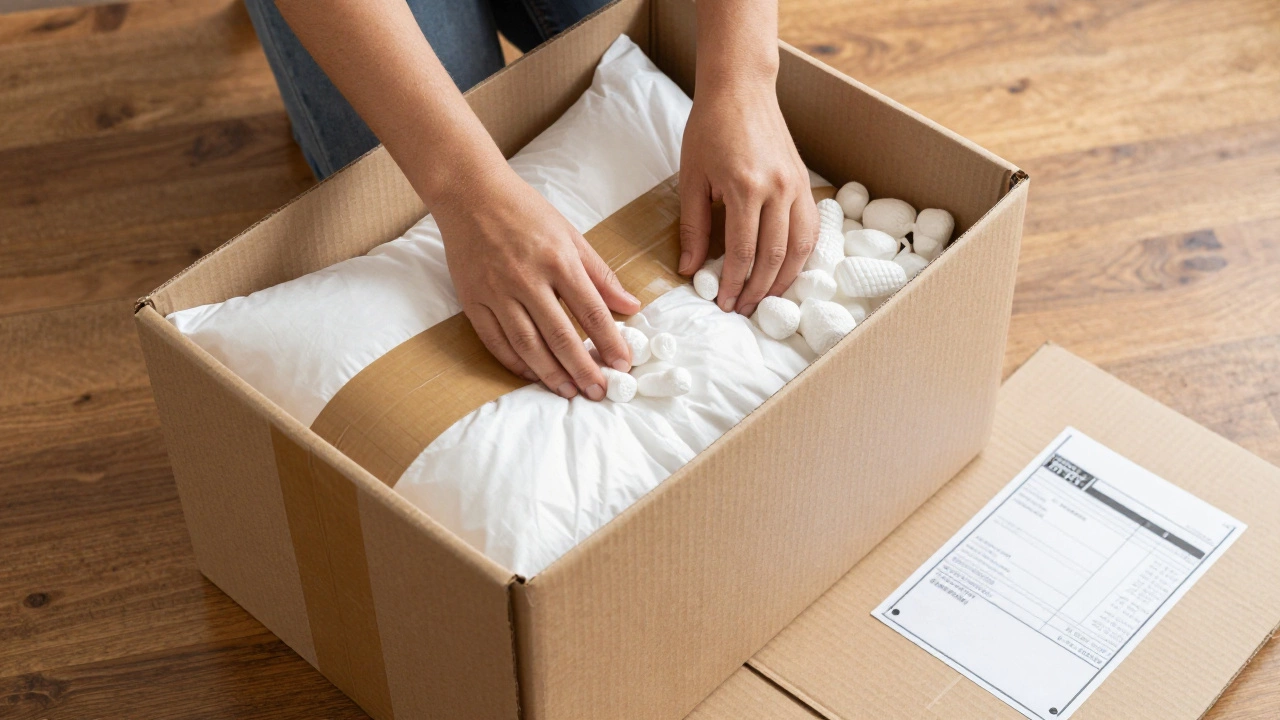
A 50-pound box is heavy enough to cause injury if dropped and heavy enough to tear through weak cardboard. Use double-walled corrugated boxes. Single-wall boxes will bottom out during transit. Reinforce all seams with strong packing tape-not duct tape or masking tape, which fail under humidity and stress. Place heavier items at the bottom and fill voids with packing peanuts or air pillows to prevent shifting. Shifting causes internal damage and increases the risk of the box bursting.
Label clearly. Print a second copy of the label and put it inside the box. If the outer label gets torn off (it happens), the contents can still be identified and returned. Include a return address inside as well.
When to Consider Freight Shipping
If your 50-pound box is exceptionally large-say, over 165 inches in total length plus girth-you may exceed parcel limits. At that point, you move into Less Than Truckload (LTL) freight territory. While freight sounds expensive, for very bulky items, it can sometimes be comparable to parcel rates. However, freight requires a pallet, liftgate service at both ends, and more complex scheduling. For a standard 50-lb box, stick to parcel carriers unless the dimensions are extreme.
Is it cheaper to ship via USPS or FedEx for a 50 lb box?
Generally, USPS Retail Ground is the cheapest option for a 50 lb box if you do not need fast delivery. FedEx Ground is slightly more expensive but offers better tracking and consistent delivery windows. For urgent shipments, compare USPS Priority Mail Express against FedEx 2Day, as prices fluctuate based on distance and current fuel surcharges.
What is the maximum weight USPS allows for a single package?
The maximum weight for most USPS services, including Priority Mail and Retail Ground, is 70 pounds. If your package exceeds 70 lbs, you must use FedEx, UPS, or a freight carrier.
How does dimensional weight affect my shipping cost?
Carriers charge based on the greater of the actual weight or the dimensional weight. If your box is large but light, they calculate volume (LxWxH/139) and charge you for that virtual weight. This means a bulky 50 lb box could cost as much as a 100 lb dense box to ship.
Can I ship a 50 lb box internationally via USPS?
Yes, USPS International Priority and Global Express Guaranteed accept packages up to 70 lbs. However, costs increase significantly with weight and distance, and customs delays are possible. For faster international delivery, private couriers like DHL or FedEx are often preferred despite higher base rates.
Do I need insurance for a 50 lb shipment?
Most carriers include limited liability (e.g., $100) automatically. If your items are worth more than that, purchase additional insurance. It is relatively inexpensive compared to the risk of losing a heavy, valuable shipment. Always document the contents with photos before sealing the box.