How Much Is One Amazon Pallet? Cost, Size, and What You Really Pay
Amazon Pallet Cost Calculator
Input Your Shipment Details
Enter your specific parameters to calculate total costs
Cost Breakdown
Your calculated costs based on inputs
Note: This calculator uses average rates from the article. Actual costs may vary based on carrier rates, exact distance, and specific warehouse location.
When you hear "Amazon pallet," you might picture a stack of boxes ready to ship across the country. But if you're asking how much is one Amazon pallet, you're probably trying to figure out shipping costs, storage fees, or maybe you're a seller planning your next inventory drop. The truth? There’s no single price. It depends on who’s moving it, where it’s going, and what’s on it.
What Exactly Is an Amazon Pallet?
An Amazon pallet isn’t a product you buy. It’s a unit of shipment. Think of it like a big, flat wooden platform-usually 48 inches by 40 inches-that holds multiple boxes. Amazon uses these in its fulfillment centers to move inventory efficiently. If you’re an FBA (Fulfillment by Amazon) seller, you ship your products to Amazon in pallet-sized loads. If you’re a business receiving bulk deliveries, you might get a pallet from Amazon as a supplier.Standard pallets hold between 30 and 70 boxes, depending on item size. A typical FBA pallet might carry 50 units of small electronics, 40 pairs of shoes, or 20 large home goods. The weight? Usually between 800 and 1,500 pounds. Anything over 1,500 pounds risks damage during handling and may get flagged by Amazon’s receiving system.
How Much Does It Cost to Ship One Pallet?
Shipping one Amazon pallet isn’t like ordering a single item. You’re moving hundreds of products at once, so freight costs dominate the price. Here’s what you’re likely paying:- Domestic LTL (Less Than Truckload): $200-$600 per pallet, depending on distance. A pallet going from California to Texas might cost $320. One from New York to Florida? Around $280. Fuel surcharges, liftgate fees, and residential delivery add $50-$120.
- FTL (Full Truckload): If you’re shipping 10+ pallets, you can drop to $1.50-$2.50 per mile. That brings the per-pallet cost down to $100-$180 if you’re sharing a truck.
- Amazon’s Inbound Freight Program: If you’re an FBA seller using Amazon’s approved carriers, you pay $85-$140 per pallet for standard ground shipping across the U.S. This includes delivery to an Amazon warehouse, unloading, and scanning. No hidden fees.
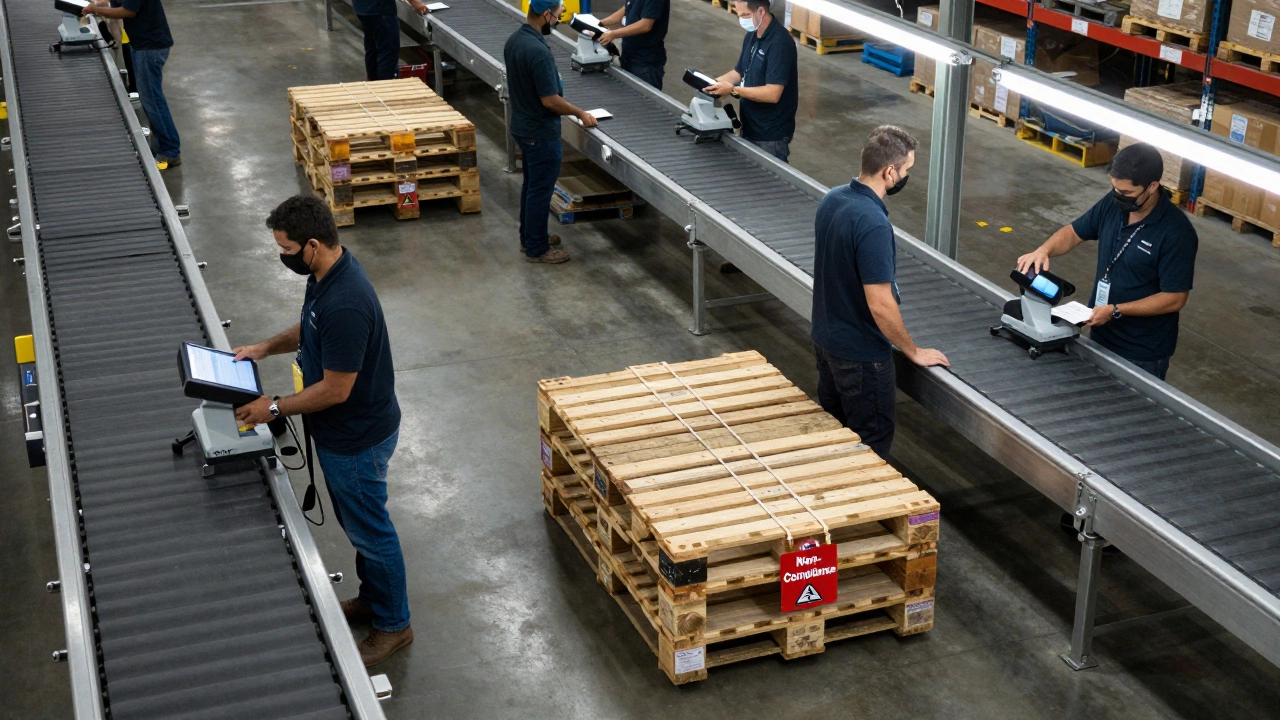
Most sellers don’t realize Amazon charges extra if your pallet doesn’t meet their specs. Labels missing? Wrong dimensions? Tape not sealed? You’ll pay a $50-$100 non-compliance fee per pallet. That’s more than the shipping cost itself.
What’s Inside the Pallet? It Changes Everything
The value of the goods on the pallet doesn’t determine the shipping cost-but it affects insurance, handling, and storage. Amazon treats high-value items differently.- Electronics (TVs, laptops): Require special handling. May trigger additional inspection fees. Storage cost: $0.75-$1.20 per cubic foot per month.
- Apparel (shirts, shoes): Lightweight and compact. Storage cost: $0.40-$0.60 per cubic foot.
- Heavy items (furniture, tools): Over 50 lbs per box? Amazon charges $0.30-$0.60 extra per pound for oversize handling.
One pallet of 100 phone cases might cost $90 to ship. The same pallet with 100 Bluetooth speakers? $140. Why? Because speakers are heavier, bulkier, and require more labor to unpack and scan.
Storage Fees: The Hidden Cost
Shipping is just the start. Once your pallet arrives at an Amazon warehouse, you start paying storage fees. These change monthly based on season.As of March 2026:
| Time of Year | Standard Size Items | Oversize Items |
|---|---|---|
| January-September | $0.40 | $0.75 |
| October-December (Peak) | $0.75 | $1.20 |
A typical pallet takes up 12-18 cubic feet. So if you leave it for 30 days in June, you’ll pay $5-$7 in storage. But if it sits through November? That jumps to $10-$15. And if you forget about it for six months? Amazon starts charging long-term storage fees: $6.00 per cubic foot per month. That’s $72 for one pallet.
What About International Pallets?
If you’re shipping from overseas-say, from China to an Amazon U.S. warehouse-the cost skyrockets. A single pallet shipped by sea can cost $800-$1,400. Air freight? $2,500-$4,000. You’re not just paying for transport. You’re paying for:- Customs clearance
- Duties and tariffs (10-25% of item value)
- Import taxes
- Amazon’s inbound processing fee ($0.30-$0.60 per unit)
Many sellers think they’re saving money by shipping bulk from overseas. But if your pallet sits in customs for 10 days, you’re losing money every hour. Amazon doesn’t pause storage fees while your pallet’s stuck at the port.
How to Save Money on Amazon Pallets
If you’re shipping to Amazon regularly, here’s what actually works:- Label correctly. Use Amazon’s barcode system. No handwritten labels. One mistake = $50 fee.
- Consolidate. Ship 3 pallets instead of 10. Fewer handling fees, lower per-pallet cost.
- Use Amazon’s shipping partners. Their network has negotiated rates you can’t get on your own.
- Don’t overstock. If you’re not selling fast, storage fees eat your profit. Sell through before the next holiday season.
- Measure everything. Use a tape measure on your boxes. Amazon’s scanners are exact. If your box is 1 inch too tall, you get charged for oversize.
Real-World Example: One Pallet, Real Costs
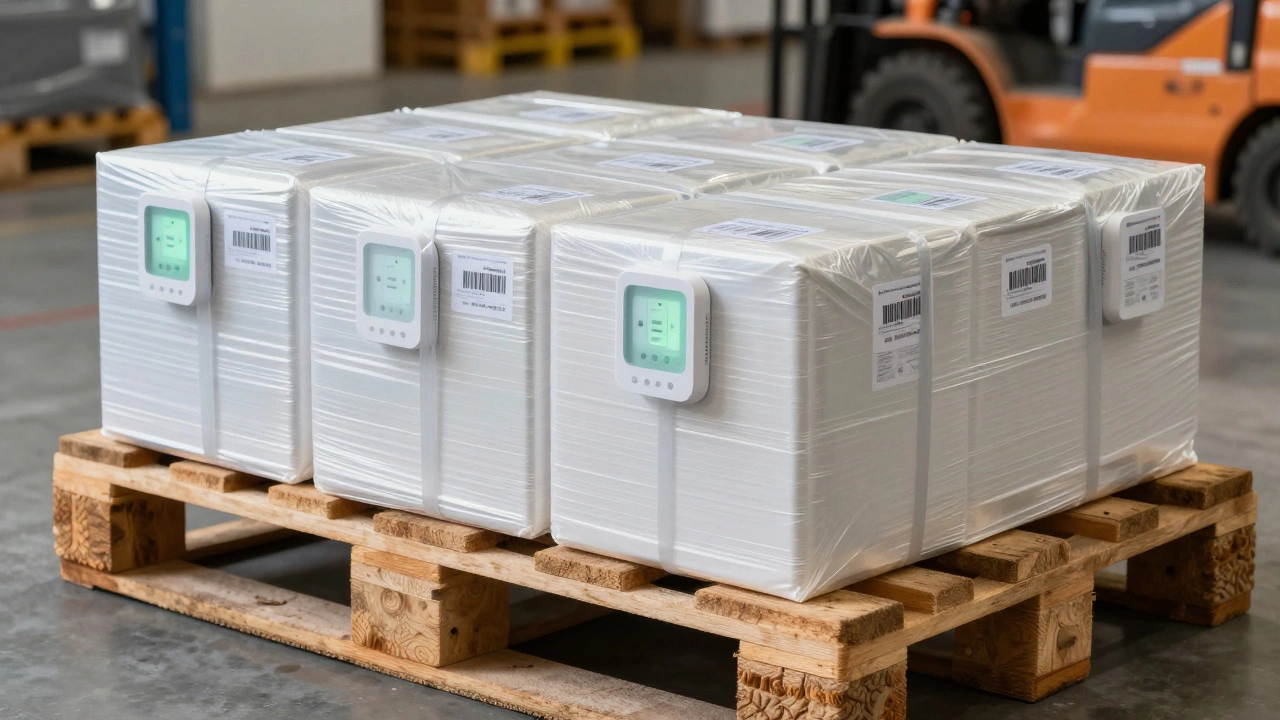
Let’s say you’re a seller shipping 50 smart home thermostats from Ohio to an Amazon warehouse in Illinois.- Pallet dimensions: 48" x 40" x 60"
- Weight: 1,200 lbs
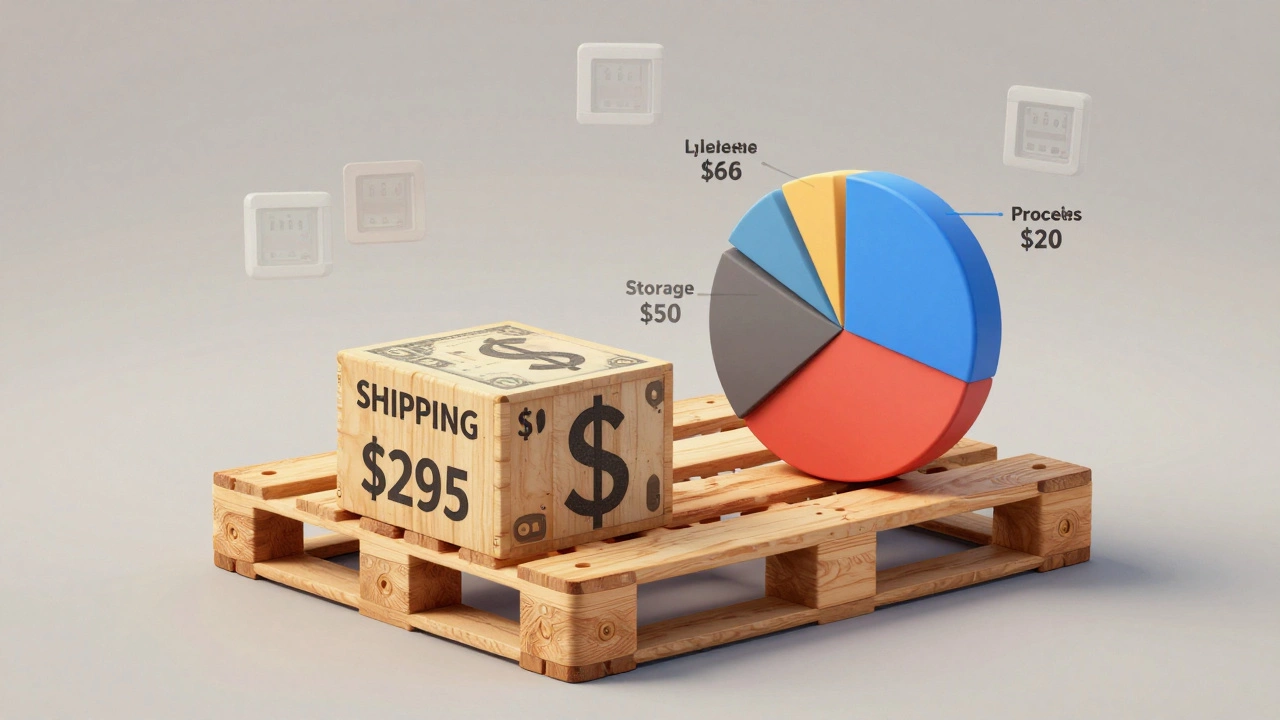
- Shipping cost (LTL): $295
- Amazon inbound processing fee: $0.40 per unit = $20
- Storage (30 days, off-peak): 15 cubic feet × $0.40 = $6
- Label error? You forgot one barcode. Fee: $50
Total cost for one pallet: $371.
That’s not $371 for 50 thermostats. That’s $371 for one pallet of 50 thermostats. Now divide that by 50. Each thermostat just cost you $7.42 to get into Amazon’s system. If you sell them for $40, your profit margin? $32.58. But now imagine you have 10 pallets. That’s $3,710 in upfront costs before you even list a single item.
What You Should Know Before Shipping
Amazon doesn’t care if you’re a small seller. Their rules are strict. And they don’t negotiate.- Never ship a pallet with mixed SKUs unless you’re using Multi-Channel Fulfillment. It triggers extra fees.
- Never use plastic wrap alone to secure boxes. Use stretch film and straps. Amazon’s forklifts don’t play nice.
- Always include a packing list inside the pallet. No exceptions.
- Track your pallet. Amazon’s system updates every 24-72 hours. If it’s not scanned in 5 days, you’ll get an email. Ignore it, and your shipment gets delayed or rejected.
There’s no magic number for "how much is one Amazon pallet." But if you know the pieces-shipping, storage, fees, compliance-you can predict it. And that’s how you stop losing money before your product even hits the shelf.
Is there a standard size for Amazon pallets?
Yes. Amazon uses the standard U.S. pallet size: 48 inches by 40 inches. Height varies based on what’s loaded, but the platform itself is always 48" x 40". Anything larger or smaller will be rejected or charged extra. Make sure your boxes fit within this footprint, and don’t overhang the edges.
Can I ship just one box on a pallet?
Technically, yes-but Amazon will charge you the same fee as if you shipped a full pallet. You’ll pay for the pallet space, even if it’s 90% empty. It’s rarely worth it unless you’re shipping something fragile or heavy that needs pallet support. For single boxes, use Amazon’s box shipping option instead.
Do I need to use Amazon’s shipping labels?
Yes. You must use the barcode labels generated by Amazon’s Seller Central system. Third-party labels or handwritten tags will cause delays. Each pallet needs one main label and one box-level label for every 10-20 units. Missing labels = $50-$100 per pallet in non-compliance fees.
How long can a pallet sit at an Amazon warehouse?
There’s no hard deadline, but storage fees start the day it arrives. After 30 days, you’re charged monthly. After 6 months, long-term storage fees kick in: $6.00 per cubic foot per month. If a pallet sits for over a year, Amazon may dispose of it or auction it off. Don’t let inventory become trash.
What happens if my pallet is damaged during shipping?
Amazon doesn’t cover damage caused by your carrier. You must file a claim with the freight company. Amazon will inspect the pallet upon arrival and note any damage in their system. If items are broken, you’ll need to replace them or risk losing sales. Always insure your shipment and take photos before shipping.