How Much Does International Shipping Cost? A Complete 2026 Price Guide

International Shipping Cost Estimator (2026)
Package Details
Cost Breakdown
Enter package details to see the estimated cost breakdown.
There is no single price tag for sending a box across the ocean. If you are looking for a flat rate, you will be disappointed. The cost of international shipping is the total expense incurred to transport goods from one country to another, including carrier fees, fuel surcharges, and potential customs duties. It is a complex equation involving weight, size, speed, destination, and what exactly is inside the package.
In 2026, global logistics have stabilized compared to the pandemic era, but costs remain volatile due to fuel prices and geopolitical shifts. For a small e-commerce seller or an individual sending a gift, understanding these variables can mean the difference between a $15 bill and a $150 headache. Let’s break down exactly where your money goes when you ship internationally.
The Core Components of Shipping Costs
When you see a final price on a shipping label, it is rarely just the base rate. Carriers like USPS is the United States Postal Service, a government-owned corporation responsible for postal service in the US, DHL is a German multinational logistics company specializing in express shipping and supply chain management, or FedEx build their quotes using several layers. Ignoring any of these layers leads to budget shocks.
- Base Rate: This is the standard fee for moving a package of a certain weight class to a specific zone (geographic region). Zone 1 might be Canada, while Zone 8 could be Australia. Higher zones cost more.
- Fuel Surcharge: Oil prices fluctuate weekly. Carriers add a percentage-based fee to cover fuel costs. In 2026, this typically ranges from 15% to 25% of the base rate depending on the carrier.
- Residential Delivery Fee: If your recipient lives in a house rather than a business address, carriers often charge an extra $3-$7 because delivery drivers spend more time locating residential homes.
- Remote Area Surcharges: Sending a package to a rural village in Japan or a remote town in Brazil incurs additional fees because last-mile delivery is less efficient there.
For example, shipping a 2-pound box to London via USPS First-Class Package International Service might look cheap at first glance. But if you need tracking and insurance, you upgrade to Priority Mail International, which jumps significantly in price. Always ask: "Does this quote include all surcharges?" If the answer is no, calculate a 20% buffer.
Weight vs. Dimensional Weight: The Hidden Trap
This is where most people get burned. You weigh your box on a kitchen scale, and it says 1 pound. You expect to pay for 1 pound. But the carrier charges you for 5 pounds. Why? Because they use dimensional weight is a pricing methodology based on the volume of a package rather than its actual physical weight, used to ensure fair pricing for large, lightweight items.
Carriers have limited space in their planes and trucks. A box full of feathers takes up the same space as a box full of bricks, even though the feathers weigh much less. To maximize efficiency, carriers charge based on whichever is greater: the actual weight or the dimensional weight.
The formula varies slightly by carrier, but the general rule in 2026 for international air freight is:
(Length x Width x Height in inches) / 166 = Dimensional Weight in lbs
If you are shipping a large, lightweight item like a hoodie or a pillow, you are paying for air, not product. Here is how to fight back:
- Right-size your packaging: Use boxes that fit the product snugly. Remove excess void fill.
- Use poly mailers: For clothing or soft goods, plastic mailers collapse around the item, drastically reducing dimensional weight.
- Measure accurately: Round up to the nearest half-inch. If your box is 10.2 inches long, measure it as 10.5 inches. Inaccurate measurements lead to post-collection bills.
Service Levels and Speed Premiums
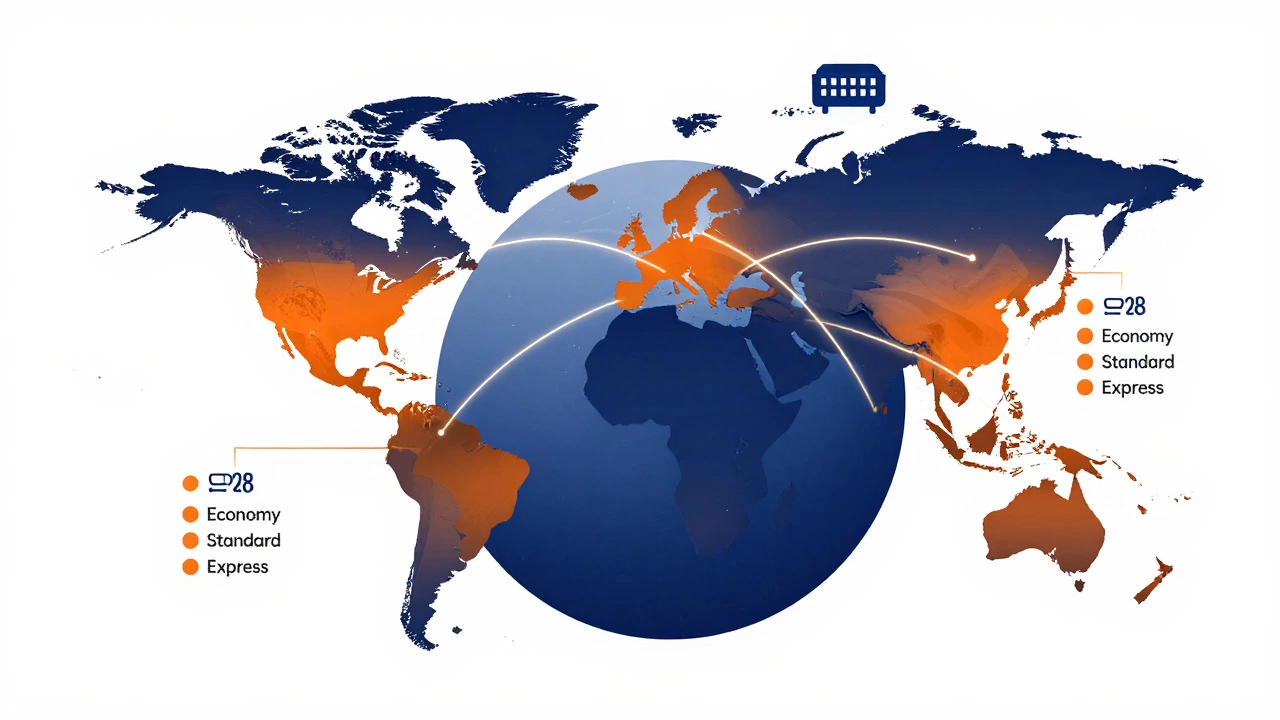
Time is money in logistics. The faster you want your package to arrive, the exponentially higher the cost. There are generally three tiers of international shipping services available in 2026.
| Service Level | Delivery Time | Cost Estimate (per lb) | Best For |
|---|---|---|---|
| Economy / Surface | 15-30 days | $2 - $4 | Non-urgent items, samples, low-value goods |
| Standard Air | 6-10 days | $5 - $9 | E-commerce orders, documents, moderate urgency |
| Express / Priority | 1-3 days | $12 - $20+ | High-value items, perishables, urgent replacements |
Economy shipping is the lowest-cost international shipping option, often utilizing sea freight or consolidated air cargo with longer transit times is great if you are sending a wedding gift to a friend who isn't expecting it tomorrow. However, it often lacks detailed tracking. Express shipping is premium international delivery service guaranteeing arrival within 1-3 business days, featuring real-time tracking and priority handling uses dedicated aircraft and air cargo hubs. It is expensive, but for a B2B client waiting for a replacement part to keep their factory running, it is worth every penny.
A pro tip: If you are an online retailer, offer multiple shipping options at checkout. Let the customer choose speed. Many customers will opt for slower, cheaper shipping if they know exactly when it will arrive. Transparency builds trust.
Customs Duties, Taxes, and Brokerage Fees
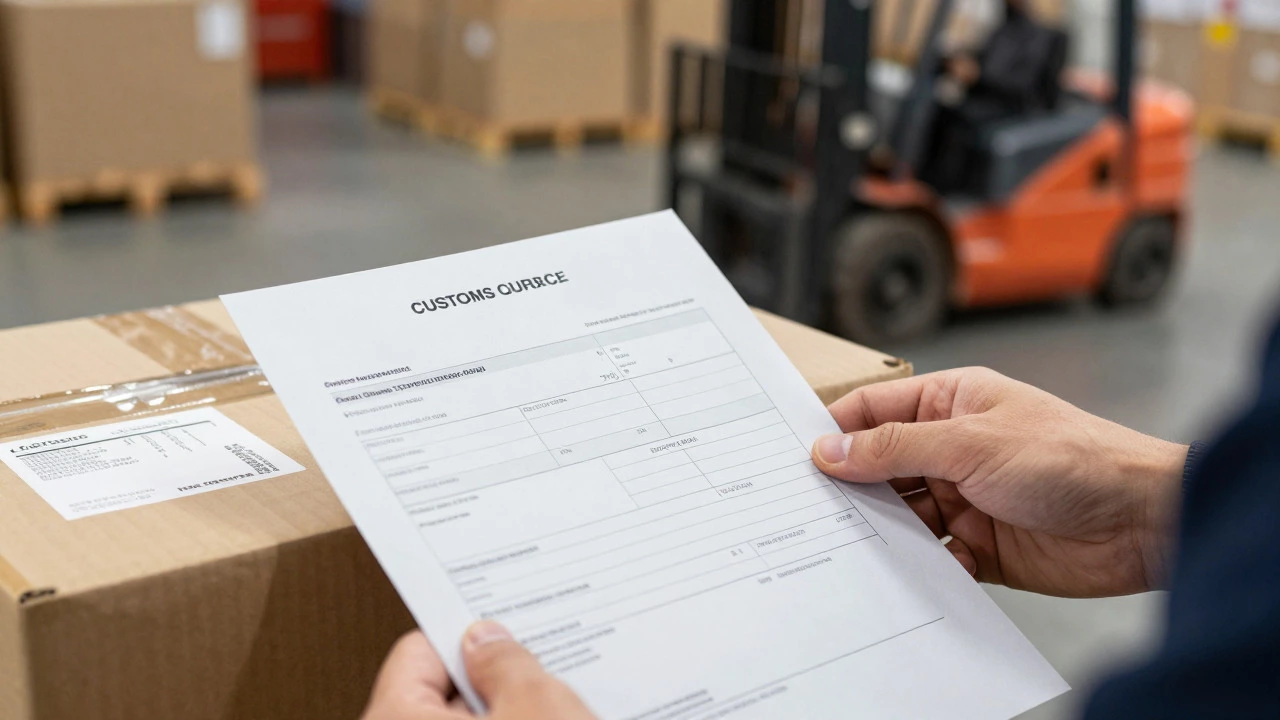
This is the silent killer of international shipping budgets. The shipping carrier gets the package to the border. Then, the destination country’s government steps in. Who pays the taxes? It depends on the Incoterms are Internationally Commercial Terms, a series of predefined commercial terms published by the International Chamber of Commerce that define the responsibilities of sellers and buyers for the delivery of goods you select.
- DDP (Delivered Duty Paid): You, the sender, pay all duties and taxes upfront. The recipient gets the package without any extra fees. This provides a seamless customer experience but requires you to calculate and remit taxes to the carrier. Carriers like DHL and UPS offer DDP services where they collect the tax from you at pickup.
- DDU (Delivered Duty Unpaid) or DAP (Delivered at Place): The recipient pays the duties and taxes upon delivery. This is cheaper for you initially, but it often leads to unhappy customers who refuse to pay unexpected fees, resulting in returned packages and lost revenue.
In 2026, many countries have lowered de minimis values (the threshold below which no duty is charged). For instance, the EU removed its €22 de minimis exemption for VAT, meaning almost every import into Europe now attracts Value Added Tax. The US still has an $800 de minimis threshold, making imports into America relatively tax-free for small parcels.
To avoid surprises, always include a clear commercial invoice with accurate Harmonized System (HS) codes. Mislabeling a product to save on duties is considered fraud and can result in seized goods and heavy fines.
Carrier Comparison: Who Offers the Best Rates?
No single carrier is the cheapest for every scenario. Your best option depends on your volume, package size, and destination.
National Postal Services are government-operated mail systems like USPS, Royal Mail, or La Poste, which often offer subsidized rates for international letters and small packets like USPS, Royal Mail, or Canada Post are usually the most affordable for packages under 4 pounds. They benefit from universal postal union agreements that keep cross-border rates competitive. However, tracking can be spotty, and delivery times vary wildly.
Private Couriers are commercial logistics companies such as DHL, FedEx, and UPS that provide premium, tracked, and faster international shipping services like DHL, FedEx, and UPS dominate the market for heavier packages and time-sensitive shipments. DHL is particularly strong in Europe and Asia. FedEx excels in North America and trans-Pacific routes. UPS offers robust global networks for medium-to-large businesses.
For businesses shipping regularly, negotiating direct contracts with these carriers is difficult unless you ship thousands of packages a month. Instead, use a shipping aggregator is a third-party platform that consolidates volume from multiple shippers to negotiate discounted rates with major carriers, passing savings to users like ShipStation, Pirate Ship, or EasyPost. These platforms allow you to buy labels at discounts of 20% to 50% off retail rates because they bundle the volume of thousands of small businesses.
Strategies to Reduce International Shipping Costs
You cannot control fuel prices or customs laws, but you can control your packaging and logistics strategy. Here are actionable steps to lower your costs in 2026.
- Consolidate Orders: If you are selling products, encourage customers to buy more to qualify for free or discounted shipping. One large shipment is cheaper per unit than five small ones.
- Use Regional Fulfillment Centers: If you sell globally, consider storing inventory in warehouses closer to your customers. Shipping from a warehouse in Germany to France is far cheaper and faster than shipping from California to France. This reduces both distance and customs complexity within trade blocs like the EU.
- Automate Customs Documentation: Errors in customs forms cause delays, which incur storage fees. Use software that auto-fills HS codes and product descriptions based on your SKU database.
- Negotiate with Carriers: Even if you are a small business, call your local carrier sales representative. Ask about startup discounts or loyalty programs. Sometimes, switching from online rates to account rates saves significant money.
- Review Insurance Needs: Carriers offer basic liability, but it is often low. Third-party insurance providers like Shiphero or ParcelGuard may offer better coverage rates for high-value items than the carrier’s own insurance.
Final Thoughts on Budgeting for Global Shipping
Calculating the true cost of international shipping requires looking beyond the sticker price. Factor in dimensional weight, fuel surcharges, and potential duties. By choosing the right service level, optimizing your packaging, and leveraging aggregators, you can keep costs predictable and competitive. Remember, the goal is not just to ship cheaply, but to deliver reliably. A delayed or damaged package costs more in lost reputation than any shipping discount ever could.
What is the cheapest way to ship internationally?
For small packages under 4 lbs, national postal services like USPS First-Class Package International Service are typically the cheapest. For heavier items, economy air freight through private couriers or consolidated sea freight offers the best value, though transit times are longer.
Who pays for customs duties in international shipping?
It depends on the Incoterms agreed upon. Under DDU/DAP, the recipient pays duties and taxes upon delivery. Under DDP, the sender pays these costs upfront, providing a smoother experience for the buyer.
How does dimensional weight affect shipping costs?
Dimensional weight charges apply if a package is large but light. Carriers calculate this based on volume. If the dimensional weight exceeds the actual weight, you pay for the dimensional weight. Using smaller boxes or poly mailers helps reduce this cost.
Is it cheaper to ship internationally with DHL or FedEx?
It varies by destination. DHL is often cheaper for shipments to Europe and Asia. FedEx tends to have competitive rates for North America and trans-Pacific routes. Comparing quotes for your specific lane is essential.
What are hidden fees in international shipping?
Common hidden fees include fuel surcharges, residential delivery fees, remote area surcharges, and brokerage fees for customs clearance. Always request a fully landed cost quote to avoid surprises.