How Many Packages Fit in a 3-Hour Courier Block?
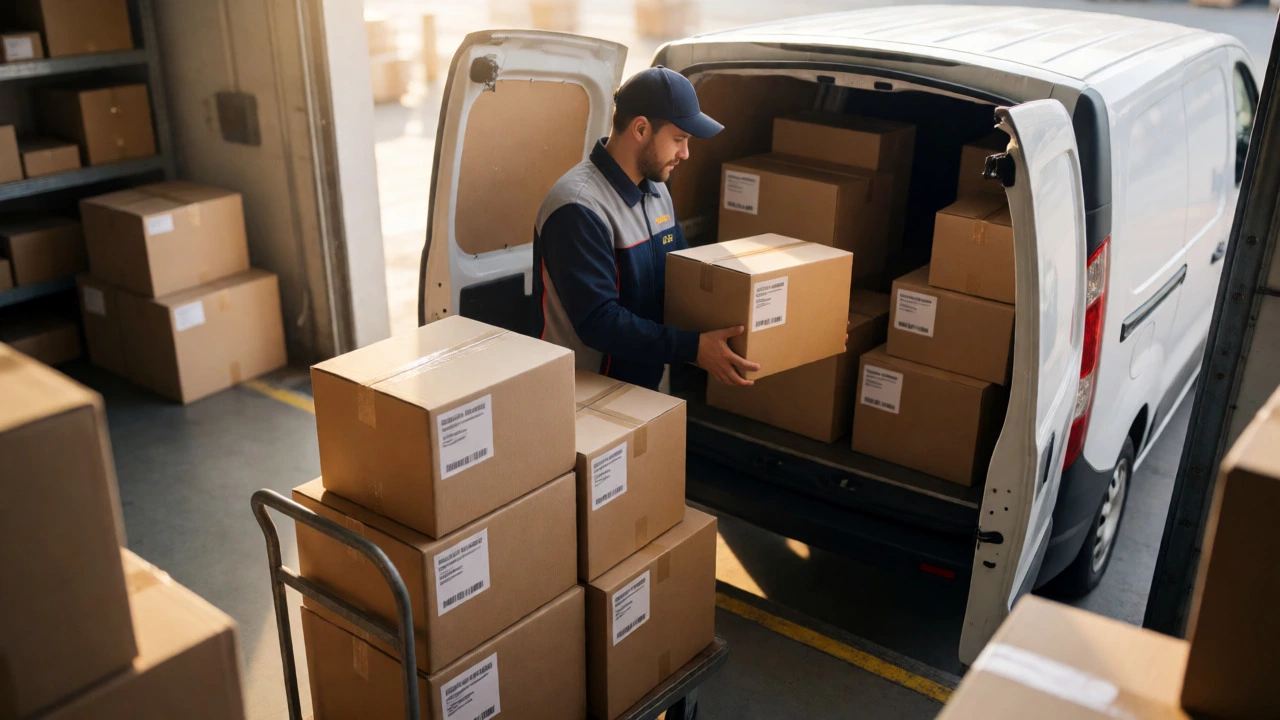
Courier Block Capacity Estimator
Estimate how many parcels fit into your booked time window. Adjust the settings to match your specific delivery scenario.
Delivery Parameters
Checking this reduces capacity as loading/unloading takes longer.
Optimization Tips for Your Scenario
You’ve booked a three-hour window for your courier service. The driver is en route. You’re standing by with a pile of parcels, wondering if you’ll actually get them all moved or if you’ll end up paying for a second trip because the first one ran out of time. It’s a common panic for small business owners and e-commerce managers. The truth? There is no single magic number. A three-hour block is a unit of time, not a container for volume. How many packages fit inside that time depends entirely on density, distance, and access.
The Math Behind the Minutes
Let’s break down the clock. If you have a strict three-hour window, you don’t actually have 180 minutes of pure driving and dropping. Realistically, you need to account for traffic, parking, and customer interaction. Industry standards suggest that for urban deliveries, you should budget between 10 to 15 minutes per stop. This includes pulling over, walking to the door, handing off the parcel, getting a signature (if required), and getting back to the vehicle.
If we assume an average of 12 minutes per stop, here is the raw calculation:
- Total Time: 180 minutes
- Average Stop Duration: 12 minutes
- Theoretical Max Stops: 15 stops
But this is optimistic. Traffic jams happen. Customers aren’t home. Parking takes longer than expected. In practice, a realistic range for a standard van courier in a mixed urban/suburban area is often between 8 to 12 packages. If you are in dense city centers like Wellington’s CBD or Auckland’s downtown core, where parking is nightmare fuel, that number might drop to 6 or 7. Conversely, if you are doing industrial drops in a warehouse park where everyone signs for bulk orders at once, you could hit 20+.
Why Your Location Changes Everything
Geography dictates speed more than anything else. A courier driving 20 kilometers across rural counties can make fewer stops than one driving 5 kilometers through a high-density apartment complex. Why? Because the "last 100 meters" is where the time goes to die.
| Environment Type | Avg. Time Per Stop | Est. Packages | Key Bottleneck |
|---|---|---|---|
| Dense Urban (CBD) | 15-20 mins | 6-8 | Parking & Security Access |
| Suburban Residential | 10-12 mins | 10-14 | Traffic & Signatures |
| Industrial/Business Park | 5-8 mins | 18-25 | Reception Wait Times |
| Rural/Regional | 20-30 mins | 4-6 | Travel Distance |
Notice the drastic difference between Industrial and Rural settings. In an industrial zone, multiple packages might go to the same building. One stop equals five packages. In rural areas, each house is miles apart. One stop equals one package. When you book a block, you aren't just buying time; you're buying access to a specific type of geography.
The Hidden Time Killers
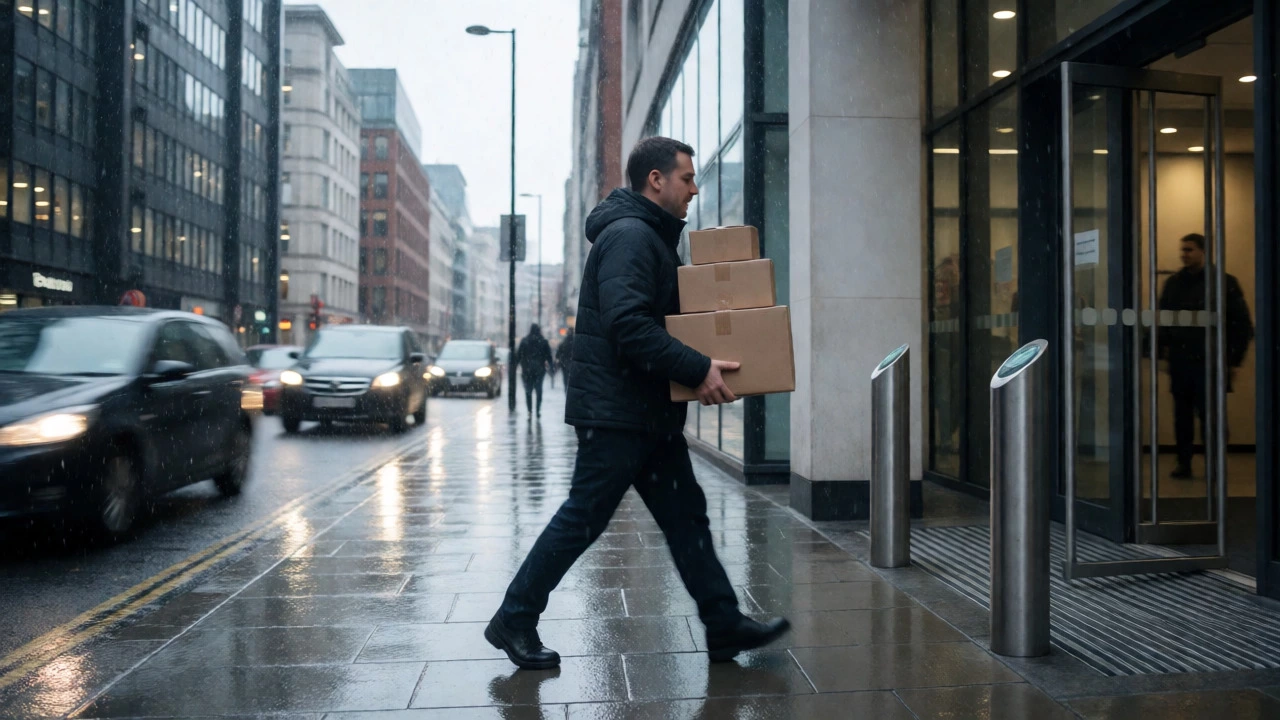
You might think you have it planned perfectly, but three factors consistently eat into courier blocks faster than any other. Understanding these helps you pack smarter before the driver arrives.
Access Issues
Is there a gate code? Is the building locked after 5 PM? Does the recipient require a photo ID check? Every minute spent fumbling for a key or waiting for security clearance is a minute lost from your next delivery. If you know a location has difficult access, flag it. Some couriers charge extra for "hard-to-reach" locations precisely because they skew the timing averages.
Signature Requirements
Do you need Proof of Delivery (POD) for every item? Digital signatures take seconds, but physical paperwork takes longer. More importantly, if the recipient isn't there, the driver has to leave a card, take a photo, and potentially return later. That failed attempt costs you the entire slot for that address. Reducing mandatory signatures for low-value items can significantly boost your throughput.
Route Optimization
Couriers use algorithms to plan routes, but they rely on clean data. If your addresses are vague (e.g., "Next to the red shop") or missing unit numbers, the driver wastes time calling the customer. Garbage in, slow delivery out. Ensure every address is validated. A clear street number and correct postcode are non-negotiable for hitting your target count.
Maximizing Your Three Hours
So, how do you squeeze more value out of that block? It comes down to preparation. You want the driver to spend their time moving, not managing.
- Group by Zone: Don’t mix a North Shore drop-off with a South City pickup in the same block unless necessary. Keep the geographic footprint tight. A compact cluster allows for quicker transitions between stops.
- Pre-Alert Recipients: Send an SMS or email to customers saying, "Your package is arriving between 10 AM and 1 PM." If they are ready, handoffs become instantaneous. No knocking, no waiting.
- Consolidate Labels: Have labels printed and attached. Do not expect the driver to print documents on the spot. Have the manifest ready for scanning. The faster the scan, the faster the drive.
- Batch Similar Items: If you have ten boxes going to the same office park, send them together. One stop, ten packages. This is the golden rule of logistics efficiency: density beats distance.
Consider using technology to help. Most modern logistics software allows you to visualize your delivery radius. Before booking, map your pending orders. If they are scattered across 50 kilometers, a 3-hour block will fail. If they are within a 5-kilometer bubble, you can likely handle 12-15 packages comfortably.

What Happens When You Overbook?
What if you try to shove 15 suburban packages into a block designed for 8? Two things usually happen. First, the driver runs late, which angers the last few recipients. Second, the courier company may refuse to complete the run, forcing you to pay for a partial service or re-book. Some providers offer "overflow" pricing-if you exceed the estimated weight or volume limit of the vehicle, you pay extra. Always check the fine print regarding volume caps versus time caps.
In New Zealand, where regional distances can be deceptive, it’s safer to under-promise and over-deliver. Book a block for 8 packages. If you only have 6, great-you saved money or gained flexibility. If you have 10, call ahead. Often, dispatchers can add a quick stop if the route is light, but they can’t magically create time if the route is already saturated.
Real-World Scenario: The E-commerce Rush
Imagine you run an online clothing store in Christchurch. On Black Friday, you have 40 local orders. You book four 3-hour blocks. Based on our earlier math, you expect about 10 packages per block. But it’s raining, traffic is bad, and half your customers live in gated communities. You end up completing only 6 packages per block. Now you’re short 16 deliveries. What do you do?
This scenario highlights why relying solely on time blocks is risky during peak seasons. For high-volume days, consider switching to per-parcel rates with a guaranteed next-day service, or hire a dedicated van for the whole day rather than hourly blocks. Hourly blocks work best for steady, predictable flows, not chaotic spikes.
Does the size of the packages matter?
Yes, absolutely. While time is the primary constraint, vehicle space is the secondary one. A 3-hour block typically assumes standard parcel sizes (shoebox to microwave size). If you are shipping large furniture or pallets, the loading and unloading time increases drastically. A single sofa might take 20 minutes to maneuver into a living room, consuming nearly two hours of a block. Always declare bulky items when booking.
Can I split the packages between morning and afternoon blocks?
You can, but it often costs more. Booking two separate 3-hour blocks usually means paying for two base fees plus the time charges. It is almost always cheaper to book one 6-hour block or a full-day rate if you have enough volume. Splitting also increases the risk of scheduling conflicts if the first block runs over.
What if the courier finishes early?
Most courier contracts are for a reserved time slot, not actual usage. If the driver finishes in 2 hours, you generally still pay for the 3-hour block because that vehicle was unavailable to other clients. However, some flexible platforms allow you to release the vehicle early for a partial refund, so check your specific terms.
How does traffic affect my package count?
Traffic is the biggest variable in urban delivery. During peak hours (7-9 AM and 4-6 PM), travel times can double. If your 3-hour block falls during rush hour, reduce your expected package count by 30%. For example, if you normally do 10 packages, expect to do 7. Try to schedule blocks for mid-morning (10 AM-1 PM) or mid-afternoon (2 PM-5 PM) for better flow.
Are returns included in the package count?
Typically, yes. A return involves the same steps as a delivery: stopping, accessing the location, and handling the item. If you are picking up returns, they count against your time block just like outgoing deliveries. Plan your route to combine pickups and drop-offs at the same address to save time.