E-commerce vs. Amazon: Understanding the Difference in Online Retail and Logistics

E-commerce vs. Amazon Profitability Calculator
Have you ever clicked "Buy Now" on a product and wondered who actually packed that box? Was it a massive robot-filled warehouse in Nevada, or was it a small business owner packing orders from their garage in Ohio? This distinction is the heart of the confusion between e-commerce and Amazon. While people often use the terms interchangeably, they represent two fundamentally different concepts in the world of digital commerce.
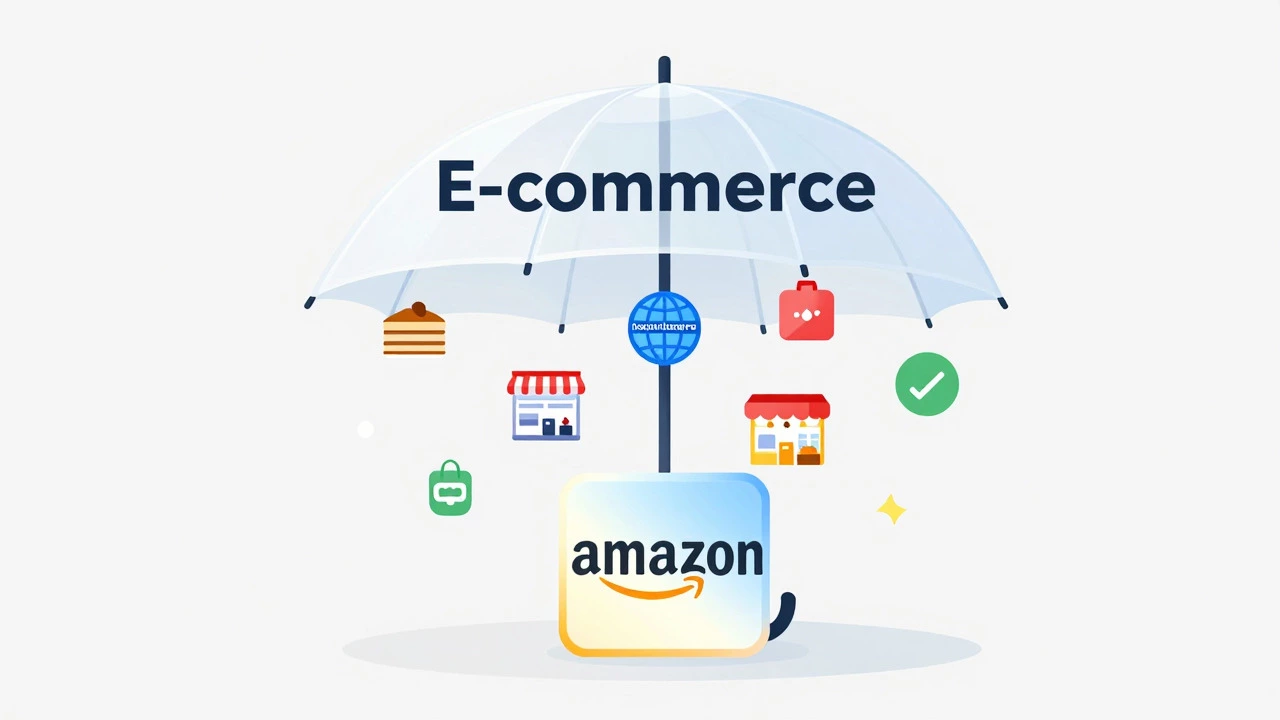
E-commerce is the broad umbrella term for buying and selling goods online. It includes every transaction that happens over the internet, from your local bakery’s website to global giants like Walmart.com. Amazon, on the other hand, is just one specific company within that vast ecosystem. However, because Amazon dominates so much of the market share and controls a significant portion of the logistics infrastructure, it has blurred the lines. Understanding this difference is crucial for anyone looking to start an online business, manage a supply chain, or simply understand where their money goes.
The Big Picture: What Is E-commerce?
E-commerce is the process of buying and selling products or services over the internet. Think of it as a category, similar to "retail." Just as "retail" includes everything from a corner store to a massive department chain, e-commerce includes every digital storefront.
This model relies on several key components:
- Digital Storefronts: Websites built on platforms like Shopify, WooCommerce, or Magento.
- Payment Gateways: Services like Stripe or PayPal that secure transactions.
- Logistics Networks: The physical movement of goods via carriers like FedEx, UPS, or USPS.
In a traditional e-commerce setup, the merchant owns the entire customer relationship. You control the branding, the packaging, the shipping speed, and the data. If you sell handmade candles on your own site, you are running an e-commerce business. You handle the marketing, you process the order, and you decide which courier picks up the package. This independence allows for high margins and brand loyalty but requires significant operational effort.
Amazon: The Platform Within the Platform
Amazon is a multinational technology company focusing on e-commerce, cloud computing, digital streaming, and artificial intelligence. While it started as an online bookstore, it evolved into a marketplace that hosts millions of third-party sellers alongside its own inventory.
When you buy something on Amazon, you might be buying directly from Amazon (First-Party sales) or from a third-party seller using Amazon’s infrastructure (Third-Party Seller Central). The key difference here is control. On Amazon, you are renting shelf space in a digital mall. Amazon sets the rules, takes a commission (often 15% or more), and frequently competes with you by selling its own private-label versions of popular products.
For many sellers, Amazon offers instant access to hundreds of millions of Prime-eligible customers. However, this convenience comes at a cost. You lose direct access to customer email addresses, making it harder to build a loyal community outside of Amazon’s walled garden. Your success depends heavily on Amazon’s search algorithm, A9, rather than your own SEO efforts.
Logistics: The Real Divergence Point
If the front-end experience seems similar-a product page, a cart, a checkout-the back-end logistics are where the true differences lie. This is particularly relevant for businesses planning their supply chain strategies in 2026.
| Feature | Independent E-commerce | Amazon FBA (Fulfillment by Amazon) |
|---|---|---|
| Inventory Storage | Your warehouse or a 3PL provider | Amazon’s fulfillment centers |
| Picking & Packing | You or your hired staff | Amazon employees/robots |
| Shipping Carriers | Choice of UPS, FedEx, DHL, etc. | Amazon Logistics (primary) |
| Customer Service | You handle returns and inquiries | Amazon handles most issues |
| Brand Visibility | Your logo on packaging | Generic Amazon brown box |
Fulfillment by Amazon (FBA) is a service where Amazon stores, packs, and ships products for sellers. This service has revolutionized logistics by allowing small businesses to offer two-day shipping without owning warehouses. However, it also means your product arrives in a generic brown box, stripping away your brand identity. In contrast, independent e-commerce allows you to customize unboxing experiences, include thank-you notes, and control the final mile delivery experience.
Cost Structures and Margins
The financial implications of choosing between these models are stark. In independent e-commerce, your costs are primarily fixed (software subscriptions, warehouse rent) plus variable shipping costs. You negotiate rates with carriers based on volume. As you scale, your per-unit shipping cost typically decreases.
On Amazon, the fee structure is complex. You pay referral fees (usually 8-15%), closing fees for media items, and FBA fees based on size and weight tiers. Additionally, if you don’t sell enough units, you may incur long-term storage fees. For low-margin products, Amazon’s fees can eat up 30-40% of revenue, whereas an optimized independent e-commerce operation might keep those costs under 20%. However, Amazon reduces your customer acquisition cost (CAC) because buyers are already there searching for products. Independent e-commerce requires spending on ads (Facebook, Google) to drive traffic, which can be expensive initially.

Data Ownership and Customer Insights
One of the most critical differences in 2026 is data privacy and ownership. With independent e-commerce, you own the first-party data. You know who bought what, when they bought it, and how often. This allows for personalized marketing, retargeting campaigns, and predictive analytics. You can build a CRM (Customer Relationship Management) system that nurtures long-term relationships.
On Amazon, the customer belongs to Amazon. You get limited insights-sales numbers, return reasons, and sometimes anonymized demographic data. You cannot email these customers directly unless you use Amazon’s paid advertising tools. This makes it difficult to build brand equity. If Amazon changes its algorithm or bans your account, you lose your entire customer base overnight. Independent e-commerce owners face less risk because their audience is tied to their brand, not a platform.
Which Model Fits Your Business?
There is no single right answer. Many successful brands use a hybrid approach. They start on Amazon to validate demand and generate cash flow, then launch an independent e-commerce site to build brand loyalty and improve margins. This strategy leverages Amazon’s traffic while building a sustainable asset outside of its ecosystem.
Consider your product type. High-volume, low-complexity items like phone chargers often thrive on Amazon due to price sensitivity and convenience. Unique, high-ticket, or brand-heavy items like custom furniture or luxury skincare perform better on independent sites where storytelling and trust-building matter more.
Ultimately, e-commerce is the vehicle; Amazon is just one road. Understanding the difference empowers you to choose the path that aligns with your long-term business goals, whether that’s rapid scaling through a marketplace or building a standalone brand empire.
Is Amazon considered e-commerce?
Yes, Amazon is a major player in the e-commerce industry. However, e-commerce is the broader category that includes all online shopping, including independent websites, eBay, Etsy, and social commerce platforms. Amazon is a subset of e-commerce.
What are the main logistical differences between selling on Amazon and independently?
The main difference lies in fulfillment. Amazon FBA handles storage, picking, packing, and shipping using Amazon’s network. Independent e-commerce requires you to manage inventory and ship orders yourself or through a third-party logistics (3PL) provider, giving you more control over branding and carrier selection.
Do I need a website if I sell on Amazon?
Not strictly, but it is highly recommended. An independent website allows you to capture customer data, build brand authority, and diversify your sales channels. Relying solely on Amazon makes your business vulnerable to policy changes and increased competition.
Which is more profitable: Amazon or independent e-commerce?
Independent e-commerce generally offers higher profit margins because you avoid Amazon’s referral and fulfillment fees. However, Amazon can provide faster sales velocity and lower customer acquisition costs. Profitability depends on your product niche, pricing strategy, and operational efficiency.
Can I sell the same product on both Amazon and my own website?
Yes, this is a common strategy known as omnichannel selling. Many brands use Amazon for reach and visibility while directing loyal customers to their own website for exclusive deals or bundles, helping to balance volume with margin.