Does Medicare Cover Over Bed Table?
Medicare Over Bed Table Coverage Checker
Check Your Coverage Eligibility
This tool helps you determine if Medicare Part B covers an over bed table based on your medical condition and needs.
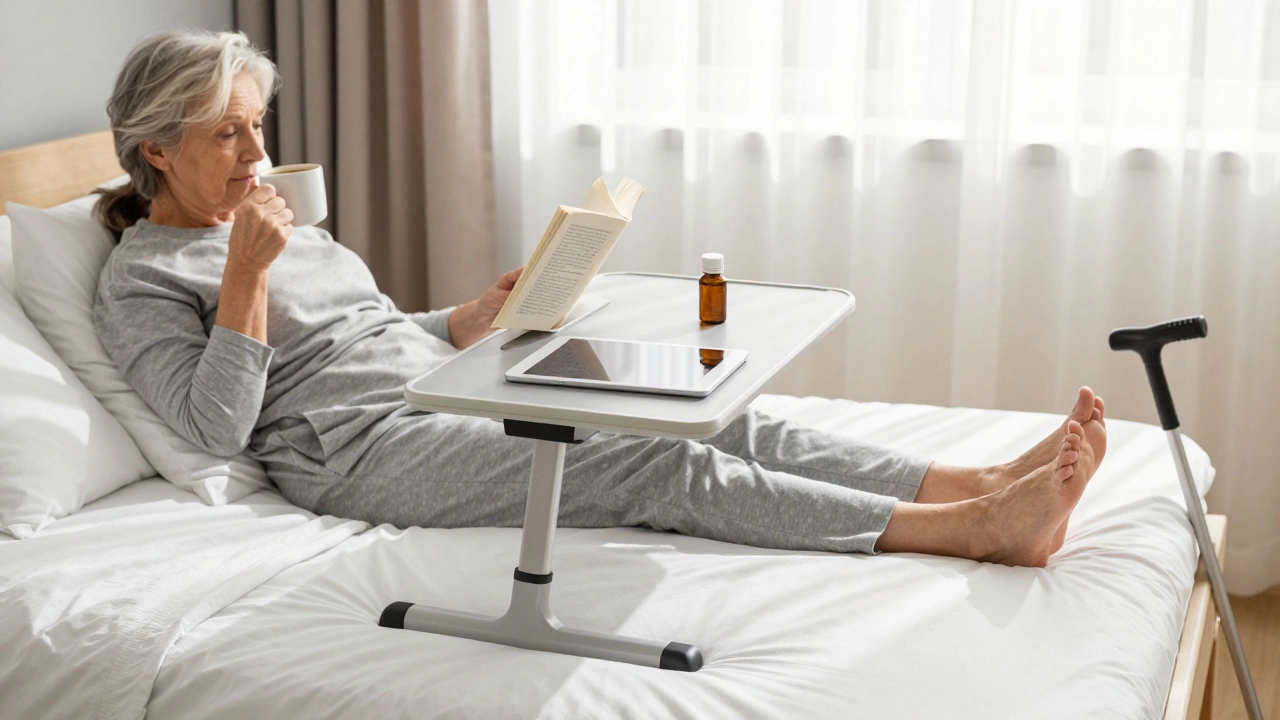
When you or a loved one is recovering at home after surgery, illness, or a fall, small details can make a big difference. An over bed table might seem like a simple convenience - something to hold a book, a cup of coffee, or a tablet. But for someone with limited mobility, it’s not just helpful. It’s essential. So the real question isn’t whether it’s useful - it’s whether Medicare will pay for it.
What Is an Over Bed Table?
An over bed table is a lightweight, adjustable tray that fits over a hospital-style bed. It’s designed to let someone in bed eat, read, write, or use a laptop without having to sit up or get out of bed. These tables usually have wheels or legs that can be raised or lowered, and some even tilt for better positioning. They’re often used by people with arthritis, paralysis, stroke recovery, or those who are bedridden after surgery.
Unlike a regular side table, an over bed table is built for medical use. It’s made from easy-to-clean materials, has non-slip surfaces, and is designed to be stable even when used with one hand. It’s not a luxury item - it’s a tool that helps people maintain independence and avoid pressure sores by reducing the need to stretch or strain.
Does Medicare Cover Over Bed Tables?
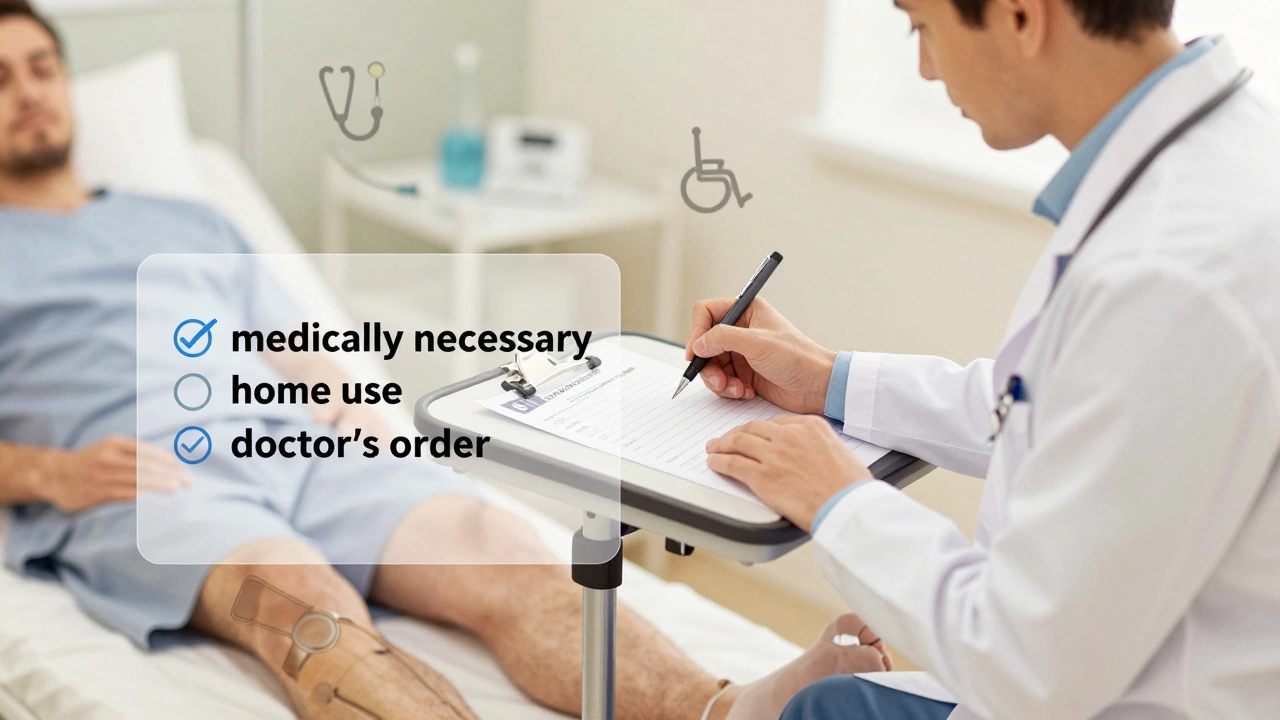
Yes - but only under very specific conditions. Medicare Part B covers durable medical equipment (DME) if it’s deemed medically necessary by your doctor and prescribed for use in your home.
An over bed table qualifies as DME if:
- Your doctor writes a written order stating you need it because of a medical condition that limits your ability to sit up or reach for items.
- You’re confined to your bed for long periods due to illness, injury, or recovery.
- The table is used primarily for medical reasons - not comfort or convenience.
Medicare doesn’t cover items just because they make life easier. It covers what’s necessary for treatment or recovery. So if your doctor says you can’t safely reach your phone, water, or medications without an over bed table - and you’re not able to get up to use a regular table - then Medicare may cover it.
How to Get Medicare to Pay for It
Getting coverage isn’t automatic. You need to follow a clear process.
- See your doctor. Explain why you need the table - how it helps you eat, take medicine, or use a phone without risking falls or strain.
- Get a written prescription. The order must say "medically necessary for home use" and include your diagnosis.
- Use a Medicare-approved supplier. You can’t just buy one online and expect reimbursement. The supplier must be enrolled in Medicare and accept assignment (meaning they accept Medicare’s approved amount as payment in full).
- Pay your share. You’ll pay 20% of the Medicare-approved amount after you meet your Part B deductible. Medicare covers 80%.
If you have a Medicare Advantage plan, rules might be slightly different. Check with your plan directly - some require prior authorization or only cover certain models.
What If Medicare Denies Coverage?
Denials happen. Often, it’s because the documentation wasn’t detailed enough. If your request is denied:
- Ask your doctor to rewrite the prescription with more clinical detail - mention specific conditions like "severe mobility limitation due to bilateral hip replacement" or "chronic COPD preventing upright sitting."
- File an appeal. Medicare allows you to appeal decisions. You have 120 days to do so. Keep copies of all paperwork.
- Consider a letter of medical necessity. Some suppliers offer templates that your doctor can sign to strengthen your case.
Many people give up after one denial. But appeals succeed more often than you’d think - especially when the medical need is clear and well-documented.
Alternatives If Medicare Won’t Cover It
Not everyone qualifies. If Medicare denies coverage or you don’t have Part B, here are other options:
- Medicaid. If you’re low-income, Medicaid often covers DME more broadly than Medicare.
- Veterans Affairs. If you’re a veteran, VA benefits may cover the table at no cost.
- Nonprofit organizations. Groups like the National Association of Area Agencies on Aging or local charities sometimes provide medical equipment loans or grants.
- Rental programs. Some medical supply companies rent over bed tables for $10-$20/month. That’s far cheaper than buying one outright.
- Used equipment. Check local Facebook groups, Craigslist, or hospital surplus sales. Many people donate unused DME after recovery.
You don’t have to go without one. There are always options - you just need to know where to look.
What to Look for in an Over Bed Table
If you’re buying or renting one, here’s what matters:
- Weight capacity. Most hold 15-30 pounds. Make sure it supports your tablet, tray, and water bottle together.
- Adjustability. Look for height and tilt controls. A table that can’t be lowered to your lap level is useless.
- Stability. Don’t buy one with wobbly legs. Test it before you pay.
- Cleanability. Choose wipeable surfaces - plastic or laminate. Avoid fabric or wood.
- Portability. If you travel between rooms or need to store it, foldable models are worth the extra cost.
Prices range from $30 for basic models to $150 for heavy-duty, motorized versions. Medicare-approved suppliers usually offer mid-range models that meet clinical standards.
Common Mistakes People Make
Many people assume Medicare covers everything related to recovery. It doesn’t. Here are the most common missteps:
- Buying online without checking if the seller accepts Medicare.
- Using a doctor’s note that says "for comfort" instead of "for medical necessity."
- Not knowing that Medicare only covers equipment used in the home - not for use in nursing homes or assisted living.
- Waiting until they’re in crisis to ask. The approval process can take 2-4 weeks.
Start early. Talk to your doctor before you’re discharged from the hospital. Get the paperwork done while you still have support.
Real-World Example
Maria, 72, had a hip replacement in November 2025. Her doctor recommended an over bed table so she could eat and take pills without trying to sit up - which could dislocate her new hip. She got a prescription, found a Medicare-approved supplier in her area, and paid $25 out-of-pocket after Medicare covered the rest. The table arrived in five days. She used it every day for six weeks. Without it, she says, she’d have needed home health aides five times a week.
That’s the real value of this small device.
Final Thoughts
An over bed table isn’t glamorous. It doesn’t make headlines. But for someone who can’t get out of bed, it’s one of the most important tools they’ll use. Medicare does cover it - if you jump through the right hoops. Don’t assume it’s covered. Don’t assume it’s not. Ask. Document. Follow up. And if you’re helping someone else, be their advocate.
It’s not about the table. It’s about dignity. About independence. About being able to sip coffee in bed without asking for help.
Does Medicare cover over bed tables for people with arthritis?
Yes, if arthritis severely limits mobility and makes it unsafe or impossible to sit up or reach for items. A doctor must document that the table is necessary for daily activities like eating, taking medication, or using a phone. General stiffness alone isn’t enough - the impairment must be significant and ongoing.
Can I use any over bed table I find online?
No. If you buy from a non-Medicare-approved supplier, Medicare won’t pay anything - even if you have a prescription. Only suppliers enrolled in Medicare and accepting assignment are eligible. Always ask: "Are you a Medicare supplier?" before you pay.
What if I already bought the table? Can I get reimbursed?
Medicare doesn’t reimburse for equipment bought before approval. You must get the prescription and use an approved supplier before purchase. Retroactive claims aren’t allowed. Plan ahead - don’t wait until after you’ve paid.
Is there a limit to how many over bed tables Medicare will cover?
Medicare covers one table per person, every five years - unless you have a new medical condition that requires a replacement. If your table breaks or you move to a new home, you can request a replacement with updated documentation.
Do I need a special bed to use an over bed table?
No. Over bed tables are designed to fit over standard hospital beds, home beds, or even recliners. As long as there’s enough clearance under the table’s legs, it will work. You don’t need to buy a special bed to qualify for coverage.