Does FedEx Ship Internationally? A Complete Guide to Global Services, Costs & Restrictions
FedEx International Shipping Estimator
Shipment Details
Select Service Level
International Priority
FastestNext-day delivery to major cities. Includes full customs support.
Best for urgent documents & high-value goodsInternational Economy
Recommended2-5 business days. Cheaper than priority with standard processing.
Best for non-urgent B2B or personal packagesInternational First
PremiumBy 8:00 AM next day to select markets. Mission-critical only.
Best for critical business partsEstimation Results
Included Features:
Picture this: You’ve just closed a massive deal with a client in Tokyo, or maybe you’re sending a birthday gift to family in London. The excitement is real, but then the doubt creeps in. Can you actually trust FedEx a multinational delivery services company that provides air and ground transportation to get that package across borders safely and on time?
The short answer is yes. FedEx ships internationally to more than 220 countries and territories. But if you think it’s as simple as dropping off a box and forgetting about it, you might be in for a surprise. International shipping involves layers of logistics, customs regulations, and service choices that can make or break your delivery experience.
Whether you are a small business owner scaling up globally or an individual sending a personal parcel, understanding how FedEx handles cross-border logistics is crucial. Let’s break down exactly what you need to know to ship without headaches.
Understanding FedEx’s Global Network
FedEx isn’t just another courier; it operates one of the largest logistics networks in the world. Unlike standard postal services that often hand off packages to local carriers halfway through the journey, FedEx maintains control over most of the supply chain. This vertical integration means they own the planes, the trucks, and the sorting facilities.
The backbone of their international capability is FedEx Express the premium division of FedEx focused on time-definite air freight services. This division handles urgent shipments via their extensive fleet of aircraft based at hubs like Memphis, Tennessee, and Indio, California. When you choose FedEx for international shipping, you are tapping into a system designed for speed and reliability rather than just cost-efficiency.
However, not all international needs are created equal. If you don’t need next-day delivery, FedEx offers slower, more economical options through its ground divisions. For example, FedEx Freight a subsidiary specializing in less-than-truckload (LTL) and truckload freight services handles heavy pallets across continents, particularly between North America, Europe, and Asia. Knowing which part of the FedEx machine fits your shipment is the first step to saving money and avoiding delays.
Key International Service Levels Explained
Choosing the right service level is where most people get confused. FedEx doesn’t offer a one-size-fits-all solution. Here is how the main international services stack up:
- FedEx International Priority: This is the fastest option. It guarantees delivery by 10:30 AM or noon the next business day to major cities worldwide. It includes customs clearance support and is ideal for high-value documents or urgent commercial goods.
- FedEx International Economy: As the name suggests, this is slower but cheaper. Delivery typically takes 2-5 business days depending on the destination. It’s perfect for non-urgent B2B shipments or personal packages where speed isn’t the primary concern.
- FedEx International First: Reserved for truly critical items. This service delivers by 8:00 AM the next business day to select markets. It’s expensive and usually only used by large corporations for mission-critical parts.
- FedEx Ground Economy: Available for certain routes (like US to Canada/Mexico), this uses ground transport where possible to reduce costs significantly, though transit times are longer.
| Service Name | Speed | Best For | Customs Support |
|---|---|---|---|
| International Priority | Next Day | Urgent Documents/Goods | Full Assistance |
| International Economy | 2-5 Days | Non-Urgent Commerce | Standard Processing |
| International First | By 8 AM Next Day | Critical Business Parts | Priority Handling |
Navigating Customs and Duties
This is the part that trips up almost everyone. Shipping internationally isn’t just about moving a box from Point A to Point B; it’s about getting that box through government checkpoints. Every country has different rules regarding what can enter, and who pays for it.
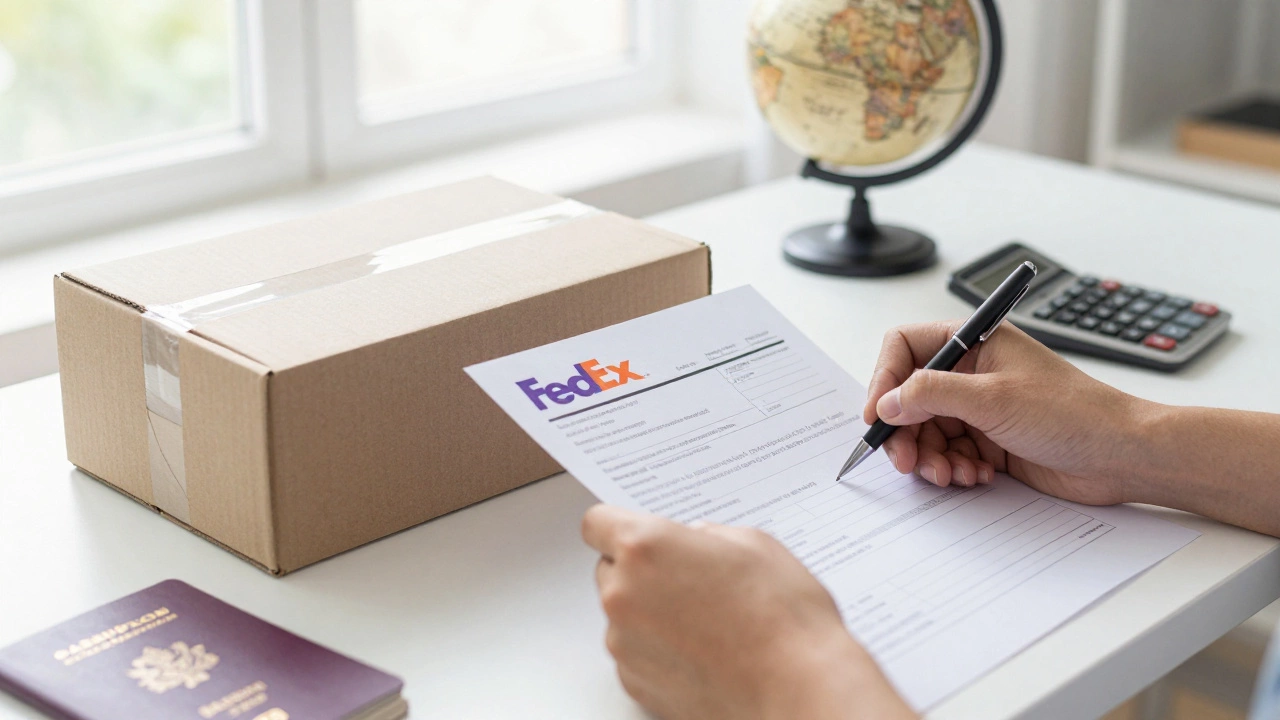
FedEx acts as your broker in many cases. They handle the paperwork submission to customs authorities, but you are responsible for providing accurate information. If you misdeclare the contents, undervalue the item, or forget to include the Harmonized System (HS) code, your package will get stuck. In some cases, it could be seized or returned to sender at your expense.
You also need to decide on the payment terms for duties and taxes. There are two main approaches:
- Recipient Pays: The person receiving the package pays the import duties and taxes upon delivery. This is common for personal gifts or B2C e-commerce.
- Shipper Pays (DDP): Delivered Duty Paid means you, the sender, cover all import fees upfront. This improves the customer experience for online shoppers because there are no surprise charges at the door. FedEx allows you to pre-pay these fees when you create the label.
If you are selling products globally, using DDP is increasingly becoming the standard. Customers hate hidden fees, and refunding them after they pay customs is a logistical nightmare. By calculating the duties into your price upfront, you streamline the process and boost conversion rates.
What Can and Cannot Be Shipped
FedEx has strict prohibited items lists that vary slightly by destination country. Generally, you cannot ship hazardous materials, explosives, flammable liquids, or perishable food items without special permits. Lithium batteries are a major point of contention. They must be declared correctly and packaged according to UN standards. If you are shipping electronics with built-in batteries, ensure they are installed in the device and protected from short-circuiting.
Additionally, certain countries have unique bans. For instance, some Middle Eastern nations restrict the import of religious materials, while others ban specific types of media or political literature. Always check the specific country’s import regulations before packing. FedEx provides an online tool called "Prohibited Items" where you can filter by origin and destination to see exactly what is allowed.
Cost Factors and How to Save Money
FedEx is rarely the cheapest option compared to national postal services like USPS or Royal Mail. However, you pay for reliability, tracking visibility, and speed. To manage costs, consider these strategies:
- Use Dimensional Weight: FedEx charges based on the size of the box, not just the weight. If your item is light but bulky, you will pay for the space it occupies. Use smaller boxes whenever possible.
- Leverage Online Rates: Creating a label online often gives you a discount compared to walk-in counter rates. These discounts can range from 10% to 30%.
- Consolidate Shipments: If you are sending multiple items to the same region, combine them into one larger shipment. One set of customs fees is better than three.
- Choose Economy Over Priority: Unless it’s an emergency, International Economy saves significant money without sacrificing too much time for most destinations.
Tracking and Visibility
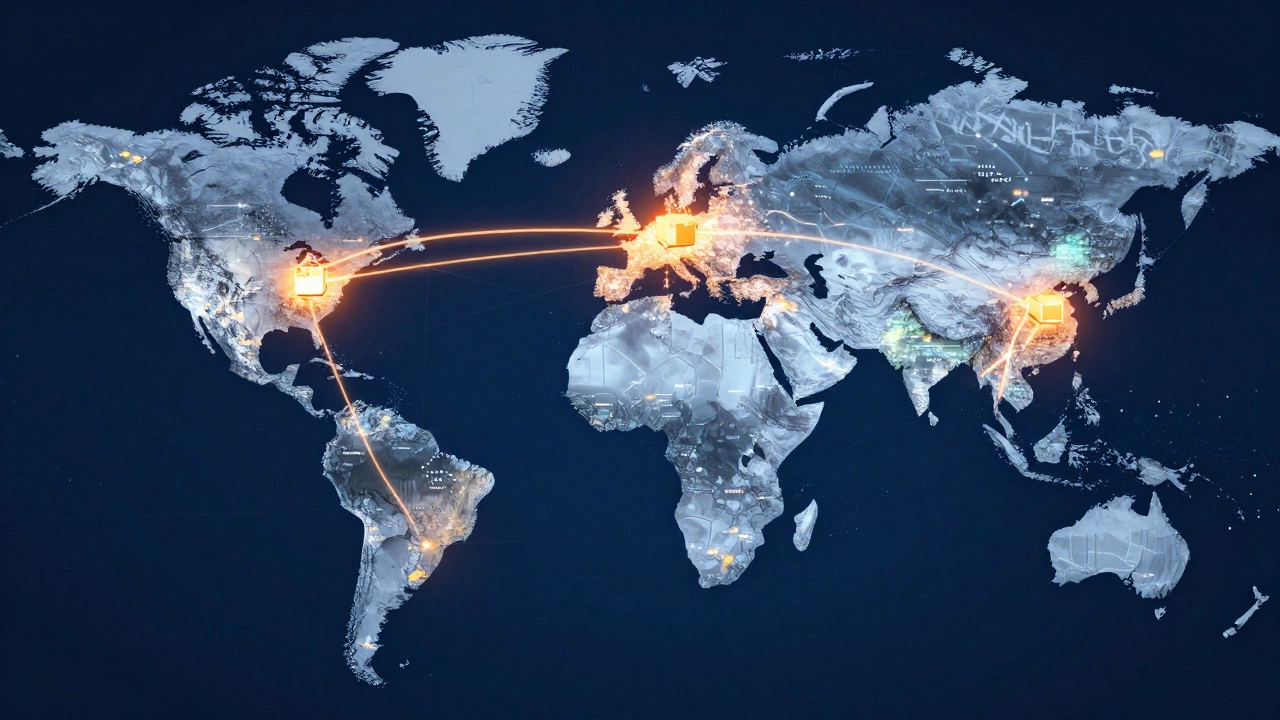
One of the biggest advantages of FedEx is its tracking technology. With international shipping, losing sight of a package is a common fear. FedEx provides granular tracking updates that show you exactly where your package is-whether it’s at the Memphis hub, in flight over the Atlantic, or cleared through customs in Berlin.
You can track packages using the FedEx website or app. Enter your tracking number, and you’ll see status updates like "Shipment Information Sent," "Picked Up," "At Regional Facility," and "Customs Clearance." If there is a delay due to customs inspection, the tracking will usually indicate "Hold for Customs Inspection." At this point, FedEx may contact you for additional documentation. Respond quickly to avoid further delays.
Alternatives to Consider
While FedEx is excellent, it’s not always the best fit. If cost is your absolute priority and speed doesn’t matter, consider DHL eCommerce a division of DHL focusing on affordable international parcel solutions or national postal alliances. For heavier freight, companies like Maersk or UPS Freight might offer better rates per kilogram. Always compare quotes for shipments over 20kg, as economies of scale can shift the advantage to other carriers.
How long does FedEx International Economy take?
FedEx International Economy typically takes 2 to 5 business days, depending on the destination country and customs processing times. Major hubs like London, Frankfurt, and Singapore often receive shipments faster than remote areas.
Does FedEx charge for customs clearance?
Yes, FedEx charges a brokerage fee for handling customs clearance. This fee varies by country and shipment value. Additionally, you or the recipient must pay any applicable import duties and taxes imposed by the destination country.
Can I send a gift internationally with FedEx?
Yes, you can mark a package as a "Gift" on the customs form. However, note that many countries still apply taxes and duties to gifts above a certain value threshold. Marking it as a gift does not guarantee duty-free entry.
What happens if my package is lost internationally?
If a package is confirmed lost, FedEx offers liability coverage based on the declared value of the contents. Standard coverage is limited, so for high-value items, purchasing additional insurance is highly recommended during checkout.
Do I need an account to ship with FedEx?
You do not strictly need an account to drop off a prepaid package, but creating a free FedEx.com account allows you to access discounted online rates, print labels, and manage shipments more efficiently.